
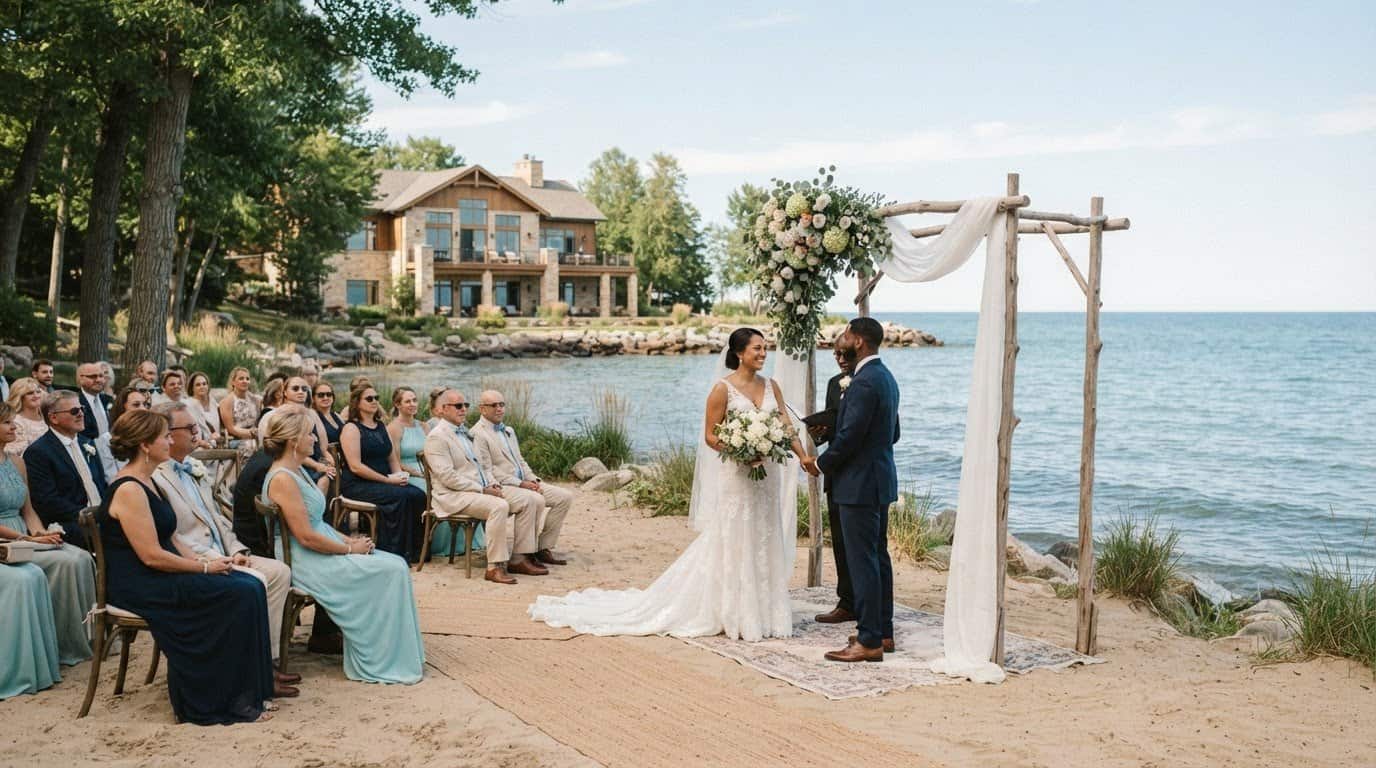
What makes a beach wedding memorable is not only the décor, but how easy and comfortable the day feels for everyone. Planning a beach wedding ceremony means balancing the shoreline’s natural beauty with practical details such as wind, sound, timing, and a weather backup. A little preparation can help the vows feel calm and personal, even when the setting is open to the elements.
It’s natural to want the water and sand to take center stage. Guests still need clear directions, comfortable places to gather, and a ceremony schedule that fits smoothly with the rest of the celebration. Thoughtful choices make the experience feel relaxed rather than complicated.
This guide covers the key decisions, from choosing a beach setting and timing the ceremony to planning for guest comfort and changing weather. You’ll also find ways to connect the ceremony with indoor event space and nearby suite accommodations, so the celebration feels convenient and restorative from arrival through farewell.
Key Takeaways
- Start planning a beach wedding ceremony by deciding what matters most: the setting, guest experience, ceremony elements, timing, and a backup option.
- Let the shoreline guide your setup, then plan practical details such as seating, shade, footwear, accessible routes, and clear guest instructions.
- Compare seated and standing layouts, along with minimal and more structured décor, to find the balance that suits your guests and ceremony.
- Work through planning in a clear sequence, from setting priorities and choosing the venue to finalizing details and briefing participants.
- Consider the ceremony setting, indoor event space, and guest accommodations together to create a more convenient celebration and stay.
Planning a Beach Wedding Ceremony Starts With the Experience You Want
A shoreline ceremony can feel effortless and beautiful, and you don’t need to solve every detail at once. Planning a beach wedding ceremony becomes clearer when you begin with a few decisions: the setting, the guest experience, the ceremony elements that matter most, the timing, and a backup plan for changing conditions.
Keep the focus on the ceremony itself. Decide where guests will gather, how you’ll exchange vows, who will take part, and what will help everyone follow along comfortably. Reception choices, from dining to entertainment, can come later. First, make sure the ceremony fits the shoreline and the people sharing the moment with you.
What makes a beach ceremony different? It takes place in an open natural setting, where the surroundings and conditions shape the layout and guest experience. Familiar elements of a wedding ceremony, such as vows and a public declaration, need to work alongside practical considerations like footing, sound, and a weather contingency.
Choose the feeling and size of the ceremony
Picture the atmosphere before choosing the setup. An intimate gathering may call for a simple layout that keeps attention on the couple. A relaxed celebration or more formal ceremony may benefit from planned seating and a defined processional. The guest list influences the feel of the gathering, but the layout should also suit the ceremony area. Let the setting guide the plan.
Think about how long guests will stand or sit, how they’ll see and hear the ceremony, and how much structure feels right. A few deliberate choices can create a sense of occasion without competing with the water, open sky, and shoreline.
Set priorities before choosing ceremony details
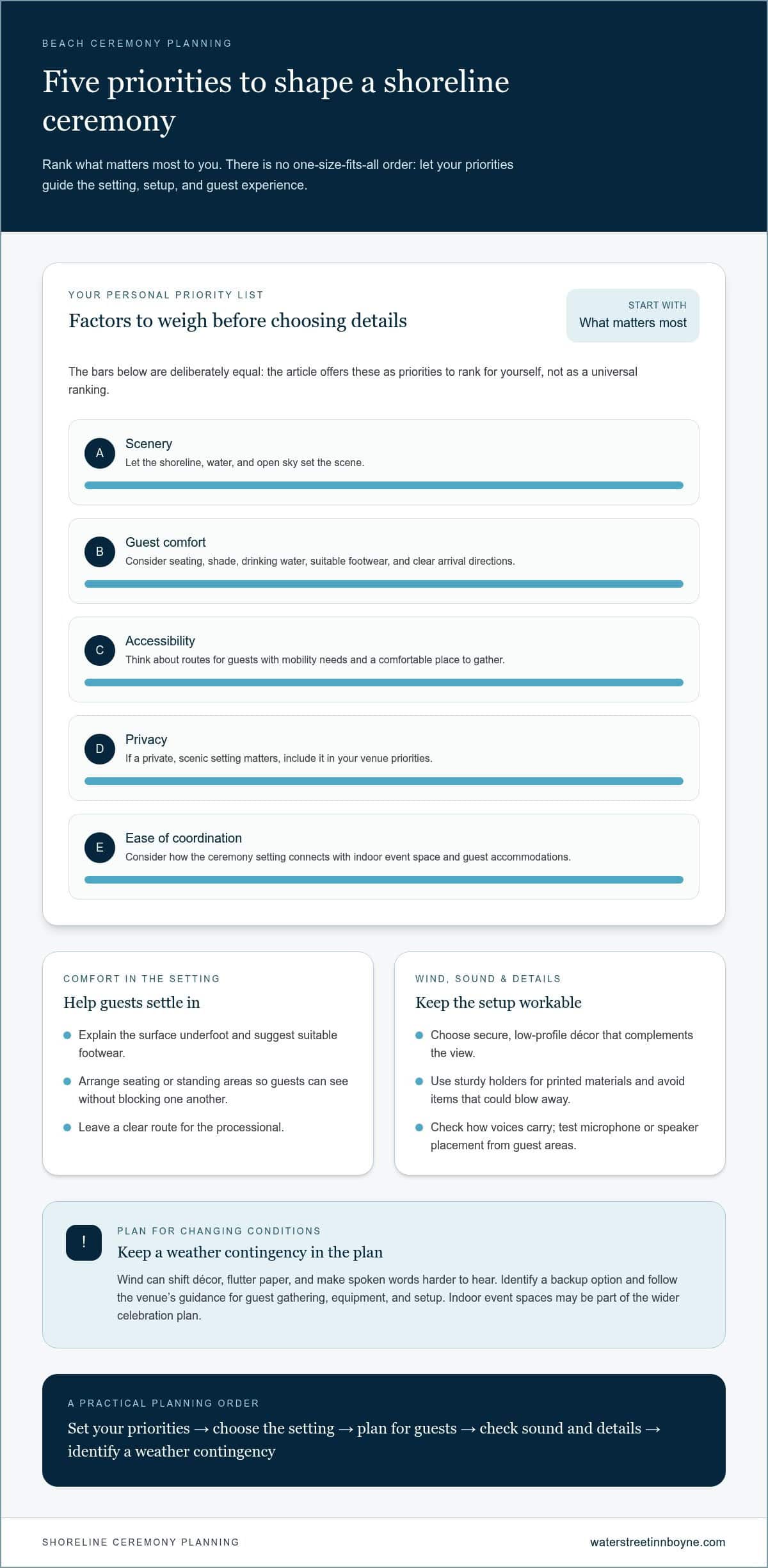
Rank what matters most to you: scenery, guest comfort, accessibility, privacy, or ease of coordination. Then separate essentials from details that can wait. For example, a clear route and a comfortable place for guests to gather may matter more than decorative accents. If a private, scenic setting is a priority, Water Street Inn’s private beach provides a setting for wedding ceremonies, with indoor event spaces available for private events.
Use your priorities to guide venue decisions rather than starting with décor inspiration alone. Explore the wedding venue and ceremony information to consider how the setting and event spaces could support the experience you want. Once the essentials are clear, it’s easier to choose personal details that feel coordinated.
Design a Beach Wedding Ceremony Around the Setting and Your Guests
A shoreline already gives the ceremony a distinct sense of place, so décor can complement the view rather than compete with it. As you continue planning a beach wedding ceremony, picture the scene from your guests’ perspective: where they’ll arrive, what they’ll see, and how comfortable they’ll feel outdoors. Practical choices can make the gathering feel considered without making the setup crowded.
Make the ceremony comfortable for guests
Give guests clear arrival directions and a helpful note about the outdoor setting. Describe the surface underfoot and suggest suitable footwear, so no one is surprised by sand or uneven ground. Consider seating for guests who may prefer not to stand, routes that work for guests with mobility needs, and shade and drinking water where appropriate.
Keep the layout simple. Arrange seating or standing areas so guests can see the couple without blocking one another, and leave a clear route for the processional. A sound check at the ceremony location can show how voices carry in the open air. If you plan to use a microphone, consider its placement in relation to the couple, officiant, and guests, and follow the venue’s guidance for equipment and setup. The Knot’s guide to getting married on the beach also offers broader planning ideas, including guest logistics.
Good beach ceremony design begins with helping every guest feel comfortable, included, and able to share the moment.
Choose details that work with a shoreline setting
Let the natural surroundings do some of the visual work. A few secure, low-profile details can add meaning while keeping the shoreline in view. Pay particular attention to lightweight items: a breeze may shift décor, flutter paper programs, move floral arrangements, or make spoken words harder to hear. Use sturdy holders for printed materials and avoid relying on anything that could blow away or distract during the vows.
Wind can affect sound, too. Position a microphone or speakers to serve the gathering without overpowering the atmosphere, then test the sound from where guests will sit or stand. Keep ceremony materials easy to handle, and leave room to adjust the setup if conditions change.
Make the venue’s guidance part of the design process, including where guests gather and how equipment or décor is placed. For a ceremony beside a private beach, Water Street Inn’s wedding venue information can help you consider the beach setting alongside indoor event spaces as you plan the wider celebration.
Compare Beach Ceremony Setups, Timing, and Backup Options
The most scenic setup isn’t automatically the most comfortable or practical. Compare options by considering how guests will see and hear the ceremony, how easily they can reach their places, and what changes if the weather shifts. Planning a beach wedding ceremony means choosing a setup that feels right in the moment and remains workable as conditions change.
Choose a layout that fits the ceremony
Each layout offers a different balance of comfort, sightlines, and flexibility. Use this comparison as a starting point, then adapt it to your guests and the ceremony area.
| Layout | Comfort and sightlines | Considerations |
|---|---|---|
| Rows of chairs | Provides a place to sit and creates a clear view toward the ceremony focal point. | Plan spacing and an accessible route; guests farther back may feel less connected. |
| Compact semicircle | Can bring guests closer together and offer a more shared view. | Arrange it so guests can see without crowding the couple or blocking access. |
| Standing arrangement | Can be flexible and simple to organize. | Standing for the ceremony may not suit every guest, and sightlines can be harder to manage. |
Guest needs and the shape of the ceremony area matter as much as the visual effect. Chairs can help guests settle in, while a minimal arrangement can keep attention on the natural surroundings. Neither approach suits every couple. Choose based on comfort, visibility, mobility needs, and the venue’s guidance rather than assuming a particular layout will work for every setting.
Plan for weather and schedule changes
Outdoor conditions can vary. Rain, wind, heat, or cooler temperatures may affect guest comfort, décor, sound, and the schedule, so make the backup plan part of the design rather than an afterthought. Agree on a decision point with the venue: who will make the call, what conditions will prompt a change, and how guests will be told where to go.
Timing also shapes the experience. Consider how the light will look in photographs, when guests may be most comfortable outdoors, and how the ceremony fits around arrivals and the rest of the celebration. Leave room for transitions rather than building a schedule with no flexibility.
An indoor alternative gives the day a clear path if the shoreline setup isn’t suitable. Water Street Inn has indoor spaces for private events alongside its private beach for wedding ceremonies. Explore the indoor wedding and event spaces as you plan a practical alternative with the venue.
Build a Step-by-Step Timeline for Planning a Beach Wedding Ceremony
A clear sequence keeps planning manageable and helps ceremony decisions fit together. Instead of choosing décor first, begin with the experience you want, then work through the setting, guest needs, ceremony details, and day-of communication. Revisit earlier choices if the layout or guest plans call for an adjustment.
Coordinate the ceremony details in a clear order
- Define your priorities. Decide what matters most, such as the shoreline view, guest comfort, accessibility, or a simple ceremony with little décor.
- Align on the venue. Consider how the ceremony area, available indoor event space, and the rest of the celebration fit together. Follow the venue’s guidance when planning the setup.
- Plan for guests. Prepare arrival directions and outdoor comfort notes, and account for seating, mobility needs, and how guests will find their places.
- Finalize ceremony details. Set the order of events, choose readings or music, confirm who has a role, and decide what equipment or décor is needed.
- Brief participants. Share the schedule, arrival plan, roles, and a clear point of contact with the wedding party and anyone taking part in the ceremony.
Assign one person to communicate the plan and guide participants on the day. They can share updates, answer practical questions, and help keep the ceremony moving without asking the couple to manage every detail.
Prepare guests and ceremony participants
Send guests the information they need to arrive ready for an outdoor ceremony, including where to gather, what the surface is like, and what to expect from the schedule. Give the wedding party and ceremony participants a concise briefing with their roles, arrival details, and where to go if plans change. Keep the communication plan simple: decide who will send an update and how guests will receive it.
A written backup plan turns last-minute uncertainty into a clear next step for everyone.
For the ceremony day, keep a short checklist that someone can use at the venue:
- Check that the setup follows venue guidance and the ceremony layout is ready.
- Test the sound from where guests will sit or stand, and adjust the microphone if needed.
- Welcome guests and direct them to the gathering area and their seats.
- Share any timing or location change through the agreed communication channel.
As you organize the venue and ceremony details, explore Water Street Inn’s wedding venue options, including its private beach and indoor event spaces.
Choose a Beach Wedding Venue and Stay Plan That Simplifies the Celebration
A venue decision shapes more than the ceremony backdrop. As you continue planning a beach wedding ceremony, consider how the setting, event spaces, guest arrival, and overnight accommodations work together. When these choices are connected, guests can move through the celebration more easily, and the couple has fewer separate details to coordinate.
Evaluate the venue experience beyond the ceremony view
Look beyond the view of the water. Think about how guests will arrive, where they’ll gather, and how the ceremony connects to the rest of the occasion. A private beach can provide a scenic setting for the vows, while indoor event spaces can be part of the overall plan, including as an alternative if outdoor conditions change. A private beach doesn’t automatically mean complete seclusion, so focus on the experience and features the venue provides rather than assuming a particular level of privacy.
Also consider the transition between the ceremony and other parts of the celebration. Keeping the whole venue experience in mind can help create a cohesive occasion instead of requiring guests to navigate a complicated series of locations. Explore wedding venue and event details to see how the private beach and indoor spaces can inform your plans.
Make the guest stay part of the celebration
Lodging is another part of guest comfort, especially for loved ones traveling to share the day. Suite-style accommodations give guests room to settle in before or after the celebration. At Water Street Inn, all-suite accommodations include fully equipped kitchens, lake views, private balconies or patios, and gas-log fireplaces. These features provide a comfortable place to unwind, with the option of enjoying a view or a quiet moment outdoors.
Bringing venue and lodging plans together can make the celebration more restorative for everyone. Guests have a welcoming home base, while the couple can keep the day’s setting and stay experience connected. Consider which guests may benefit from nearby accommodations and share lodging information early enough for them to make their own arrangements.
Explore the suite accommodation options as you shape the guest stay around the celebration. For a closer look at the property and its waterfront experience, explore a memorable waterfront stay.
Bring Your Beach Ceremony Plans Together
Planning a beach wedding ceremony feels more manageable when you begin with the experience you want, then make practical choices for the setting, guest comfort, timing, and a weather backup. A simple layout and clear instructions help guests feel prepared, while a written day-of plan gives participants a shared reference if conditions or timing change.
Consider the venue and guest stay as parts of the same celebration. Water Street Inn offers a private beach for wedding ceremonies, indoor event spaces for private events, and all-suite accommodations with fully equipped kitchens and private balconies or patios. These options can connect a scenic ceremony with a comfortable place for guests to settle in.
Explore a memorable waterfront stay as you shape the details of your celebration. With thoughtful preparation and a setting that suits your priorities, you can create a day that feels welcoming, beautiful, and true to you.
Frequently Asked Questions
How do you plan a beach wedding ceremony step by step?
Start by deciding the atmosphere and guest experience you want, then choose a venue that suits those priorities. Plan for guest comfort and accessibility before finalizing the layout, ceremony elements, and timing. Next, identify an indoor or other suitable backup location and decide how you’ll communicate changes. Share arrival directions and outdoor notes with guests, then brief the wedding party and participants on their roles and schedule.
What should guests wear to a beach wedding ceremony?
Guests should follow the couple’s dress code and choose clothing and footwear suited to an outdoor shoreline setting. Breathable fabrics and shoes that feel stable on sand or uneven ground can make arriving and standing more comfortable. If the ceremony may be breezy or cooler, a light layer can be useful. Couples can help by sharing a short note about the surface, expected conditions, and suggested footwear in advance.
What happens if it rains during a beach wedding ceremony?
If rain makes the outdoor setup unsuitable, the couple can move the ceremony to the backup location or adjust the plan according to the venue’s guidance. Decide in advance who will make the call, how the wedding party will be notified, and how guests will receive directions. Water Street Inn’s indoor event spaces for private events can be part of the plan for an alternative setting.
Can you have a beach wedding ceremony without chairs?
Yes, a beach ceremony can use a standing layout, but it may not be comfortable or accessible for every guest. Consider how long people will stand, whether everyone can see the couple, and whether guests with mobility needs have suitable options. A compact standing arrangement can feel informal, while some chairs or a semicircle may make viewing easier. Choose the layout around your guests and the venue’s guidance.
How do you keep a beach wedding ceremony comfortable for guests?
Make comfort part of the plan by sharing clear arrival directions and notes about outdoor surfaces, footwear, and expected conditions. Consider seating, accessible routes, shade, and drinking water, along with a layout that gives guests clear sightlines. Test any microphone at the ceremony location so vows and readings can be heard in the open air. A helpful guest note sent ahead can prevent surprises on the day.
What is the best time of day for a beach wedding ceremony?
The best time depends on the setting, light, guest comfort, and the rest of the wedding schedule. The hour or two before sunset is often considered for its softer light, but it may not suit every venue or gathering. Consider how timing affects arrivals and transitions, and account for the ceremony area’s availability. Build flexibility into the schedule rather than relying on ideal weather or light.
Do you need a backup plan for an outdoor wedding ceremony?
Yes, a practical backup plan helps everyone respond calmly if rain, wind, heat, or cooler conditions affect the ceremony. Choose an alternative location with the venue, agree on who decides when to switch plans, and prepare a simple way to update guests and participants. Write down the decision process and key contacts so the couple isn’t left coordinating every detail. Clear next steps can reduce last-minute uncertainty.