

What if a rewarding vacation began with a train window, a quiet road, or a shoreline instead of an airport? If flying brings anxiety, discomfort, or stress, it can seem as though the best trips are out of reach. But travel ideas for people who hate flying can lead to memorable escapes where the journey feels calmer and the pace is your own.
You don’t need to cover a huge distance or fill every hour to make a trip worthwhile. The right choice depends on how much time you have, which ground or water transport feels manageable, and whether you’d rather explore along the way or settle in one place. This guide compares flight-free travel styles and shares practical ways to plan around your schedule and comfort.
Consider a train, bus, road trip, or cruise, then leave space to unwind once you arrive. A home-like lakeside suite with a private balcony or patio, a fully equipped kitchen, and private beach access can make that slower rhythm feel especially restorative.
Key Takeaways
- Explore travel ideas for people who hate flying and choose a trip style that fits your time, comfort, and sense of adventure.
- Compare flexibility, planning effort, and the feel of the journey to find the right fit among flight-free options.
- Build a calmer itinerary by setting your trip length, mapping connections, and leaving room for rest.
- Check current schedules, transfer points, accessibility details, and baggage guidance before you travel.
- Make downtime part of the getaway by choosing a comfortable stay that supports a slower pace.
Travel ideas for people who hate flying: start with a different kind of trip
Avoiding flights doesn’t mean settling for less discovery. It can change how you get there, giving the journey room to become part of the vacation. These travel ideas for people who hate flying include scenic rail journeys, road trips, intercity buses, cruises, and stay-centered escapes. Each offers a different balance of movement, planning, and downtime.
Flight-free travel means planning a trip without air travel. The best fit depends on the time you have, what feels comfortable, your budget, and whether you prefer a gentle pace or a full itinerary. Some travelers want to avoid airport stress; others value scenery, flexibility, or fewer transitions. There’s no single reason to choose this style of travel, and no single right way to do it.
For inspiration, watch No Fly Zone Nomads: How We Travel the World by Land & Sea:
What makes a trip rewarding without flying?
The journey can be more than a way to reach a destination. A train ride can make passing landscapes part of the day, while a road trip lets you add stops as you go. A bus journey or cruise may suit travelers who would rather leave driving or navigation to someone else. To choose well, compare the destination’s appeal with total travel time, the number of transfers, and how much energy you want to spend getting there. For background on one possible reason people avoid flying, see Fear of flying; not everyone feels the same way about air travel.
Choose a travel style before choosing a destination
Start by picturing the experience you want: wide-open scenery, planned activities, time with family or friends, or the freedom to make decisions as you go. A fixed itinerary can reduce day-to-day planning, while a self-directed trip offers more independence and room for detours. Think about how much structure feels reassuring rather than restrictive. Then look for destinations that support that style, instead of choosing a place first and forcing the journey to fit.
Keep the practical details in view. Routes, connections, and services vary, and a flight-free trip may take longer or involve transfers. Check current schedules, connection points, accessibility information, and baggage guidance with the relevant transport operator before making plans. If your journey includes more than one leg, review how the pieces fit together and leave enough time to make each connection. Preparation can help the travel day feel calmer and leave more energy to enjoy your destination.
Five flight-free travel ideas for a change of pace
The right trip can make the ride, drive, or time on the water feel like part of the getaway, rather than a hurdle before it begins. These five travel ideas for people who hate flying range from active, self-directed adventures to a quiet stay with fewer plans. National Geographic’s guide to no-fly family trips offers more inspiration for traveling without taking to the skies.
Rail journeys, road trips, and intercity buses
These ground-travel choices suit different preferences for independence and ease. Before you choose, consider how much of the journey you want to manage yourself, how many transfers the route requires, and whether the schedule leaves time to rest. Check current routes and timetables before building the rest of your plans around them.
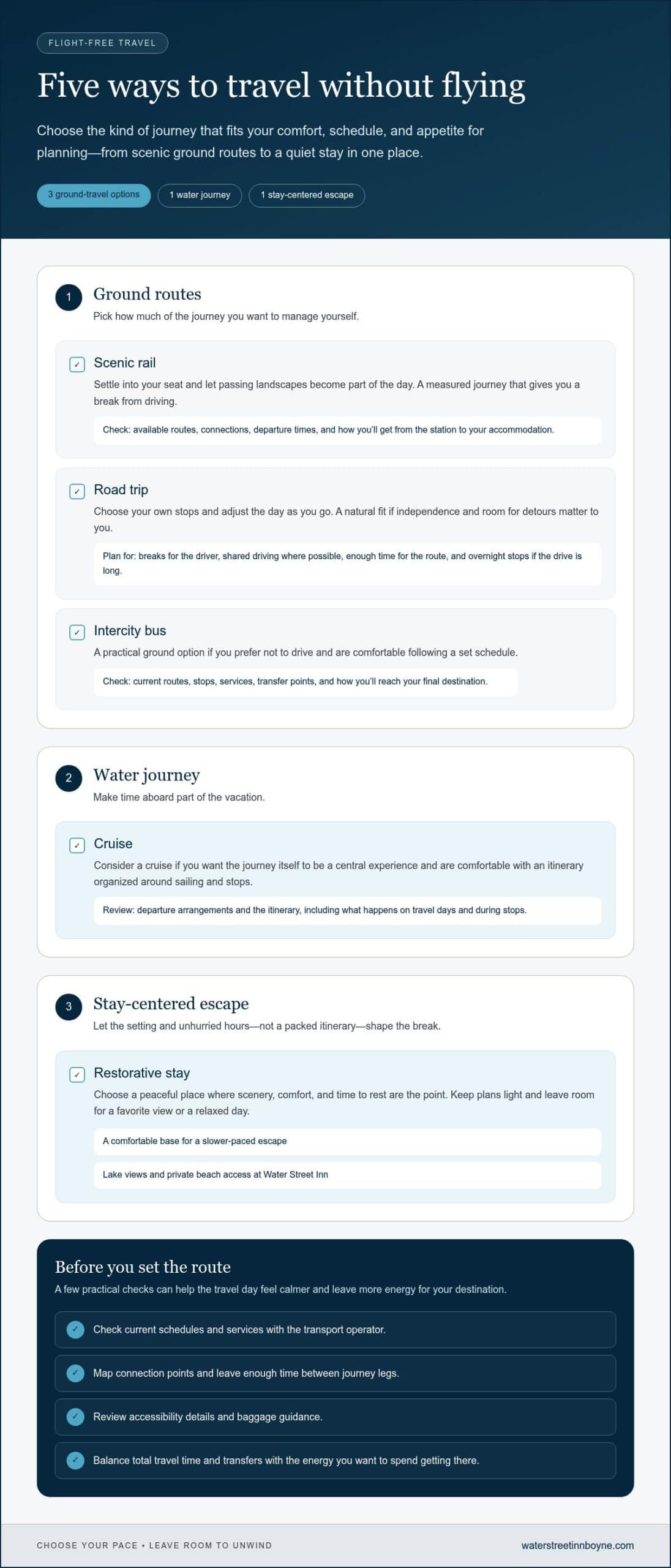
- Scenic rail: Settle into your seat and watch the landscape unfold without managing every mile. It suits travelers who enjoy a measured journey and want a break from driving. Compare available routes, connections, and departure times, and check how you’ll get from the station to your accommodation.
- Road trip: Choose your own stops and adjust the day as you go. It’s a natural fit for travelers who value independence, but the driver needs to plan breaks and share driving where possible. Allow enough time for the route so the day doesn’t feel like a race, and plan overnight stops if the drive is long.
- Intercity bus: A practical alternative for travelers who prefer not to drive and are comfortable with a set schedule. Routes, stops, and services vary, so check current details, transfer points, and how you’ll reach your final destination before making plans.
Cruises and slower, stay-centered escapes
For some travelers, the water is the attraction: a cruise makes time aboard part of the vacation, with the itinerary shaped around sailing and stops. A stay-centered escape takes a different approach, keeping plans light and centering the break on scenery, comfort, and unhurried hours. The best choice depends on whether you want a moving itinerary or one welcoming place to settle in.
- Cruise: Consider this if you want the journey itself to be a central experience and are comfortable with a schedule organized around sailing. Review departure arrangements and the itinerary so you understand what happens on travel days and during stops.
- Restorative stay: Choose a peaceful setting and leave generous room for rest, a favorite view, or a relaxed day without a packed agenda. Water Street Inn is an all-suite condominium hotel with lake views and private beach access, offering a comfortable base for a slower-paced escape. Explore the suite accommodations as you consider where you’d like to unwind.
Train, bus, car, or cruise: compare no-fly travel options
There isn’t one best way to travel without flying. The right choice depends on how much control you want, how comfortable you are managing connections or driving, and whether you want the journey to be the main event. Use this comparison to narrow the travel ideas for people who hate flying that best fit your preferred pace.
| Option | Flexibility | Planning effort | Journey experience | May suit travelers who… |
|---|---|---|---|---|
| Rail | Shaped by routes and departure times | Plan schedules and connections | Watch scenery without driving | Want a measured ride and time to relax |
| Bus | Shaped by available routes and stops | Coordinate schedules and transfers | Travel by road without being the driver | Prefer a set itinerary and no self-driving |
| Self-drive | High control over stops and pace | Plan the route, navigation, breaks, and driving | Make detours and explore along the way | Value independence and can manage the driving |
| Cruise | Itinerary follows the sailing and stops | Plan around departure and onboard arrangements | Make time on the water part of the vacation | Like a structured trip with onboard time |
| Stay-centered getaway | Flexible daily plans once settled | Focus on reaching one place and arranging a restful stay | Spend more time unwinding than transferring | Want a slower break with fewer moving parts |
These are broad comparisons, not guarantees about every trip. Duration, accessibility, connections, and onboard features depend on the specific service. Check current details before booking, especially if a transfer, mobility requirement, or particular amenity will shape your plans. Environmental impact may also factor into your choice; Harvard Business School Online offers context to help readers compare no-fly travel options with sustainability in mind.
Which option offers the right balance of ease and flexibility?
Driving gives you freedom to change plans, but you’re also responsible for navigation and taking breaks. Rail and bus travel remove the need to drive, yet route choices and connection patterns determine how direct the trip feels. A cruise combines transport and onboard time into one vacation format, with less freedom to change the overall itinerary once it’s set. For a stay-centered getaway, most of the planning is about reaching one place and arranging a comfortable stay, leaving your days more open once you arrive.
How to match the journey to your comfort and interests
Choose rail if you’d rather watch the landscape than focus on the road; consider a self-drive trip if choosing your own stops matters most. If transfers and packed days sound tiring, a stay-centered escape can leave more room for downtime. Water Street Inn’s lake-view suites and private beach access offer one restful setting to consider. Explore the suite accommodations as you plan a trip with time to settle in.
Plan a no-fly getaway that feels calm from start to finish
A little planning can make a flight-free trip feel more manageable, especially when the journey includes several legs or transfers. Start with your comfort level, then build a schedule with breathing room instead of trying to fit in every possible stop. These travel ideas for people who hate flying work best when the transport, activities, and place you stay all support the same pace.
Build the journey around time, comfort, and connections
Use this sequence to shape your plans before booking each part:
- Step 1: Set your trip length. Decide how much of your available time you’re comfortable spending in transit, and leave enough time at your destination to rest and enjoy it.
- Step 2: Choose your mode. Consider whether you’d rather watch the scenery, drive at your own pace, travel by bus, or make a cruise part of the vacation.
- Step 3: Map each leg. Check current schedules, transfer points, accessibility information, and baggage guidance with the relevant transport operator. If your itinerary has multiple connections, leave a realistic margin between them rather than relying on a tight handoff.
- Step 4: Plan for pauses. Build in time for meals, breaks, and overnight stops where the journey calls for them. Keep the activity schedule light enough that a delay or a slower morning won’t make the whole trip feel rushed.
Before committing to a multi-stop route, review every leg in sequence. Check not only the time between connections but also how you’ll move between stations or terminals and what you’ll do if one part of the trip runs late. A connection that looks simple on paper can take more energy than expected, so think about how you’ll feel at each stage, not just when you arrive.
Make the stay part of the vacation
Choose accommodations that fit your preferred daily rhythm. A comfortable, self-contained suite can make it easier to slow down between outings, while a setting with natural scenery may turn a quiet morning into part of the experience. For warm-weather ideas to shape your plans, browse summer outdoor activities. In colder months, choose seasonal outings that leave room to return, warm up, and unwind.
Water Street Inn is an all-suite condominium hotel with lake views, private balconies or patios, fully equipped kitchens, gas-log fireplaces, and private beach access. These home-like features can support a restorative stay, whether you plan a few outings or keep the days open. Explore the suite accommodations as you plan a slower-paced getaway.
Turn a flight-free idea into a restorative stay at Water Street Inn
Once you’ve chosen how to travel, consider what you want the hours at your destination to feel like. A restful stay can give a no-fly getaway a gentle rhythm: outings when you feel like exploring, and comfortable space to slow down when you return. Among the travel ideas for people who hate flying, a stay-centered break can be especially appealing if your goal is to make the vacation restorative rather than packed with activities.
Why an all-suite stay suits a slower trip
Water Street Inn is an all-suite condominium hotel with lake views, private balconies or patios, fully equipped kitchens, gas-log fireplaces, and private beach access. These features support a more self-contained style of stay, with room to enjoy quiet time between plans.
A fully equipped kitchen gives you the option to prepare food during your stay, while a private balcony or patio offers a place to sit with the lake view and pause between outings. A gas-log fireplace adds a cozy feature to the suite, and private beach access makes the natural setting part of the experience. Together, these comforts can help make downtime an intentional part of the trip, not simply the gap between activities.
Make room for both outings and unhurried time
A restorative getaway doesn’t require an empty schedule. Choose a few activities that feel meaningful, then leave open space around them. You might start the day slowly, head out for an outdoor activity, and return with enough time to relax rather than rushing straight into the next plan. For warm-weather inspiration, browse summer activity ideas and choose outings that suit the pace you want.
At Water Street Inn, lake views and private beach access offer a natural invitation to pause, while a comfortable suite gives you a welcoming place to settle in after exploring. You can balance time outdoors with a quiet meal in the kitchen, a restful moment on your balcony or patio, or an evening by the fireplace. The details of the stay can shape the feeling of the whole trip.
Ready to plan a slower lakeside escape? Explore Water Street Inn vacation rentals and picture a stay with time to unwind.
Choose your pace and make the journey part of the getaway
The best travel ideas for people who hate flying aren’t about replacing one kind of trip with another. They’re about choosing a journey that feels manageable, whether that means watching scenery from a train, setting your own rhythm on the road, or keeping plans close to home. Compare travel time, connections, comfort, and the amount of planning each option requires, then leave room in your itinerary to rest.
Your stay can help set that restorative pace. Water Street Inn is an all-suite condominium hotel with lake views, private balconies or patios, fully equipped kitchens, gas-log fireplaces, and private beach access. These comforts make it easy to balance time out exploring with quiet moments back in your suite.
Ready to picture a slower escape? Explore relaxing all-suite stays and start planning a trip that gives you space to unwind. A rewarding getaway can begin wherever you feel most comfortable.
Frequently Asked Questions
What are the best travel ideas for people who hate flying?
Good travel ideas for people who hate flying include rail journeys, road trips, intercity buses, cruises, and stay-centered getaways. Start by choosing the kind of trip that suits you, then find a destination that fits it. Consider how much time you have, which transport feels comfortable, what you enjoy doing, and how much flexibility you want. Routes and schedules change, so check current service details before you plan around them.
Can you travel across the United States without flying?
Yes, you can plan trips across the United States using combinations of driving, passenger rail, intercity buses, and cruises. Which options work depends on the places you want to connect and current routes and schedules. For a longer journey, consider breaking the trip into manageable legs, with time for transfers, meals, and rest. Verify routes, connection points, accessibility details, and timing with the relevant transport operators before booking.
Is taking a train better than flying for a vacation?
It depends on what matters most to you and the trip you’re planning. A train can make the journey part of the vacation, offering time to sit back and watch the scenery instead of driving. Routes, connections, and journey times vary, so compare the whole itinerary rather than one leg. Flying may be quicker for some journeys, but comfort, transfers, and time to enjoy your destination may matter more to you.
How do I plan a vacation if I am afraid of flying?
Start with a trip length and destination that feel manageable without air travel. Compare ground or water transport options, check current schedules and connections, and leave room for breaks and rest. Choose accommodations that support the kind of getaway you want, whether that means active outings or quieter days. If fear of flying affects your daily life, consider seeking appropriate professional support as well as planning travel in a way that feels comfortable.
Are road trips a good alternative for people who hate flying?
Road trips can be a good option if you value choosing your own stops and setting the pace. They do require someone to navigate and drive, so think about what feels comfortable and plan breaks along the way. Avoid packing too many miles or activities into each day. For longer journeys, you could also look at combining driving with another transport mode, depending on available routes and connections.
Can you take a relaxing vacation without traveling far?
Yes, a restorative vacation can focus on a comfortable stay, a few enjoyable activities, and a change from everyday routines rather than distance. Choose a setting and accommodation that suit your preferred pace, then leave open time between outings. Water Street Inn is an all-suite condominium hotel with lake views, private balconies or patios, fully equipped kitchens, gas-log fireplaces, and private beach access, creating a home-like setting for unwinding.
What should I check before booking a no-fly trip?
Check current schedules, routes, transfer points, accessibility information, baggage guidance, and transfer arrangements with the relevant transport operator. Consider how manageable each leg feels and leave a comfortable margin between connections. Review your accommodation details, too, and plan rest around travel days rather than filling every hour. Transport information can change, so rely on current operator guidance instead of old timetables or assumptions when finalizing your itinerary.