
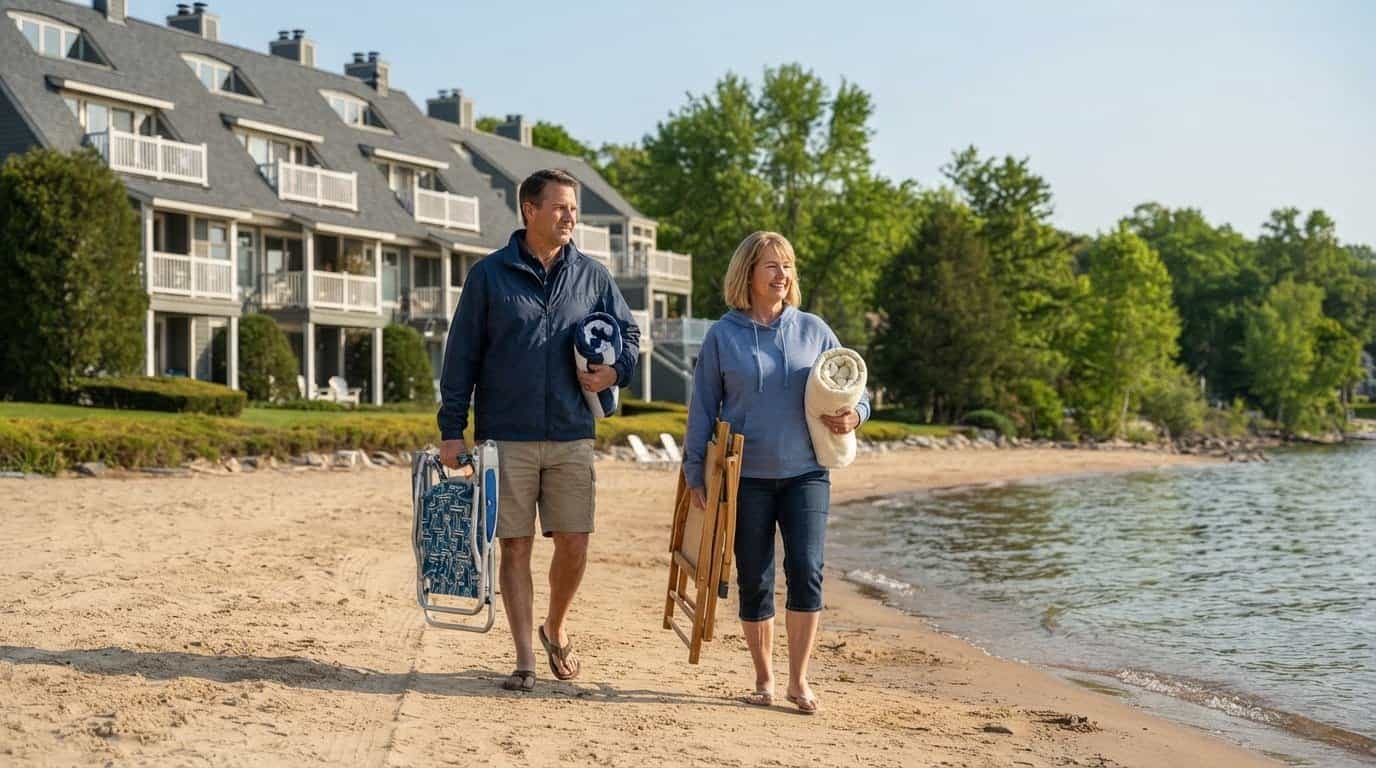
On 30A, public beach access points offer a way to reach the shore, while a hotel beach may bring guest amenities closer to your stay. But the label “private hotel beach” doesn’t, by itself, explain who can use the shoreline. That’s why the difference between public beaches and private hotel beaches is about more than chairs and convenience.
South Walton has 46 neighborhood beach access points and 10 regional access points on or near 30A. Florida’s customary-use rules add another layer: House Bill 631 took effect on July 1, 2018, voiding Walton County’s 2017 customary-use ordinance.
This guide explains how 30A access and seclusion compare with hotel beach amenities, and what Florida’s customary-use rules mean for beachgoers. You’ll also get a clearer sense of which setup may suit your plans, whether you’re looking for a public access point or the ease of beach amenities during your stay.
Key Takeaways
- Choose an access point or lodging based on how you want to reach the shore and how much walking fits your plans.
- Think about location and seclusion together: a quieter stretch may involve different access and convenience trade-offs.
- Understand how Florida’s customary-use rules affect beach access before assuming a hotel beach is reserved exclusively for guests.
- Compare the convenience of hotel beach amenities with the flexibility of public access to find a setup that suits your stay.
1. What’s Up With The Public and Private 30A Beaches?
In the United States, public beach access points provide routes to the shore, while hotel beach arrangements may add guest amenities or designated service areas. A hotel’s “private beach” label doesn’t, by itself, explain who may use the shoreline. On 30A, compare how you’ll reach the beach with the services and lodging that fit your plans, whether you are staying at a property like Water Street Inn or another local retreat.
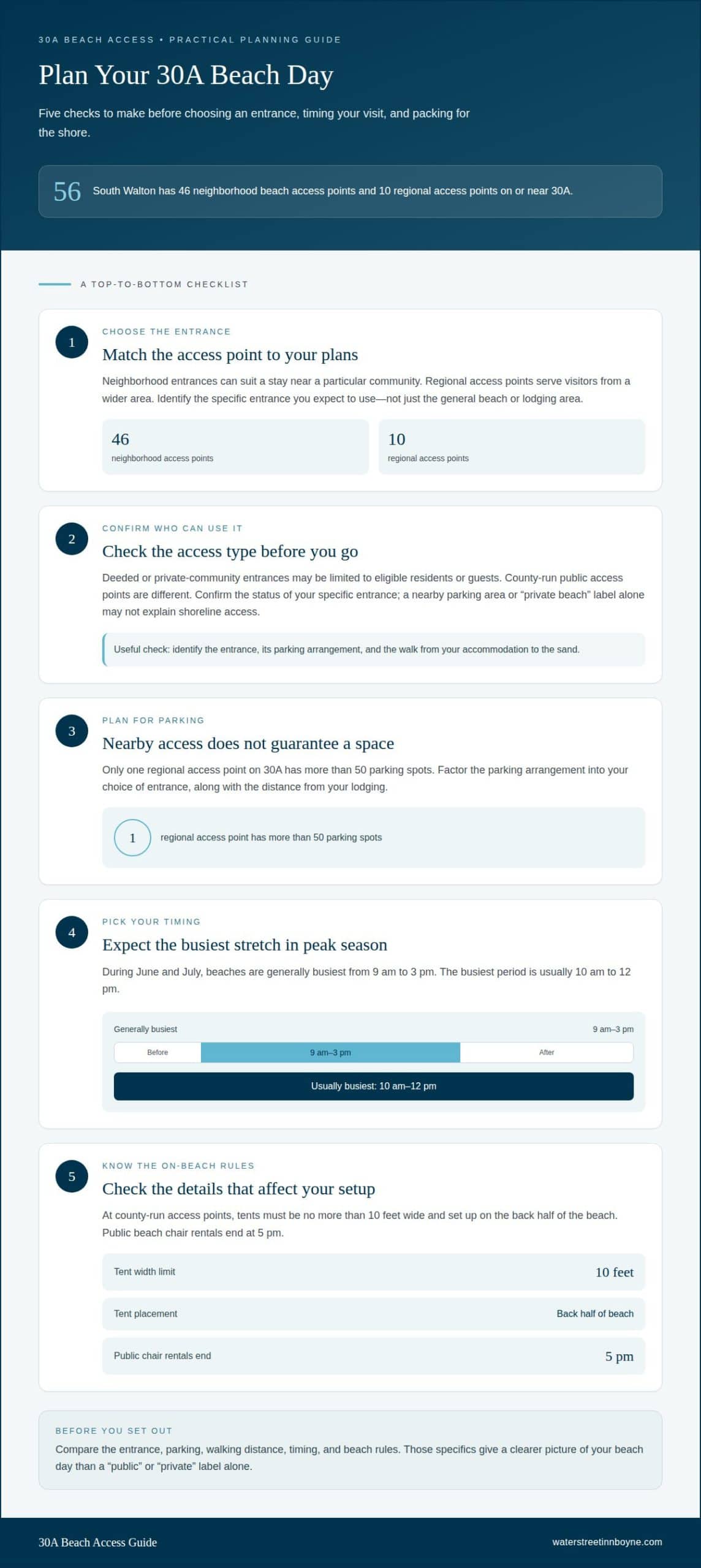
South Walton has 46 neighborhood beach access points and 10 regional access points on or near 30A. Neighborhood entrances can work well when you’re staying near a particular community, while regional access points serve visitors from a wider area. As you compare accommodations, consider your budget, the walking distance to an entrance, and whether guest beach services matter to your day. A stay farther from the shore may require more planning for each visit.
Parking can shape the beach experience as much as lodging location. Only one regional access point on 30A has more than 50 parking spots, so a nearby entrance doesn’t guarantee an easy parking space. During peak season in June and July, beaches are generally busiest from 9 am to 3 pm, with the busiest period usually from 10 am to 12 pm. Consider those patterns when choosing where to stay and when to arrive.
Access can also depend on the community. Deeded or private-community entrances may be limited to eligible residents or guests, unlike county-run public access points. At county-run points, tents must be no more than 10 feet wide and set up on the back half of the beach. Public beach chair rentals end at 5 pm, so plan ahead if you expect to stay later.
Before booking, identify the specific entrance you expect to use, its parking arrangement, and the walk from your accommodation. Then compare those details with the amenities you want. On 30A, that practical check offers a clearer picture of your beach day than a “private” or “public” label alone.
2. Beach seclusion and location
Along 30A, 26 miles of white sand offer varied settings, but distance alone doesn’t guarantee seclusion. A beach beside a busy community entrance can feel very different from a stretch reached through a smaller access route. Compare the shoreline, nearby development, and where visitors enter. Those details shape the atmosphere more than the words “public” or “hotel” on a lodging description.
Van Ness beach, between Seaside and WaterColor, was no longer public as of March 2024, although its parking lot remained. The example shows why a map pin or nearby parking area may not tell the whole access story. Before choosing a place to stay, identify the specific beach entrance and whether it serves the public or a defined community. That distinction matters if easy walks to the water are part of your plans.
Seclusion also depends on how the beach is set up. During peak summer periods, public beaches may have several rows of chairs, and chair rentals may sell out. A hotel-managed chair area can offer guests a more organized setting, but it does not necessarily make the surrounding sand quiet. Check how close the lodging and beach services are to the shore, and whether a nearby public access point attracts day visitors.
For a quieter beach day, consider both the access point and the timing. A location with fewer nearby services may feel less busy, but it can take more planning to bring supplies and shade. Staying beside the shore may shorten the walk from your room to the sand, while lodging near a public entrance can keep community access close. Comparing public beaches with private hotel beaches means weighing these trade-offs, not assuming one option always offers more privacy.
Use three details to guide your choice: the exact beach entrance, the surrounding development, and the distance from lodging to sand. On 30A, those specifics give a clearer picture of the setting than a “private beach” label alone.
3. Florida law and customary use of beaches
In Florida, a hotel’s beach label does not by itself determine public access rights. On Miami Beach, a concessionaire cannot demand that beachgoers leave a public beach. A legal expert has also said people can walk along the water’s edge past private beaches to reach another beach. These examples show the difference between hotel-managed services and public shoreline access.
Walton County’s customary-use rules changed after Florida House Bill 631 passed in 2018. The bill voided Walton County’s 2017 customary use ordinance and made it easier for private property owners to claim the beach in front of their homes as private property. HB 631 took effect on July 1, 2018. That history helps explain why customary use alone doesn’t guarantee access to every stretch of sand in Walton County.
Can hotels restrict non-guests from accessing or using the beach? A hotel can manage services for its guests, such as beach chairs, but a public beach does not become private simply because a hotel uses it. In Miami Beach, a concessionaire cannot tell beachgoers to leave a public beach.
Alcohol, pets, and fires are separate from shoreline access. Rules depend on the beach and local regulations, so do not assume that permission to enter also allows alcohol, pets, or fires. Follow the posted rules at the specific location.
What should travelers know about beach access rights in Florida, California, Hawaii, and other coastal states? Rules vary by state and locality, so Florida’s customary-use history should not be treated as a nationwide rule. Before visiting, identify whether the access point is public and follow local beach rules.
If someone tells you to leave a public beach in Florida, the report advises getting their name and calling the police. Be clear about the location and circumstances, especially where private property borders public shoreline. This is a practical step, not a substitute for understanding access rights at that specific beach.
4. Hotel beach amenities
A hotel beach’s practical advantage is often convenience, not exclusive shoreline rights. Depending on the property, guest arrangements may include chairs, umbrellas, or access to a beach concessionaire. Public access points may offer a different setup, with visitors bringing their own shade or renting chairs locally. Before planning a full day by the water, compare what is available at the beach with what your stay includes.
Safety and upkeep depend on the beach and its management, not simply on whether a hotel is nearby. A lifeguard stand marks an important boundary: a hotel or its concessionaire cannot place chairs beyond it. A hotel chair setup does not mean lifeguards are on duty, and hotel service is no substitute for following posted beach guidance. To assess cleanliness and maintenance, look at the beach’s facilities and management arrangements rather than assuming every hotel shoreline receives the same care.
How do safety, lifeguards, cleanliness, and maintenance compare? Neither public access nor hotel access guarantees a particular level of lifeguard service or upkeep. Check signs at the specific beach, follow lifeguard instructions where present, and distinguish hotel-provided services from public beach facilities.
How much do hotel beach day passes, chair rentals, and parking cost? There is no single price for these options across beaches. Charges depend on the location, provider, and what the arrangement includes. A chair rental is different from a day pass, and parking may be managed separately. Compare each cost at your destination rather than treating them as one hotel amenity fee.
On 30A, public beach chair rentals end at 5 pm, so guests staying later need another plan for seating. A hotel or concessionaire’s chair arrangement may have its own terms, and chairs must remain behind the lifeguard stand. Before settling in, identify where guest chairs may go, which facilities are public, and what services are actually available at that beach.
Budget for each separately: day-pass access, chair rentals, and parking may be handled by different providers, and charges vary by location and arrangement.
Water Street Inn
Water Street Inn offers a waterfront stay for travelers weighing beach access, privacy, and lodging convenience. Its private beach and One Bedroom Suite provide a setting to consider alongside the public and hotel beach options discussed above. Each suite has a private balcony or patio, a fully equipped kitchen, and a gas-log fireplace. For couples planning a celebration, Wedding Venue Rental is another option. If this style of stay fits your plans, contact Water Street Inn to discuss your visit.
Choose the shoreline that suits your stay
Your beach choice can shape the rhythm of a trip, from how close you want to be to the water to the kind of place you want to return to afterward. The decision between public beaches and private hotel beaches is most useful when tied to your travel plans. Water Street Inn offers a waterfront stay with private beach access for guests seeking a quieter setting.
A One Bedroom Suite offers a place to settle in, while Wedding Venue Rental may suit couples planning a celebration. Consider which kind of stay fits your plans, then contact Water Street Inn to explore the next step. May your plans lead you to a shoreline and setting that feel right for your time away.
Frequently Asked Questions
What’s Up With The Public and Private 30A Beaches?
30A has public beach access points alongside hotel and community beach arrangements, so the access route matters as much as the lodging label. For a practical comparison, pick the beach you expect to use and trace how you’ll reach it from your accommodation. Then consider whether your plans depend on guest-only services, public facilities, or simply a walk to the shore.
Are beaches legally public in the U.S., and how do state coastal access laws vary?
There isn’t one rule that makes every U.S. beach public or private; access depends on state and local law and the specific shoreline. Florida’s Walton County history shows customary-use rules can change, so avoid applying one county’s rules nationwide. For California, Hawaii, or another coastal state, use local access information and follow posted directions rather than assuming the same rights apply everywhere.
What amenities and services are typically included at hotel beaches?
Hotel beach amenities vary by property, so do not assume a room booking includes every beach service. Check whether guest access, equipment, and other services have separate terms. For example, a family comparing stays can note whether beach access, chairs, umbrellas, and parking are described separately, then plan what to bring accordingly.
What are the pros and cons of public beaches versus hotel beaches for families and visitors?
Public beaches can suit visitors who want flexibility in where and when they spend time by the water. Hotel beach arrangements may make it easier to move between lodging and shoreline, especially for families carrying snacks, towels, or children’s gear. Each setup has its own access conditions and services, so match your choice to your family’s routine and preferred level of planning.
How can visitors find public beach access near a hotel or resort?
Start with a map of the hotel and nearby beach entrances, then trace the route from your lodging to the shore. Look for access marked for public use, and distinguish it from entrances serving a private community or hotel guests. Check the route, parking arrangements, and local signs together. A nearby lot or beach name alone may not establish public access.