Did you know that 56% of global travelers in 2026 cite resting and recharging as their primary motivation for a getaway? While the search for peace is a top priority, finding a quiet and relaxing hotel often feels like a gamble when faced with sterile rooms and unpredictable noise from neighboring guests. It’s a common frustration to book a stay based on vague promises of tranquility, only to arrive at a high-traffic transit point that feels anything but restorative.
You deserve a stay that functions as a true home sanctuary. In this guide, we’ll share the professional secrets to identifying truly serene accommodations by looking past standard marketing terms. We will explore why all-suite layouts provide a superior physical buffer against noise and how certain architectural choices transform a standard trip into a deeply restorative escape. This guide provides a reliable framework for vetting your next destination to ensure it offers the quiet confidence and comfort you’ve been searching for.
Key Takeaways
- Learn to identify a true sanctuary by prioritizing acoustic privacy and sensory comfort rather than relying on standard marketing labels.
- Discover how residential features like a fully equipped kitchen and private balcony reduce external stress and keep your retreat beautifully self-contained.
- Master the art of finding a quiet and relaxing hotel by identifying natural buffers, such as waterfront views, that shield your space from high-traffic noise.
- Use a specific vetting framework to scan guest reviews for residential signatures. This helps you verify the tranquility of a property before you book.
- Understand why an all-suite layout serves as the gold standard for travelers seeking a stay that feels like a home sanctuary rather than a transit point.
Defining the Quiet and Relaxing Hotel Experience
A quiet hotel isn’t just a place to sleep; it’s a sanctuary designed for mental decompression. With the average daily rate for U.S. hotels reaching $162.16 in 2026, guests are increasingly demanding that their financial investment translates into actual peace. When you prioritize finding a quiet and relaxing hotel, you are making a vital investment in your personal health. True tranquility allows your nervous system to settle, moving away from the constant buzz of daily life into a space where your thoughts can finally breathe and your body can truly rest.
This growing focus on restorative travel has fueled the rise of Sleep tourism, where the quality of rest is the main attraction. Unlike standard hotels that cater to high-turnover business travelers, a leisure-focused property moves at a steadier, more intentional rhythm.
To better understand the practical steps of this process, watch this helpful video:
Relaxation is a deeply sensory experience that requires a harmony of elements. Standard hotels often feel like transit points, filled with the clatter of rolling suitcases and slamming doors at all hours. This is why the hushpitality trend has gained such momentum. Travelers now seek out properties where the layout is intentionally designed to minimize stress. A restorative escape offers a residential atmosphere that feels like a home sanctuary, much like the privacy found in condominium vacation rentals that prioritize space and personal comfort. True relaxation involves:
- Visuals: Soft natural light and views of serene landscapes or water.
- Acoustics: The absence of mechanical noise and the presence of natural buffers.
- Comfort: High-quality linens and a layout that mimics a residential suite.
The Difference Between Quiet and Silent
True relaxation rarely happens in a vacuum of total silence. A sterile, silent room can sometimes feel unsettling or even amplify the smallest internal sounds, such as the ticking of a clock or your own heartbeat. The most peaceful stays incorporate natural white noise, like the gentle rustle of wind through trees or the rhythmic lap of water against a shore. These pleasant ambient sounds provide a natural buffer that masks minor disturbances and creates a soothing backdrop for reflection. It’s the difference between a clinical environment and a living, breathing landscape that invites you to linger.
Why Standard Hotels Often Fail the Quiet Test
Most commercial hotels prioritize density over privacy to maximize their revenue. This often results in thin walls that offer little protection from a neighbor’s television or a late-night conversation in the hallway. High-traffic features like elevators, ice machines, and heavy fire doors are frequently placed directly adjacent to guest rooms, leading to constant interruptions throughout the night. Additionally, standardized ventilation systems can produce a persistent, mechanical hum that makes it difficult to truly disconnect from the industrial world. When you are finding a quiet and relaxing hotel, look for properties that avoid these common structural pitfalls in favor of a more thoughtful, residential design.
Essential Amenities That Guarantee a Restorative Stay
When finding a quiet and relaxing hotel, the amenities should do more than just provide convenience; they should actively protect your peace. A fully equipped kitchen is a hidden hero of the restorative stay. By having the ability to prepare a simple meal or brew a fresh pot of coffee within your own walls, you eliminate the need to navigate crowded lobbies or noisy dining areas. This self-contained lifestyle allows you to remain in your sanctuary for as long as you wish, maintaining the steady rhythm of your retreat without outside interruption. It transforms the hotel experience from a series of public interactions into a private, residential escape.
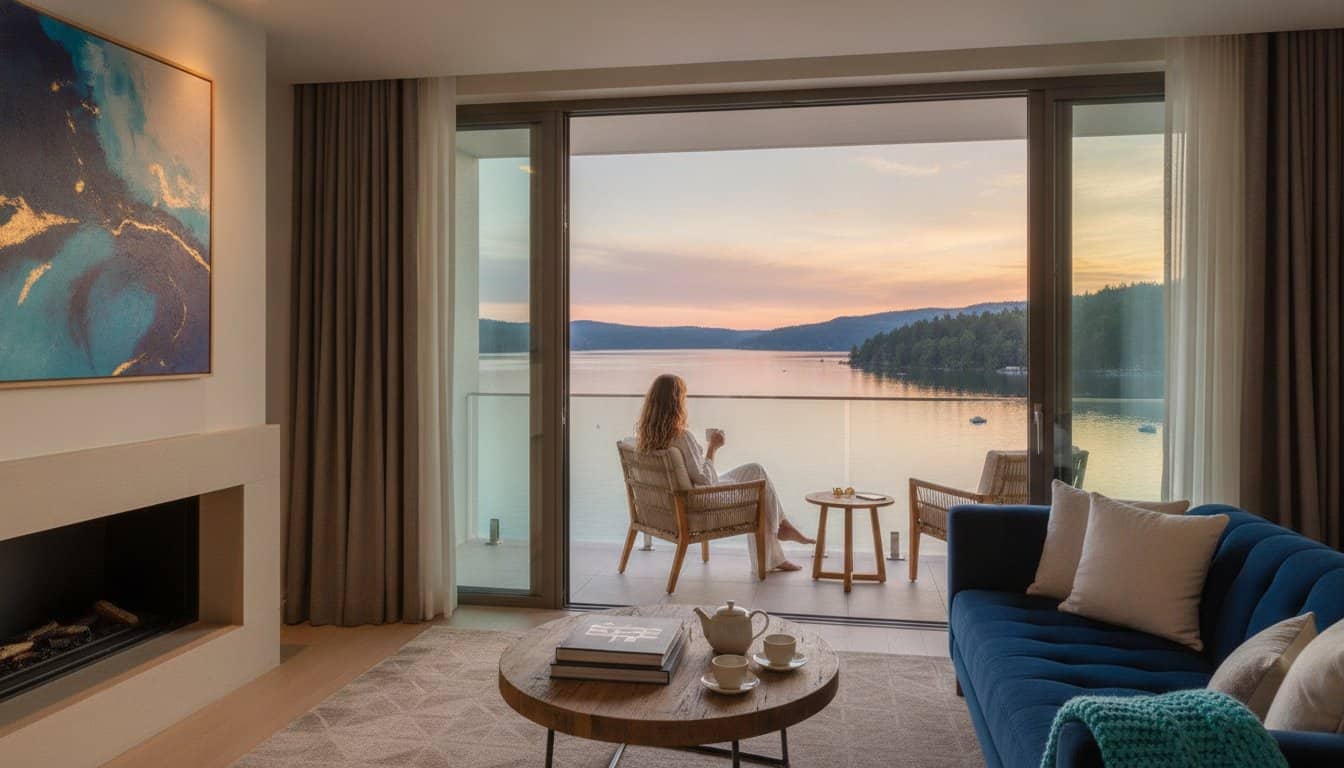
A private balcony or patio extends your living space into the fresh air, offering a personal corner for morning reflection or evening stargazing. Unlike shared hotel terraces, these private perches ensure your connection to nature remains uninterrupted by other guests. Inside, a cozy gas-log fireplace provides a psychological anchor for relaxation. The soft, silent glow offers warmth without the clatter of traditional heating units, creating a meditative focal point for a quiet evening. When you pair this with residential-style furniture, such as plush armchairs and sturdy wooden tables, the suite sheds its sterile hotel identity and begins to feel like a cherished home away from home.
The All-Suite Layout Advantage
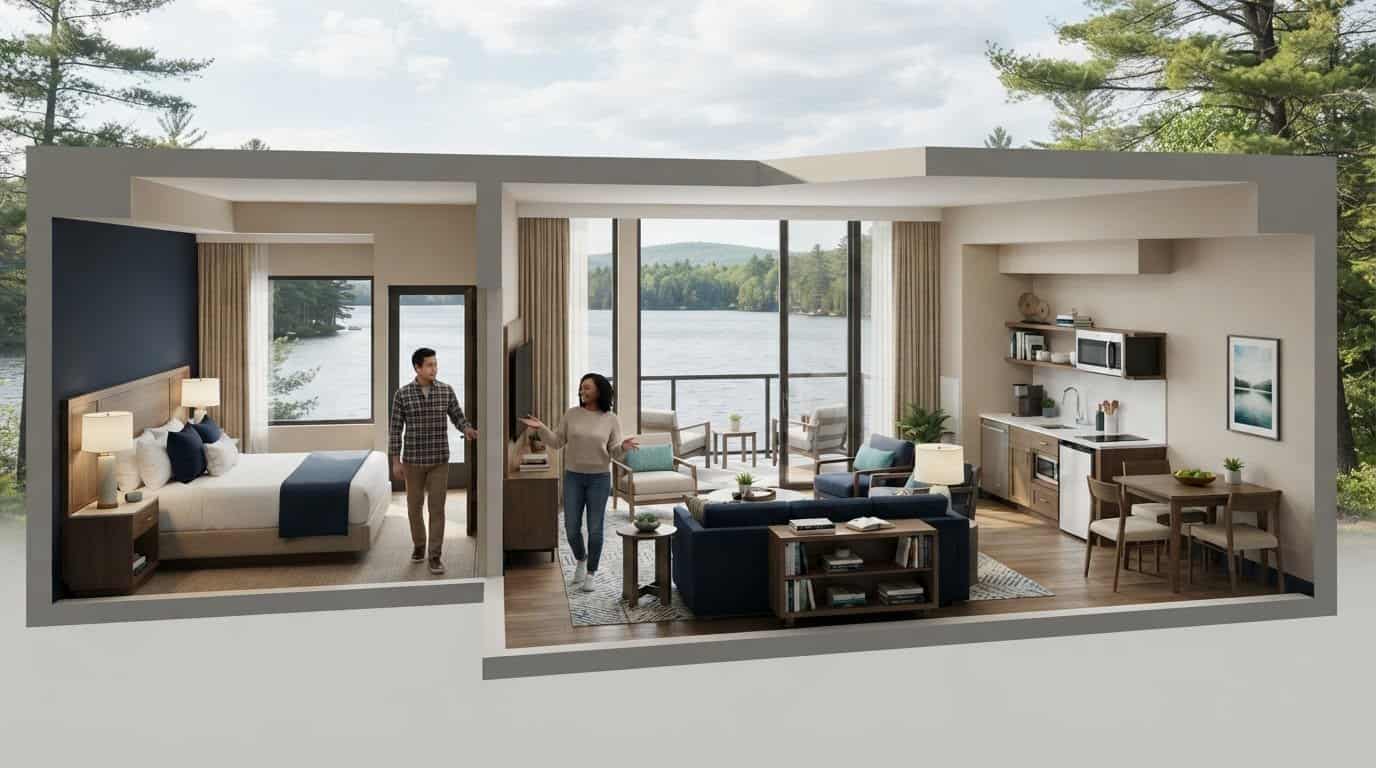
The physical separation of living and sleeping areas is a significant factor in ensuring tranquility. In a standard hotel room, the bed is the only place to relax, which can make the space feel cramped and utilitarian. An all-suite layout provides multiple rooms, creating a natural sound-buffering effect. If one guest is reading in the living area while another rests in the bedroom, the interior walls and doors provide a vital layer of acoustic privacy. This residential flow allows for a more versatile stay where relaxation is not confined to a single mattress.
In-Room Features for Light Sleepers
For those who are easily disturbed, the fine details of a suite make all the difference. High-quality linens and blackout window treatments are essential for maintaining a deep, restorative sleep cycle. Gas fireplaces serve as a silent heat source, avoiding the intrusive mechanical cycles of standard wall units. Additionally, many travelers find that a One Bedroom Suite with a private entry point significantly reduces the ambient noise of a traditional hallway. By bypassing the high-traffic zones of elevators and central corridors, you can maintain your sense of privacy from the moment you arrive.
Evaluating Location and Layout for Maximum Peace
Finding a quiet and relaxing hotel involves more than just checking a map for nearby highways. You must consider how the physical landscape and the orientation of the building itself work together to create a sanctuary. A well-designed property uses its own structure as a shield, positioning guest rooms away from the street and toward natural features. This architectural foresight ensures that the sounds of local commerce stay where they belong, while your private space remains dedicated to rest. It’s about the deliberate placement of every window and balcony to capture the serenity of the environment.
Waterfront Sanctuaries and Natural Buffers
Properties situated directly on a shoreline possess a natural advantage that urban hotels cannot replicate. When a building faces the water, it benefits from a massive natural buffer on at least one side where no traffic, construction, or neighbors can exist. This creates a dead zone for noise, replaced instead by the meditative rhythm of waves or the soft rustle of a breeze over the lake. Choosing a stay with private beach access further enhances this exclusivity, allowing you to enjoy the outdoors without the intrusion of public crowds. From your private balcony, the view of the horizon becomes a visual extension of your quiet interior, anchoring your restorative escape in the beauty of the natural world.
The Balance of Convenience and Seclusion
The most successful retreats offer a delicate balance between being secluded and being isolated. You shouldn’t have to sacrifice the pleasure of exploring the local community to find peace. Look for properties that are set back from main roads yet remain within a comfortable walking distance of local shops and dining. This proximity allows you to engage with the region’s charm at your own pace before retreating to the stillness of your suite. Many travelers find that condominium-style hotels provide a higher level of tranquility because they are often built to owner-level standards, prioritizing thick walls and lasting quality over the rapid turnover of a standard motel. This setup is ideal for enjoying summer activities like lakeside walks while knowing your quiet sanctuary is only a few steps away.
A Checklist for Identifying Your Next Quiet Escape
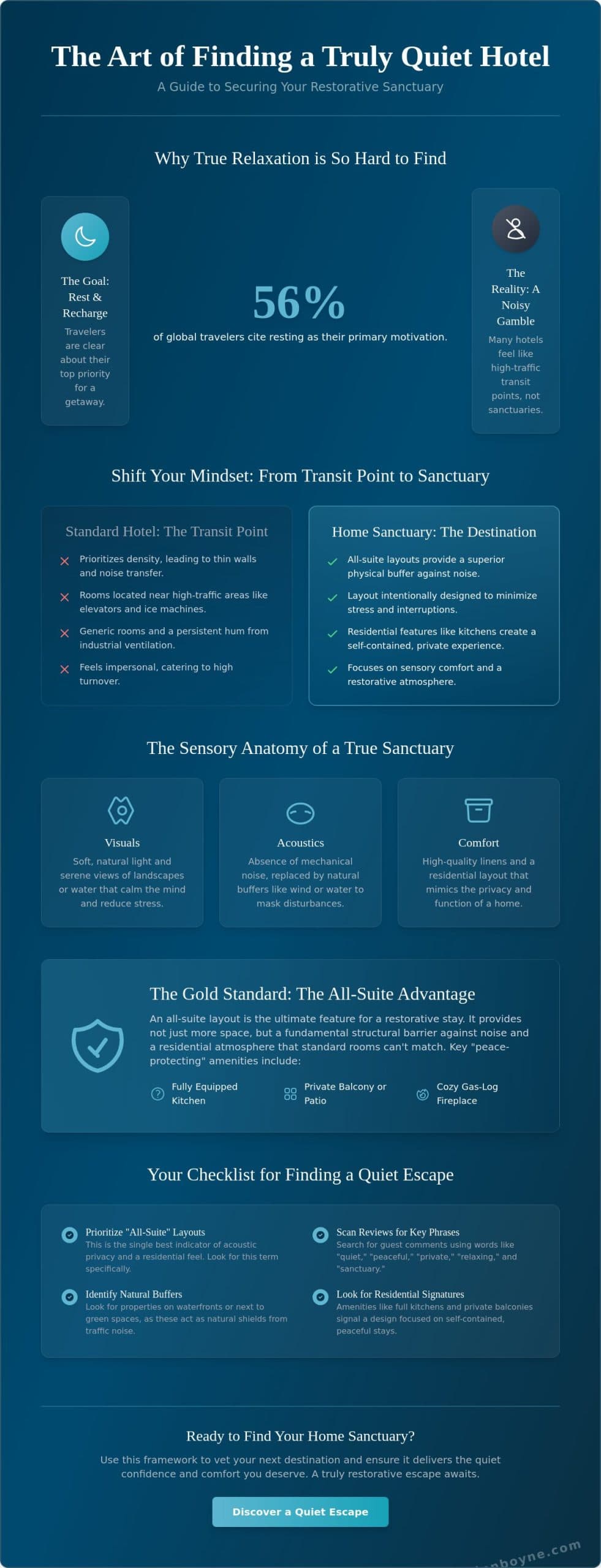
Finding a quiet and relaxing hotel requires a shift in how you evaluate potential stays. Instead of looking at general amenities, you should focus on the specific features that guarantee acoustic and mental privacy. A reliable checklist begins with verifying the layout of the property. Does it offer an all-suite configuration that separates your living and sleeping quarters? Does it include a private balcony or patio that belongs only to you? These residential markers are the first sign that a property is designed for long-term comfort rather than quick turnover. You should also look for private outdoor amenities, such as a private beach or a secluded garden, which provide a dedicated space for reflection away from the bustle of public areas.
Vetting Reviews Like a Pro
Don’t just rely on the overall star rating when finding a quiet and relaxing hotel. Instead, use the search function on review sites to look for specific keywords like serene, sanctuary, or thick walls. These terms are often used by travelers who share your priority for peace. Pay close attention to feedback from light sleepers, as they’re the most likely to notice the subtle sounds of neighboring units or hallway traffic. It’s also wise to check for mentions of the atmosphere during different times of the year. A property might be a vibrant hub for summer activities but transform into a silent, snow-covered retreat during the winter months. This seasonal context helps you choose the right time for your restorative escape, and it ensures your stay aligns with your personal need for peace.
Analyzing Property Photos for Clues
Photos provide a visual map of a property’s commitment to tranquility. When you examine room images, look closely at the balconies to ensure they have solid dividers for true privacy. Shared or open-railing balconies often mean you’ll be hearing your neighbors’ conversations. You should also look for the presence of large, industrial-looking heating and cooling units under windows, which can be quite loud when they cycle on and off. In contrast, the absence of these units suggests a more sophisticated, quiet climate control system. Before you book, it’s also helpful to inquire about how the property manages events. A professional host who offers a wedding venue rental will have clear policies in place to ensure that celebrations remain in designated areas, preserving the peace for guests in their private suites. To see how these peaceful elements come together, you can view our residential suites and begin planning your next quiet escape.
The All-Suite Advantage for a Truly Relaxing Stay
Finding a quiet and relaxing hotel often leads travelers to the realization that layout is the most critical factor in securing peace. While standard hotels focus on room density, the all-suite condominium hotel represents the gold standard for restorative travel. This specific configuration provides a physical and acoustic buffer that a single room simply cannot match. By separating the sleeping area from the living space, these suites ensure that the sounds of a television or a morning coffee routine don’t disturb someone resting in the next room. This residential design allows the property to function as a home away from home, where the rhythm of your stay is dictated by your own needs rather than the schedules of neighboring guests.
The privacy of a One Bedroom Suite is significantly superior to that of a traditional hotel room. In a standard setup, your bed is often only a few feet away from a high-traffic hallway where the sounds of heavy doors and rolling luggage are constant. In an all-suite layout, the bedroom is typically tucked further into the unit, using the living area and full kitchen as a natural sound barrier. This architectural choice transforms the suite into a self-contained sanctuary, allowing you to fully retreat from the outside world without sacrificing comfort or convenience.
Creating Lasting Memories in a Private Space
A private, quiet environment does more than just block noise; it creates a dedicated space for deeper connection with your travel companions. When you have a full kitchen at your disposal, mornings become a slow and intentional experience. You can enjoy a fresh breakfast on your private balcony, watching the light dance across the water, without the need to navigate a crowded lobby. This sense of seclusion continues into the evening, where a gas-log fireplace serves as a meditative focal point for relaxation. These residential features elevate the vacation experience, replacing the sterile atmosphere of a transit point with the warmth and emotional reward of a true sanctuary.
Choosing Your Next Waterfront Sanctuary
When you are ready to plan your next restorative escape, prioritize properties that offer the perfect balance of space and intimacy. Exploring waterfront vacation rentals is often the best way to ensure you have the natural buffers and exclusive views required for total peace. We invite you to discover the serene lifestyle of an all-suite inn, where the beauty of the natural environment meets the high-end quality of a residential stay. Whether you are visiting for summer activities or a quiet winter retreat, choosing a One Bedroom Suite ensures that your stay is defined by tranquility and lasting comfort. By selecting a property that prioritizes your privacy, you secure an experience that truly recharges your spirit.
Secure Your Restorative Sanctuary
Finding a quiet and relaxing hotel is the first step toward a successful health investment that recharges your spirit. By prioritizing all-suite layouts and looking for properties that use natural waterfront buffers to shield you from the world, you can ensure your next trip feels like a true home sanctuary. Remember to vet guest reviews for mentions of residential comfort and to look for amenities that allow you to stay self-contained within your private space. These intentional choices transform a standard vacation into a deeply restorative experience.
Our property is designed with these exact principles in mind. Every unit at our inn is a spacious suite featuring a fully equipped kitchen and a cozy gas-log fireplace for quiet evenings. You can enjoy the meditative beauty of the horizon from your private balcony with lake views or spend exclusive time outdoors with our private beach access. Explore our serene waterfront vacation rentals and find your sanctuary today. We look forward to welcoming you to a stay that leaves a lasting impression of peace and comfort.
Frequently Asked Questions
What makes a hotel room truly soundproof?
A truly soundproof room relies on thick masonry or double-stud wall construction and solid-core entry doors with bottom seals. These physical barriers prevent sound from traveling between units; while double-paned windows block external street noise. You should also check for the absence of connecting doors between rooms. These are often the weakest point for acoustic privacy in a standard hotel setting and can easily compromise your peace.
Are all-suite hotels quieter than traditional hotels?
Yes, all-suite hotels are generally quieter because the multi-room layout creates a natural buffer between the hallway and the sleeping area. In a one bedroom suite, the bedroom is typically set back from the entry door; this significantly reduces the impact of voices or footsteps in the corridor. This residential structure is a key secret to finding a quiet and relaxing hotel that feels like a private home.
How can I tell if a hotel is in a high-traffic area?
You can identify high-traffic areas by examining satellite maps for nearby four-lane highways, hospital flight paths, or clusters of late-night bars. Look for properties located on dead-end streets or those situated within residential neighborhoods rather than busy commercial centers. Checking the distance to the nearest stoplight or major intersection can also reveal if your room might be subject to the sound of idling engines and sirens.
What are the best amenities for a relaxing getaway?
The best amenities for a restorative escape include a fully equipped kitchen, a gas-log fireplace, and high-quality linens. These residential features allow you to remain self-contained in your sanctuary, reducing the stress of navigating public dining spaces. A fireplace provides a silent, meditative heat source, while a kitchen ensures you can enjoy slow mornings at your own pace without the pressure of outside schedules or interruptions.
Is a private balcony worth the extra cost for a quiet stay?
A private balcony is definitely worth the investment because it provides exclusive access to fresh air without the noise of shared public terraces. It serves as a personal outdoor extension of your suite, allowing you to enjoy natural sounds like wind or water in total privacy. A balcony that is properly shielded from neighbors ensures your quiet moments of reflection remain uninterrupted by the presence of others.
How do I find adult-centric hotels for a peaceful experience?
You can find peaceful, adult-centric experiences by searching for properties that market themselves as couples’ retreats or romantic getaways. Check the list of amenities for the absence of family-focused features like playgrounds or splash pads. Properties that offer refined spaces like a wedding venue rental often maintain a more sophisticated and quiet atmosphere that caters specifically to travelers who are seeking a high-quality, restorative stay.
Does a waterfront location actually reduce noise?
A waterfront location provides a significant acoustic advantage because the water acts as a natural buffer on at least one side of the property. This eliminates the possibility of neighbors or traffic in that direction; it replaces industrial sounds with the rhythmic, soothing lap of waves. When you are finding a quiet and relaxing hotel, these natural white noises are highly effective at masking minor disturbances from the surroundings.
What should I ask the front desk before booking to ensure a quiet room?
Ask the front desk for a room that is located away from the elevator, ice machines, and heavy fire doors. Inquire if the unit uses a central quiet climate control system rather than a loud wall-mounted unit under the window. You should also confirm if the property has any large group bookings or events scheduled during your stay that might impact the general noise level of the building.