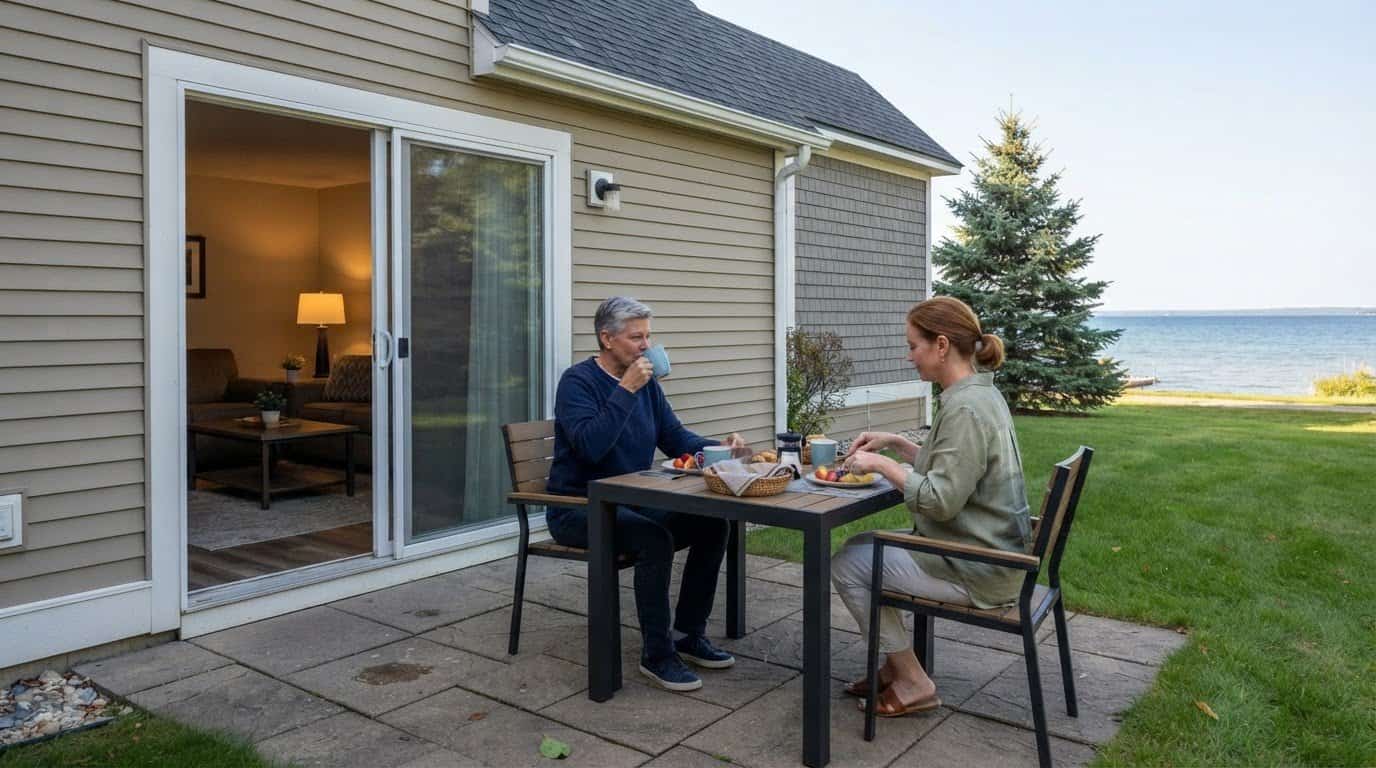
Ground-floor suites with patios make it easy to step from the living space outdoors. A private patio offers a place to unwind, while seating and dining space can make it welcoming for relaxed gatherings. The layout also matters: a direct connection to the suite adds convenience, while screening or planting can help provide privacy.
A patio can be a quiet spot for morning air or evening conversation, and it can extend the living area when family or guests gather. Look for a layout that makes moving between indoors and outdoors simple.
When comparing suites, focus on patio access, privacy, and how you expect to use the space. Room descriptions and photos can show whether the patio connects directly to the suite, what seating is provided, and how the outdoor area relates to the interior.
Key Takeaways
- Match the patio’s layout to how you’ll use it, whether for shared meals, family downtime, or a quieter retreat.
- Look for clear indoor-outdoor access, comfortable shelter, and thoughtful planting to make the patio feel like a natural extension of the suite.
- Compare lodging options by the privacy and outdoor access they provide, then consider which amenities best support your stay.
- A suite with a private patio can pair a more residential feel with a relaxing outdoor setting near Lake Charlevoix.
Outdoor areas for entertaining, privacy, and family use
For entertaining, a patio works best when guests can move easily between conversation, food, and the suite. Outdoor kitchens can combine a built-in grill, prep counter, and dining area, keeping cooking and socializing together. For example, a family hosting dinner can serve food outside while children use a nearby seating area. The result is a shared gathering space with room for different activities.
Privacy calls for a different arrangement. An interior courtyard can create a sheltered, tranquil outdoor area at the center of a home. In this example, the situation is a home where outdoor seating feels exposed; the design response is an enclosed courtyard; the result is a more private place to pause or talk. Planting and screening can also help define the patio’s edge.
For family use, plan clear routes between the living area and patio. A wide glass door makes carrying meals or outdoor toys between spaces easier. In a family suite, the situation may be a busy day with meals, play, and rest happening together; an open patio connection gives each activity room to spread out. Keep dining, seating, and play areas distinct so one use doesn’t crowd another.
Compared with upper-floor suites, ground-floor suites offer direct access to a patio or outdoor area, while a balcony sits above ground level. Choose based on whether stepping outside easily or having an elevated outlook matters more.
Fees and booking terms vary by property and room category. Select the room type that includes patio access, then review its displayed terms before completing your reservation.
A ground-floor location alone does not establish accessibility. Check the route to the patio, the door threshold, the outdoor surface, and the bathroom setup against the guest’s mobility needs.
To book, use the property’s room filters for patio or terrace access, if available, and select the specific room category. Otherwise, search the room descriptions for direct patio access.
There is no single U.S. destination that can be identified as having the most ground-floor suites with patios. Compare individual properties in the destination you are considering, because patio access is typically specified by room type.
Outdoor living spaces
Plan 5 shows how a patio can serve an in-law suite. The situation is a resident who wants convenient outdoor access; the plan uses French doors from the suite to the patio. This direct connection creates an easy transition outside without routing through the main living area. It also gives the suite a distinct relationship to the garden, while preserving a clear path back indoors.
For a home where shared rooms should open onto fresh air, place the living room, dining room, and kitchen along the rear or side. Connect them to a covered patio, deck, or courtyard. This arrangement keeps everyday spaces close to outdoor seating. A covered patio adds shelter while retaining an open-air feel. In a warmer, humid climate, a screened porch offers a breezy sitting area while keeping bugs out.
Privacy can come from the floor plan itself. A courtyard between home wings or a pocket patio off the main floor can create usable outdoor space without expanding the footprint. If a primary suite needs a quieter retreat, give it private access to a deck or screened porch. Each arrangement gives the outdoor area a distinct purpose, from a secluded pause to a place for shared conversation.
Choose features around the way the space will be used. For evening gatherings, an outdoor fireplace can make the patio inviting after sunset. A well-designed front porch can encourage conversation with neighbors. Consider local weather, privacy, and the route from indoor rooms before choosing a layout. House plans can be customized to adjust patios, decks, and courtyards, helping the finished space suit the home’s daily rhythm.
An apartment example shows how materials and planting can give a garden its own character. The apartment’s walled patio garden has terracotta tiles from Bert & May, and a wide glass door connects the apartment to its patio garden. The apartment’s raised garden bed has olive trees, star jasmine, and climbing wisteria. Together, the tiled surface, garden bed, and glass connection bring the patio garden into close relation with the apartment, while its walls define an enclosed outdoor setting. Such details can shape the feel of a patio without changing its basic role as a place to spend time outside.
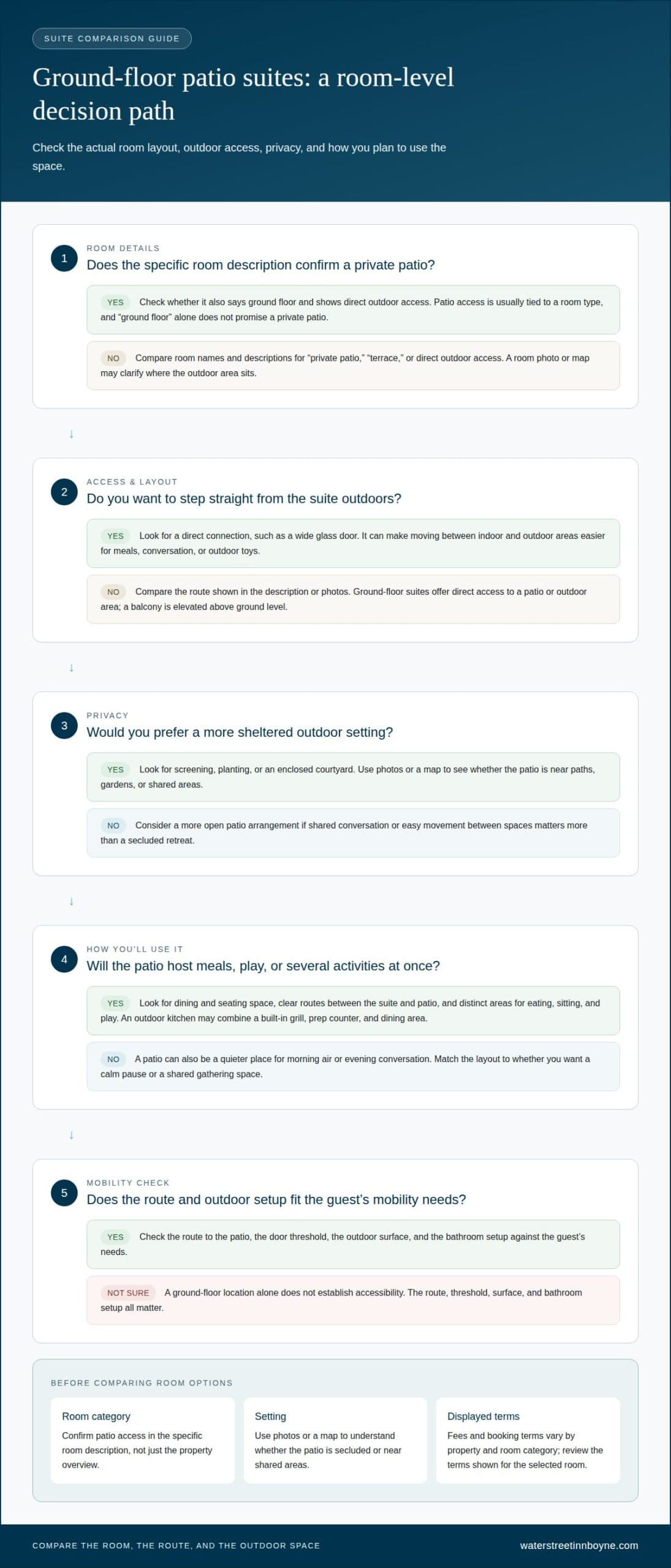
Which hotels and resorts offer ground-floor suites with private patios?
Patio access is usually tied to a specific room type, not a whole hotel. Start with a property’s room descriptions and look for “private patio,” “terrace,” or direct outdoor access. For example, a resort may show a patio beside one suite category, while other rooms open onto balconies. The situation is an appealing property with mixed room layouts; the action is comparing room-level details; the result is a reservation based on the actual outdoor space.
Use the hotel’s own booking page to narrow the choice. Select your dates and guest count, then compare the available room names and descriptions. A listing that says “ground floor” doesn’t necessarily promise a private patio, so look for both features together. If a map or room photo appears, use it to understand the patio’s position near paths, gardens, or shared areas. This helps distinguish a secluded outdoor nook from a more public setting.
Consider the destination experience alongside the room. A lakeside inn, for instance, may suit travelers seeking water views and nearby town amenities; a resort surrounded by gardens may offer a quieter setting. These examples describe different priorities, not a ranked list of properties. First decide whether scenery, walkable dining, or a peaceful retreat matters most. Then compare individual properties for a patio attached directly to the suite.
Before booking, use this quick comparison:
- Confirm the room description explicitly says private patio or terrace.
- Check whether the patio connects directly to the suite or requires a shared route.
- Compare photos for screening, landscaping, and nearby foot traffic.
- Review the room’s stated amenities and cancellation terms before payment.
For example, travelers prioritizing privacy may prefer a patio with screening or planting, while families may value a direct route outdoors. Comparing these details helps you choose a stay that fits your plans without assuming every ground-floor room has the same features.
A two-story beach house plan offers 2,381 square feet of living space. When choosing outdoor living space, consider use, local weather, privacy, and access.
What amenities are typically included in ground-floor patio suites?
A patio suite’s defining feature is direct access to an outdoor area, often through glass doors. Beyond that connection, amenities vary by property and room category. A covered patio offers shelter while keeping guests outdoors, while a screened porch lets in the breeze and keeps bugs out. For example, travelers seeking shade can prioritize covered seating; those who value airflow may prefer screening.
Some layouts make the patio feel like part of the living space. Large glass doors and windows bring in natural light and visually connect the suite with its outdoor setting. In a suite used for quiet evenings, an outdoor fireplace can make the patio more comfortable after sunset. The situation is a cool evening; the feature is a fireplace; the result is a more inviting place to sit outside.
Outdoor cooking features can also shape how guests use the space. An outdoor kitchen may combine a built-in grill, prep counter, and dining area. That arrangement keeps meal preparation and conversation together. Before booking, look at the room description and photos to distinguish a furnished outdoor setup from patio access alone. A listing’s exact amenity details matter more than the room label.
- For fresh-air dining, look for a table or outdoor dining area.
- For cooking outside, check whether the description names a grill and prep counter.
- For shelter, compare a covered patio with a screened porch.
- For a quiet evening, consider whether an outdoor fireplace suits your plans.
For families, the best combination depends on the day’s routine. A dining area supports shared meals, while a separate seating spot gives adults space to unwind. If indoor-outdoor flow is the priority, choose a suite description that clearly identifies glass-door access. These features help you compare ground-floor suites with patios by how you’ll use them, rather than assuming every property includes the same amenities.
Water Street Inn: One Bedroom Suite
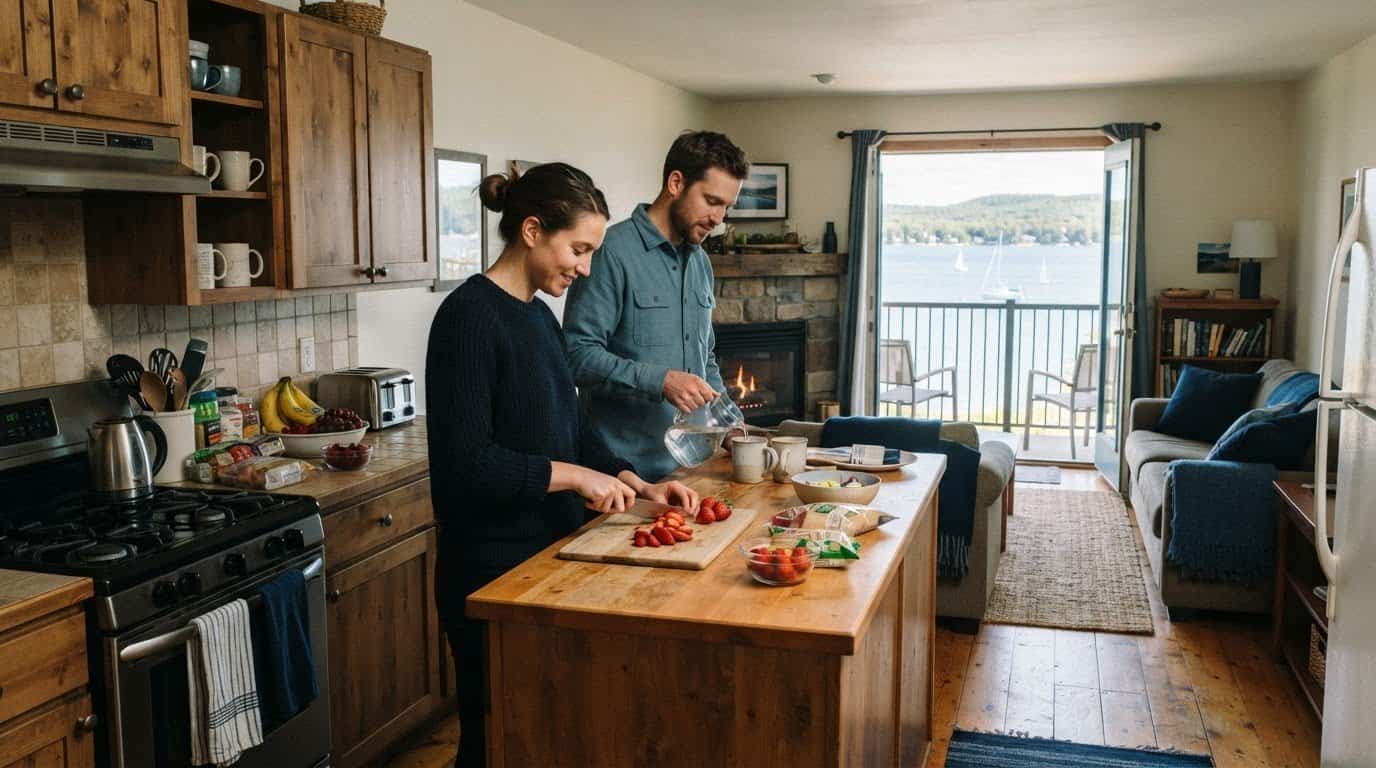
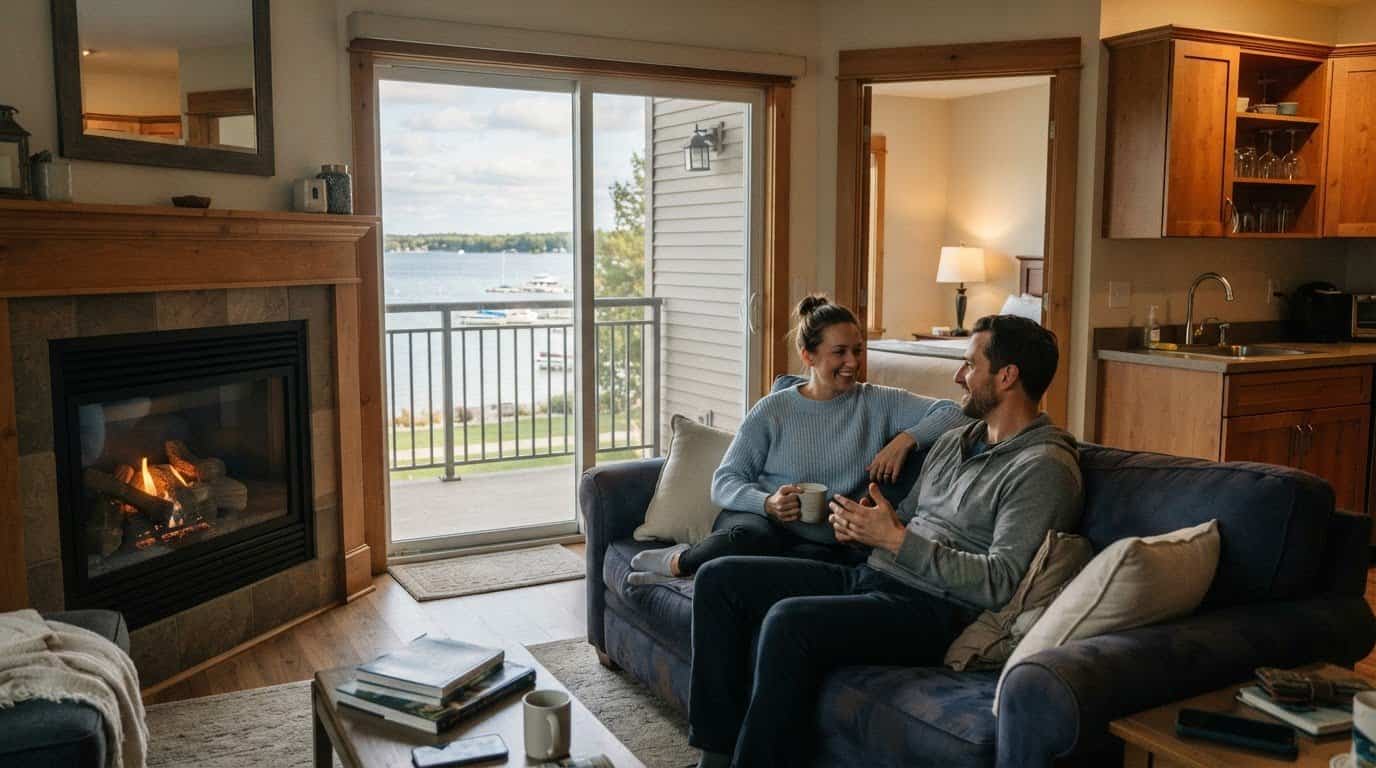
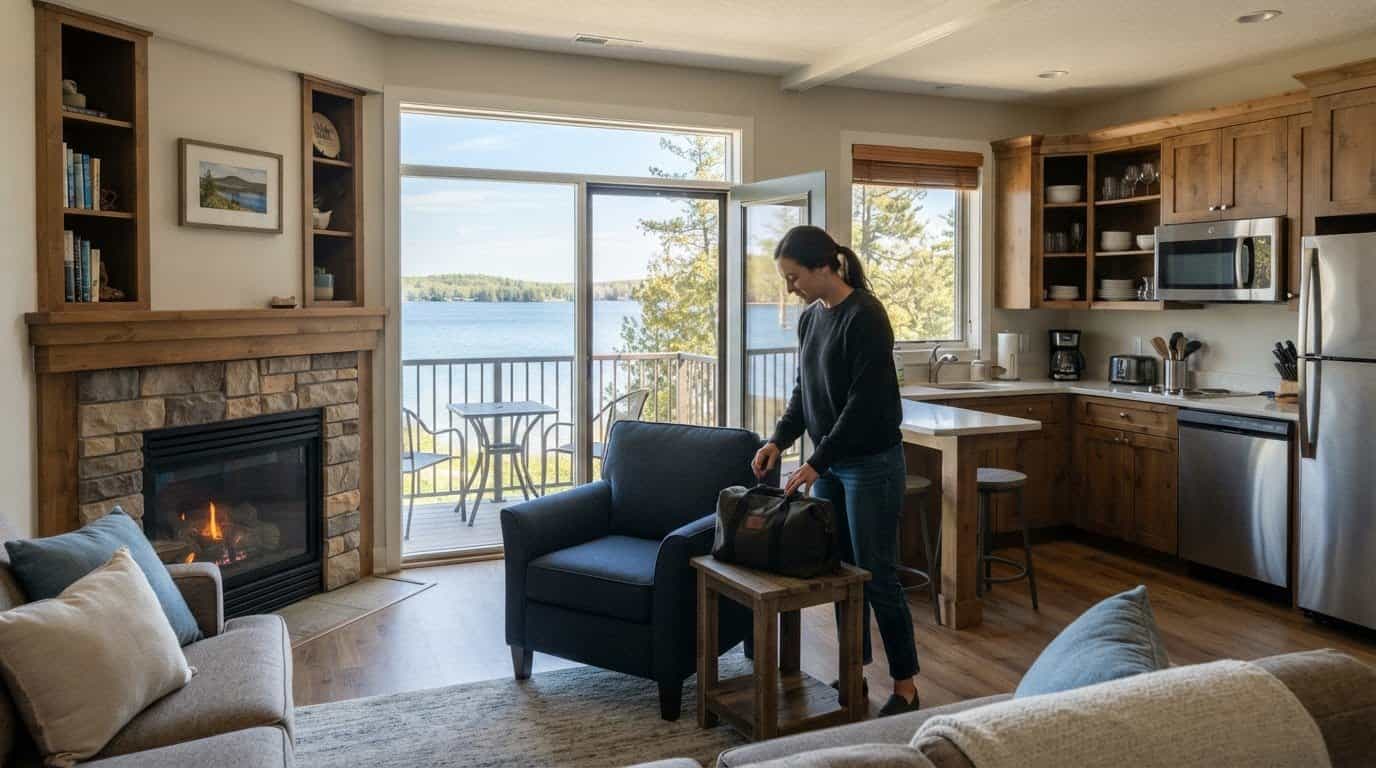
Water Street Inn’s One Bedroom Suite offers a home-like stay in a waterfront setting. Each unit has a private balcony or patio with lake views, a fully equipped kitchen, and a cozy gas-log fireplace. These features suit travelers who appreciate the freedom to prepare meals and unwind beside the water.
Guests also have access to a private beach, with downtown shops, restaurants, and local attractions within walking distance. The One Bedroom Suite offers a comfortable base between outings, with a private balcony or patio for enjoying lake views.
For details, contact Water Street Inn.
Choose a stay that fits the way you want to unwind
Let the moments you want to make room for guide your choice. A quiet morning outdoors, time together after exploring, or a special celebration can each shape what feels right. Water Street Inn also offers Wedding Venue Rental for guests planning an occasion.
Picture how you’ll spend your time and which details would make your stay feel comfortable. Then explore the options that match those priorities. If you’re considering ground-floor suites with patios, Water Street Inn is a thoughtful place to begin planning.
Contact Water Street Inn to take the next step toward a relaxing stay or celebration. A simple plan can open the door to a refreshing change of pace.
Frequently Asked Questions
What are ground-floor suites with patios?
Ground-floor suites with patios are accommodations at ground level with an outdoor area accessed from the suite. Unlike a balcony, a patio sits at or near the surrounding ground, making it easy to step outside. Whether the patio is private or shared depends on the property, so check the room description.
Do ground-floor patios offer privacy, security, and noise protection?
Those qualities depend on the patio’s design and location, not simply its ground-floor position. Screening, planting, walls, or a courtyard can limit views from nearby paths. For security, consider how the patio door locks and whether the space opens onto a shared walkway. Noise can travel from neighboring rooms or common areas, so patio placement and barriers matter. Room descriptions and photos can help you assess these details.