When comparing ground-floor vacation rentals, don’t rely on the ground-floor label alone. It doesn’t tell you whether the route from parking to the suite is step-free or whether the bathroom layout will work for you. The whole journey matters.
It’s understandable to want clear information before booking, especially when a comfortable-looking suite leaves practical access details uncertain. This guide explains how to assess entry routes, thresholds, doorways, bathroom layouts, and room arrangements in light of your mobility needs. It also covers how to weigh privacy and residential-style comforts when traveling with companions.
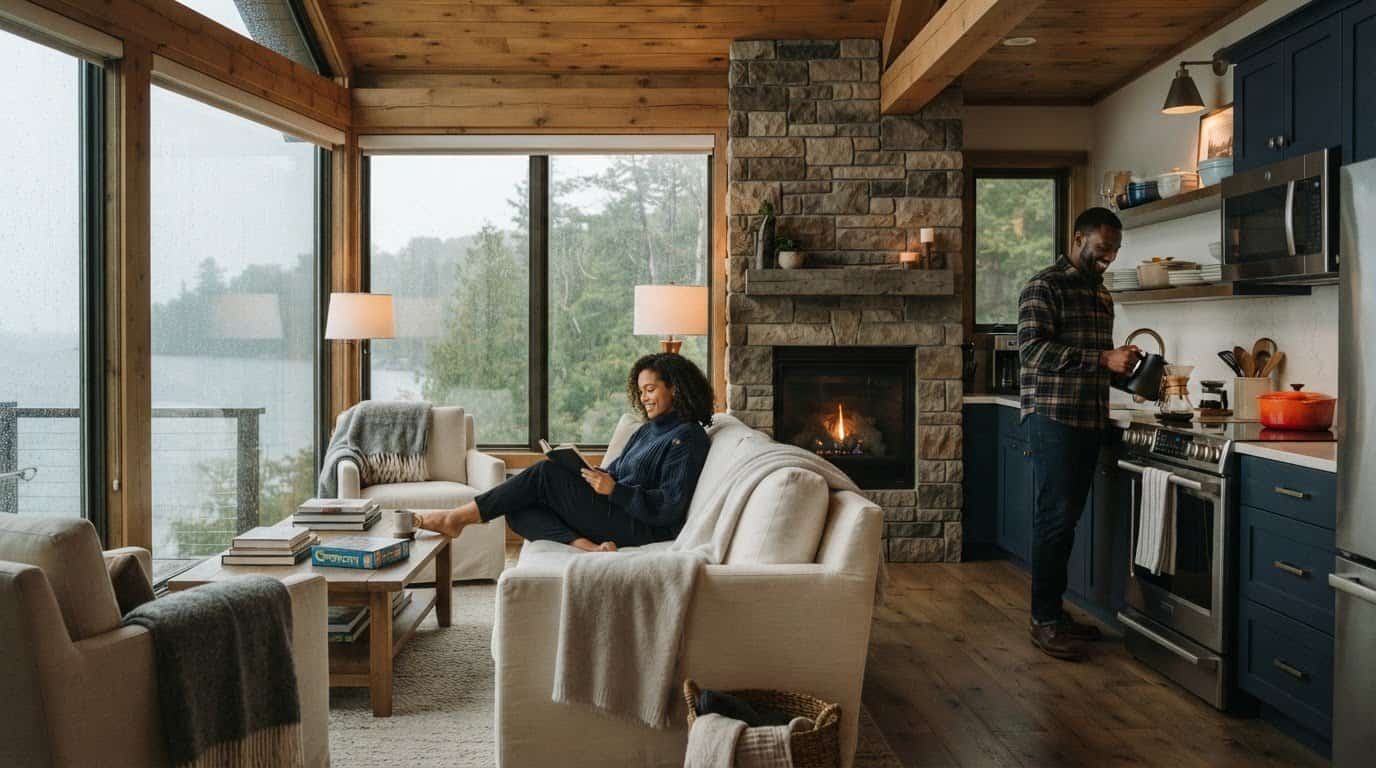
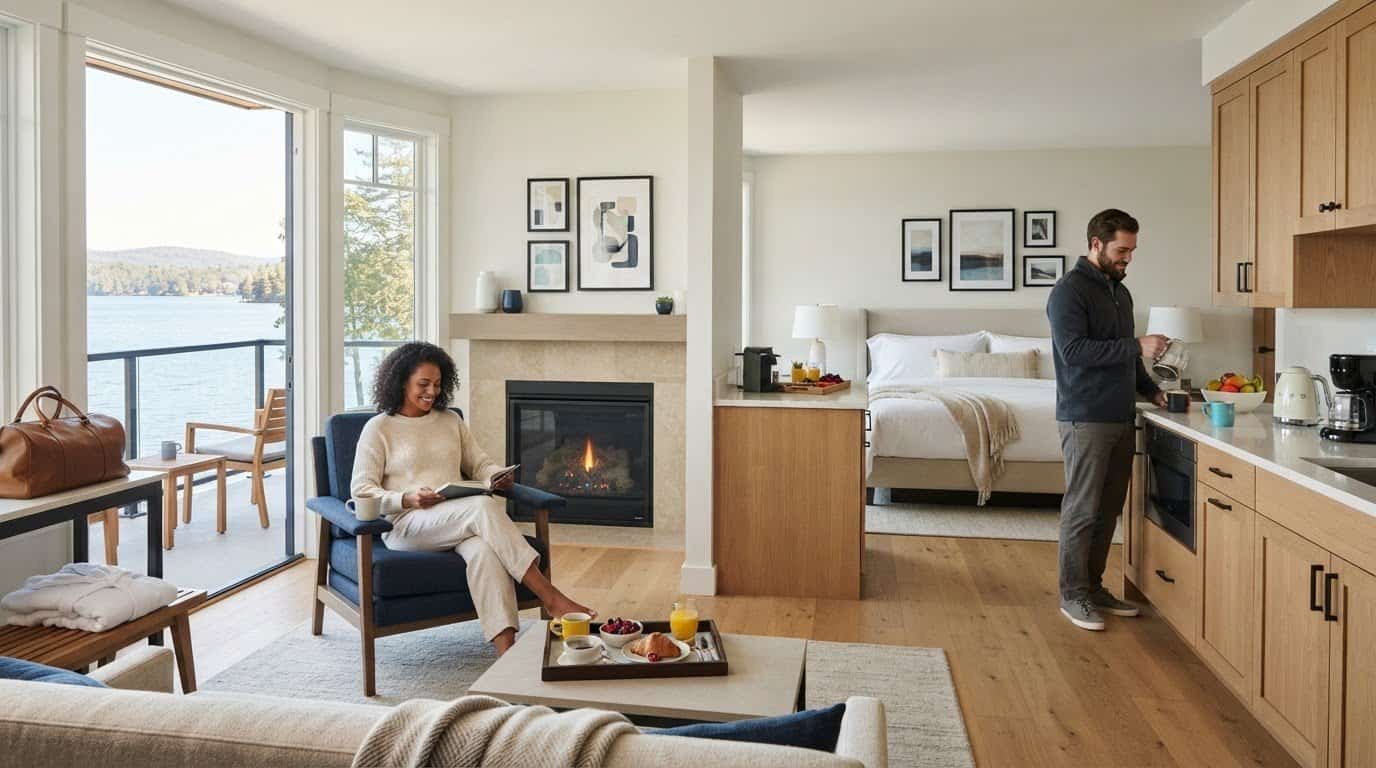
Focus on the details that shape everyday movement through a stay. Water Street Inn offers an all-suite condominium hotel experience, with fully equipped kitchens, gas-log fireplaces, and private balconies or patios. These home-like features can add comfort and independence, but they don’t describe mobility access. The sections ahead provide a consistent way to compare accommodation information and identify the details that matter to your plans.
Key Takeaways
- Treat “ground floor” as a starting point, not proof that the route or suite layout will meet your needs.
- Compare ground floor vacation rentals northern michigan by looking at arrival routes, thresholds, room layouts, kitchen access, and privacy.
- List your essential mobility needs first, then use them to assess accommodation details consistently.
- Consider how suite features such as a fully equipped kitchen, gas-log fireplace, and private balcony or patio may add residential-style comfort.
- Keep access needs and comfort preferences distinct so you can make an informed choice for yourself and your travel companions.
Accessible Hotel Suites: Why a Ground-Floor Label Is Only the Starting Point
A ground-floor suite may remove one possible obstacle, but the label alone doesn’t show how easy it is to reach the room or move around inside it. An accessible suite is one whose features align with a traveler’s specific needs. Since those needs vary, assess the whole stay rather than relying on a room name.
To see how a vacation rental’s rooms and shared spaces fit together, take a look at this virtual tour:
What does ground-floor accommodation tell you?
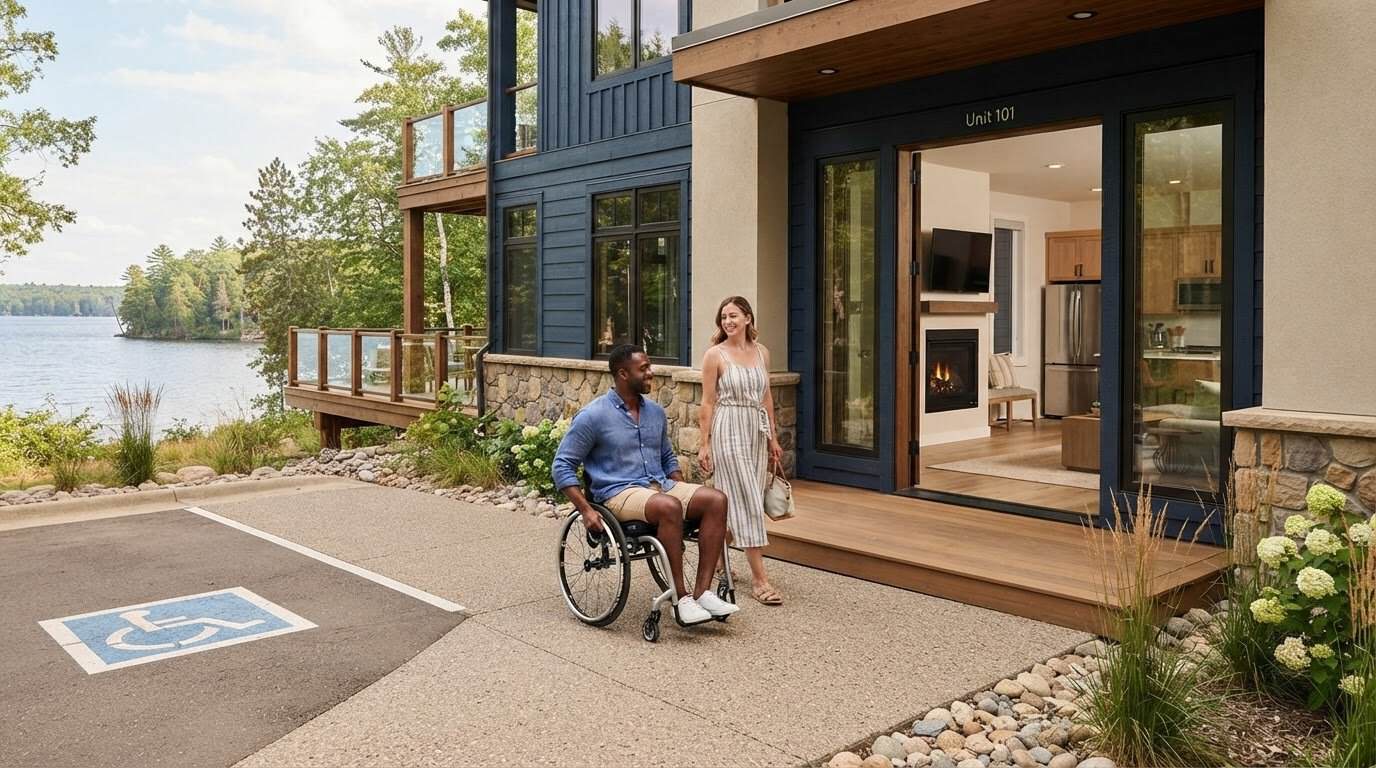
Ground-floor describes a unit’s level, not every entrance or transition on the way to it. The route may begin at a parking space or drop-off point, continue through a shared entrance or hallway, and end at the suite door. A step, raised threshold, or narrow passage anywhere along that path may affect whether it works for you. The label doesn’t confirm that the route is step-free or that the interior has enough room to move comfortably.
Assess access as a connected route, not a single doorway. An easy entrance won’t resolve a tight turn inside the suite, and an open room won’t help if the route to it includes an obstacle you can’t manage. This whole-journey perspective is part of accessible tourism, which considers how travel experiences can meet different access needs.
Which mobility needs should shape the search?
Start with what you or your companions need to move safely and comfortably. Consider whether you use a wheelchair, walker, cane, or other aid; whether balance affects your movement; and whether transfers between a mobility device, bed, or toilet require particular space or support.
Separate essentials from preferences. A step-free route or usable bathroom layout may be non-negotiable, while extra turning space could make the stay more comfortable. Companions may have different needs, so consider how each person will use the suite and shared route. Water Street Inn’s suite accommodations offer residential-style comforts, including fully equipped kitchens and gas-log fireplaces. Those amenities don’t describe mobility access, so assess access needs separately.
How Suite Layouts and Access Details Affect a Comfortable Stay
A comfortable stay depends on more than reaching the suite door. The route, the space inside, and the arrangement of everyday features all influence how easily you can settle in and move through the day. Consider the complete route and room rather than judging one feature in isolation.
Picture an ordinary arrival: getting from a parking space or drop-off point to the entrance, crossing any lobby or shared corridor, using an elevator if the route requires one, and reaching the suite. A ground-floor location doesn’t automatically mean every part of that journey is step-free. Door weight and swing, thresholds, narrow turns, and corridor space can all affect someone using a mobility aid or managing balance.
Map the route from arrival to the suite
Review each transition as part of one continuous path. A small lip at a doorway may be manageable for one traveler but difficult for another. A heavy door may require enough space to position a wheelchair or walker before opening it. Shared spaces matter, too. A clear route through a lobby or hallway can make arrival calmer and reduce the need to maneuver around obstacles.
For a broader perspective on making travel more accessible, consider how details throughout the journey shape the experience, not just the room itself.
Assess the suite around daily routines
Once inside, picture the activities you’ll repeat: getting to and from the bed, reaching switches and storage, preparing something in the kitchen, and using the bathroom. Furniture placement can narrow a route even when the room looks spacious. Review descriptions and images for information about clear floor space, door openings, and the positions of key features. If you use mobility equipment, compare any published measurements with its width and turning needs.
Assess bathroom details separately. Consider the bathroom entrance, space beside the toilet, and whether the bathing arrangement suits your balance, transfer, or seated-use needs. Controls and storage may also need to be within comfortable reach. A tub, shower, grab bar, or other support feature should be considered individually rather than treated as a solution for everyone.
These details can help you compare residential-style suite accommodations against your priorities. Match the features described to your routines and those of your companions, then weigh comfort preferences against essential needs.
Ground-Floor Vacation Rentals vs. Hotel Suites: Compare the Stay, Not Just the Label
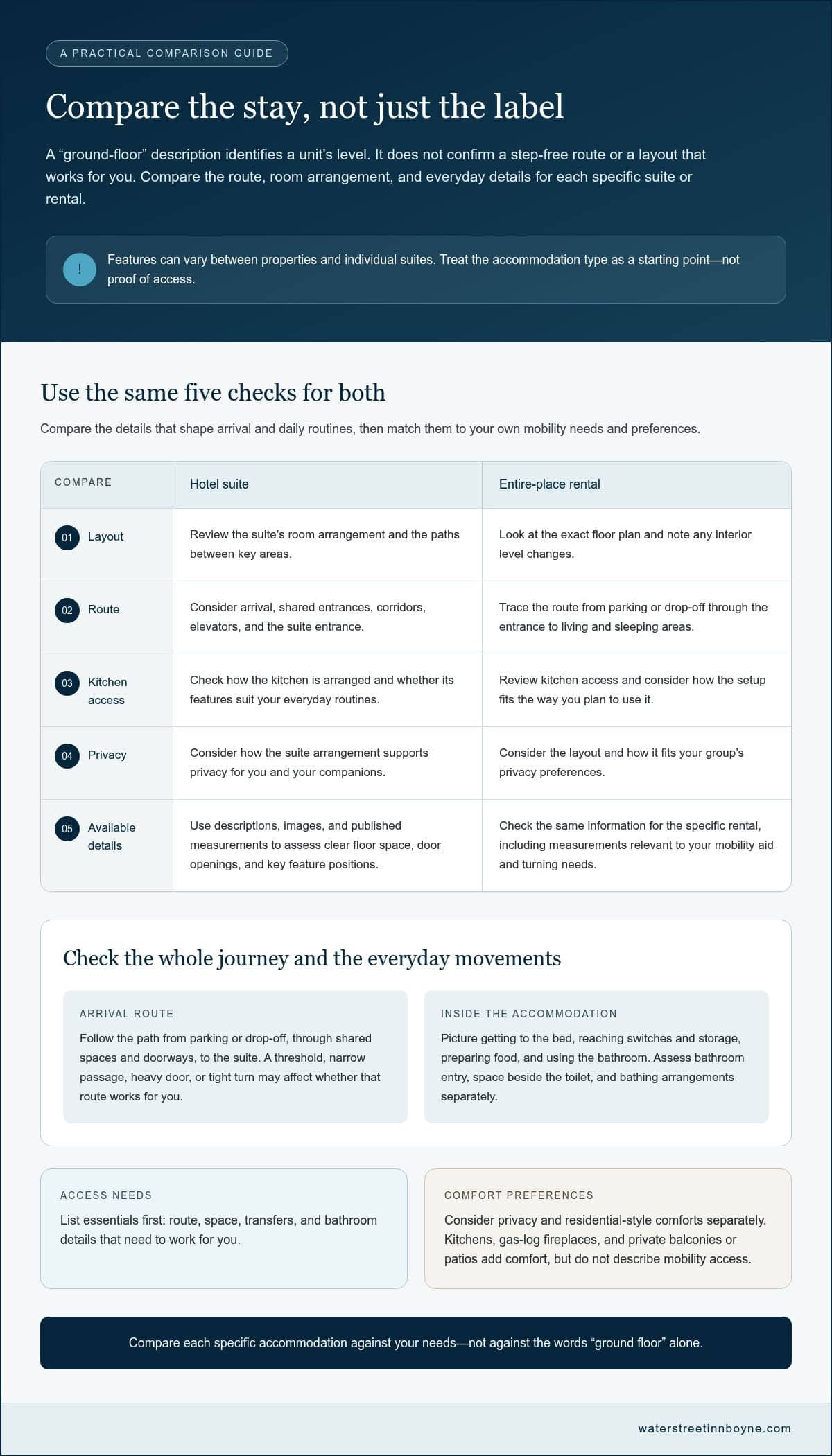
A suite and an entire-place rental can both offer a comfortable base, but their labels don’t tell you how well the layout fits your mobility needs. When comparing ground floor vacation rentals northern michigan with hotel suites, use the same criteria for each: the route, interior layout, kitchen access, privacy, and available details. Features can vary between properties and individual suites.
| What to compare | Hotel suite | Entire-place rental |
|---|---|---|
| Layout | Review the suite’s room arrangement and paths between key areas. | Look at the exact floor plan and any interior level changes. |
| Route | Consider arrival, shared entrances, corridors, elevators, and the suite entrance. | Consider the route from parking or drop-off through the entrance to living and sleeping areas. |
| Kitchen access | Check whether kitchen features suit your routines and reach needs. | Assess the kitchen’s position and usable space within the rental. |
| Privacy | Consider how the suite arrangement works for your group. | Consider whether having the whole place supports your preferred level of privacy. |
| Support information | Review the written details about shared spaces and guest assistance. | Review what the listing explains about access and the stay. |
When might a suite-style stay fit better?
A suite can suit a slower-paced trip when you value a residential-style space and familiar routines. Kitchen access may make it easier to prepare food on your own schedule, while a separate living area can offer room to relax between outings. Water Street Inn is an all-suite condominium hotel with fully equipped kitchens, gas-log fireplaces, and private balconies or patios. These are comforts of the stay, not a statement about mobility access. Explore the suite accommodations as one option to consider.
When might an entire-place rental suit the trip?
A private rental may appeal to travelers who want control over shared spaces or prefer a more self-contained setting. The category alone doesn’t establish whether the entrance, interior transitions, bathroom, or furniture arrangement will work for you. Compare the details available for each property against your priorities. Whether you’re reviewing a rental or a suite, the best fit depends on how its features align with your needs, routines, and travel plans.
Use this same approach to narrow a shortlist of ground floor vacation rentals northern michigan: compare the actual routes and layouts first, then weigh privacy and residential comforts.
A Practical Checklist for Choosing a Suite With Limited Mobility
A useful comparison checklist matches your needs to the features described, helping you assess different suites on the same terms. Start with essentials, then consider comforts that could make the stay more relaxing. This order keeps an appealing amenity from overshadowing something you rely on every day.
Turn personal needs into a short priority list
Write down what you and your companions need to move through the stay comfortably. Be specific: note mobility equipment dimensions, whether you need a step-free route, how much room you need beside the bed, and any transfer or support considerations. Separate non-negotiables from preferences such as extra open floor space or a particular room arrangement.
Compare the written details with the whole itinerary
Use the same four steps for each option:
- List needs. Record essential access features first, then add comfort preferences and any companion support needs.
- Map the route. Follow the journey from parking or drop-off through entrances and shared spaces to the suite. Include thresholds, doors, corridors, and any changes in level.
- Compare room details. Review the layout, bathroom information, kitchen access, and space around the bed and furnishings. Match published measurements to your equipment when available.
- Review the full stay. Consider how the route and suite fit your itinerary, including whether you expect to spend much of the day inside or head out frequently.
Descriptions and photos can help you understand room arrangements, but an image can’t establish a doorway’s width, a threshold’s height, or the space available to turn. Treat photos as context, not measurements. Give more weight to specific written details, and note which essentials are clearly described as you compare options.
Your itinerary matters, too. A kitchen may be especially useful if you plan quiet mornings or flexible meal times in the suite, while the route between the room and planned activities may matter more on a day with frequent outings. Consider both rather than judging the suite by one feature.
For an example of residential-style suite accommodation, explore Water Street Inn vacation rentals, with fully equipped kitchens, gas-log fireplaces, and private balconies or patios. Use your priority list to weigh these comforts alongside the details most important to your stay.
A Restful Suite Stay: What Water Street Inn Brings to the Experience
After weighing route details and room layouts against your priorities, consider which comforts would help you settle in. A residential-style suite can offer a welcome change from a standard hotel room, with familiar amenities that let you set your own pace. At Water Street Inn, each unit features a fully equipped kitchen, a gas-log fireplace, and a private balcony or patio.
How suite comforts can support a more settled stay
A fully equipped kitchen can help you keep familiar routines while traveling. You can prepare a simple meal or snack in your suite and choose timing that suits your day, rather than planning every meal around an outing. That flexibility may be welcome on a quiet morning or after returning from a full day away.
In the evening, a gas-log fireplace adds a warm residential touch to time spent indoors. A private balcony or patio offers another place to pause, enjoy fresh air, or unwind between plans. These features contribute to the character and comfort of a stay; they don’t describe the route, measurements, or mobility features of a suite.
Plan a stay around comfort and personal priorities
Let your access requirements guide your accommodation decision, then consider which comforts would make the visit feel restful. A kitchen, fireplace, or outdoor space can be appealing, but weigh each alongside the route, layout, and other details that matter to you and your travel companions. Individual needs differ, and residential-style lodging is most useful when its features fit the way you like to spend your time.
Water Street Inn is an all-suite condominium hotel with a home-like setting, private beach access, and residential comforts. The suite amenities can help shape a relaxed stay, while comparing access details against your own priorities keeps expectations grounded.
For a closer look at the residential-style experience, explore Water Street Inn vacation rentals and start planning a restful stay around the details that matter to you.
Choose a Stay That Fits Your Priorities
A ground-floor label alone can’t tell you whether the full route or suite layout will work for your mobility needs. Compare the journey from arrival to the room, then consider doorways, thresholds, bathroom details, and the space you need for everyday routines. Matching described features to your priorities can help you weigh access needs alongside privacy and comfort.
Water Street Inn offers a residential-style experience in an all-suite condominium hotel. Fully equipped kitchens can support familiar meal routines, gas-log fireplaces add a welcoming touch indoors, and each unit includes a private balcony or patio. These comforts help shape the stay, while access considerations remain personal and distinct.
Ready to explore a suite stay with home-like comforts? Explore Water Street Inn and picture a restful getaway shaped around the details that matter to you.
Frequently Asked Questions
Is a ground-floor vacation rental automatically accessible?
No. “Ground-floor” identifies a unit’s level, but it doesn’t describe the full route or interior. Consider how you’ll get from parking or drop-off through entrances and shared spaces to the suite, then assess thresholds, doorways, room circulation, and bathroom layout. The relevant details depend on your needs. Base your comparison on specific information about the stay rather than assuming the label guarantees a particular access experience.
What should I look for in an accessible hotel suite?
Start with the features that matter to your mobility needs, then trace the route from arrival to the suite. Review entrance transitions, doorway clearance, room layout, bathroom arrangement, reachable controls, and space for any mobility equipment. Use your own routine as a guide: think about getting to the bed, using the bathroom, and moving through the room. Compare described details with your requirements, since travelers don’t all need the same features.
Can a hotel suite work well for someone who uses a wheelchair?
Yes, if the specific route and suite features fit the traveler’s wheelchair and daily routines. Consider entrances and thresholds, corridor and doorway clearance, turning space, bathroom access, and furniture placement. A ground-floor description or suite category alone can’t establish whether a particular layout will work. Comparing available measurements and room details with the wheelchair’s dimensions and the traveler’s movement needs can help clarify whether the arrangement is suitable.
How do I compare a ground-floor rental with a hotel suite?
Compare the actual stay, not the accommodation labels. Look at the route from arrival, the room and bathroom layouts, privacy, kitchen access, and the details provided about shared spaces or support. Then weigh those features against your mobility needs, your companions’ needs, and your travel plans. A rental may offer privacy, while a suite may offer residential comforts, but neither format is automatically the better fit for every traveler.
What details matter most when booking accommodation with limited mobility?
Prioritize details that affect everyday routines: the route to the entrance, thresholds, doorways, circulation space, bathroom arrangement, and reachable controls. Include mobility equipment dimensions if relevant, and consider any support your companions may need. Write down essential features separately from optional comforts. This makes it easier to compare descriptions consistently and spot when an important detail, such as bathroom access, isn’t addressed.
Are suite-style vacation rentals a good choice for limited mobility?
They can be a comfortable option when the particular suite’s layout and features suit the traveler. A residential-style stay may provide a kitchen for familiar meal routines and a separate place to relax, but those comforts don’t establish accessibility. Water Street Inn is an all-suite condominium hotel with fully equipped kitchens, gas-log fireplaces, and private balconies or patios. Assess access details separately, then consider which amenities support your preferred pace of travel.