Your wedding date can shape venue costs as much as the space itself. If you’re learning how to save money on a wedding venue, consider a weekday or Sunday instead of Saturday, or look at late fall, winter, and early spring dates outside peak wedding season. Venues generally charge less for these dates, so flexibility can open up more room in your budget.
It’s understandable to want a celebration that feels welcoming and memorable without spending more than necessary. Choosing a thoughtful date is a strong start, but it’s only part of the picture. This guide explains how to compare dates, review rates and inclusions, set a guest-list limit, and choose a venue that needs less added décor, so you can make confident decisions while keeping the feel of your day in view.
Key Takeaways
- Look beyond a venue’s starting rate by weighing included services against the separate costs of rentals and add-ons.
- Set a guest-list limit early; a smaller celebration can reduce per-person expenses and widen your venue options.
- Choose a naturally beautiful setting to let the surroundings do more of the decorating.
- Consider Water Street Inn’s Wedding Venue Rental when exploring a setting for your celebration.
1. Booking during the off-season or on a weekday
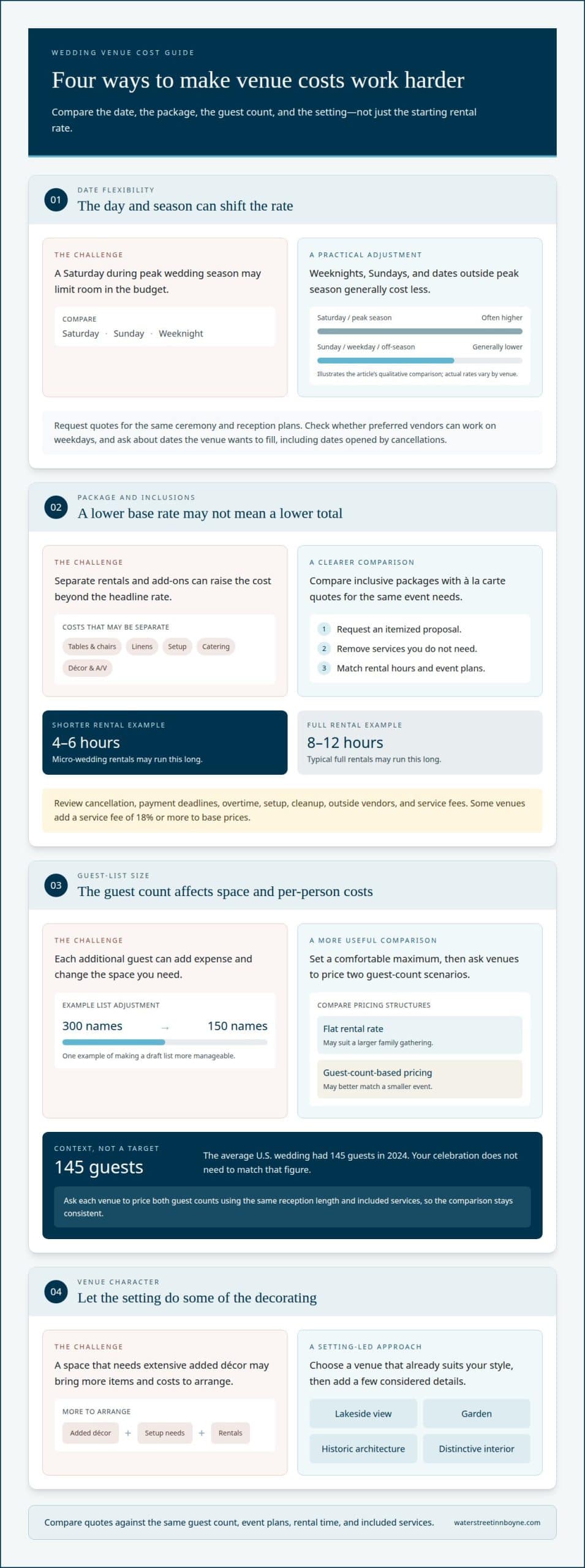
Your date can affect a venue’s rental rate before you change the guest list or décor. Wedding venues generally charge less for weeknight and Sunday weddings than for Saturday celebrations. Dates outside a venue’s peak wedding season may cost less. If you’re deciding how to save money on a wedding venue, compare a Saturday, Sunday, and weekday in the same season. This helps show whether the difference comes from the day, the season, or both.
Make a shortlist of possible dates before contacting venues. Include off-season options, Sundays, and weeknights, then request quotes for the same ceremony and reception plans. To learn how to save money on a wedding venue, compare each rental’s inclusions as well as its rate. A lower-rate date may suit an intimate celebration, while a Saturday may better fit guests’ travel plans. Consider whether your preferred photographer and other vendors can work on weekdays.
A flexible timeline can create another opportunity. Couples may find value in dates a venue wants to fill, including dates that have opened up after a cancellation. This approach works best when you can adapt your ceremony plans and guest list to the date offered.
Restaurants, parks, community halls, and private homes can cost less to rent, but the total depends on what the rental includes and what you must arrange separately. Compare the space, furniture, setup, and event requirements before deciding.
For outdoor venues, permit requirements, insurance terms, and noise restrictions depend on the location and site. Factor these into your comparison before choosing a ceremony date.
There’s no single U.S. average that describes every wedding venue. Location, season, day, and included services all affect rental costs. To find affordable venues in your area, search with flexible dates, then compare quotes based on the same guest count and event plans.
2. Negotiating venue rates and package inclusions
A package’s headline rate doesn’t reveal the full cost of hosting your wedding. Compare inclusive packages with à la carte quotes, listing catering, setup, tables, chairs, linens, décor, and audio-visual equipment. Bundled services may cost less than arranging each separately, but a lower base rate can rise once rentals and add-ons are included. Compare the same event needs across every quote.
Request an itemized proposal for your chosen date and guest count. Identify services you don’t need, such as a décor option that doesn’t fit your plans. If a Sunday or another less-requested date works for you, use it as a starting point to discuss the rate or package inclusions. Focus on specific changes, such as removing an unwanted service or adjusting the rental period.
Match the rental length to your schedule. Micro-wedding rentals may run 4-6 hours, compared with typical full rentals of 8-12 hours. A shorter booking can fit a ceremony and reception with a compact timeline, while a longer event may need added access for setup and cleanup. Ask how the package defines event hours and whether those tasks fall inside the rental period.
All-inclusive venues often serve larger weddings of 100 or more guests, while a smaller celebration may not need every bundled service. Compare each inclusive option with an à la carte plan that covers the same catering, setup, and equipment. The better value depends on which services you’ll use, not simply on whether the package is labeled inclusive.
Before booking, read clauses covering cancellation, payment deadlines, overtime, setup, cleanup, outside vendors, and automatic gratuity or service fees. Some venues add a service fee of eighteen percent or more to base prices, so account for it when comparing proposals. For a property-specific look at event spaces, explore wedding venue details.
3. Reducing costs by limiting the guest list
Each additional guest can increase wedding expenses, so set a comfortable maximum before choosing a venue. A smaller celebration can lower catering costs and make more affordable spaces practical. It may also change the layout you need, from a large dining room to a more intimate setting. Start with the people you most want beside you, then decide whether each possible addition fits your budget.
Use a clear rule to trim the list. For example, separate essential guests from people you’d invite only if space and budget allow. If your first draft has 300 names, reducing it to 150 is one way to make the event more manageable. The average wedding had 145 guests in 2024, but that figure is context, not a target your celebration must match.
Guest count and reception length both affect venue costs. A smaller group may need less space and fewer per-person services, while a shorter reception may fit a shorter rental period. Compare quotes using the same guest count and event schedule, so the differences reflect the pricing model rather than changing assumptions.
Ask whether the venue charges a flat rental rate or bases costs on guest count. A flat-rate venue can save couples with large families thousands of dollars compared with guest-count-based pricing. For a smaller gathering, per-person pricing may better match the scale of the event. The more guests you invite, the more carefully you should compare those two structures.
Before finalizing the list, make a simple estimate with two guest counts, such as 60 people and your current draft. Ask each venue to price both scenarios using the same reception length and included services. This reveals how guest count affects the rental and related expenses without confusing those changes with package differences.
Keep your celebration’s priorities in view. A shorter guest list can leave room in the budget for details that matter more to you, while a flat-rate space may suit a larger family gathering. Choose the balance that feels right for your guests and plans.
4. Reducing decor needs with an attractive setting
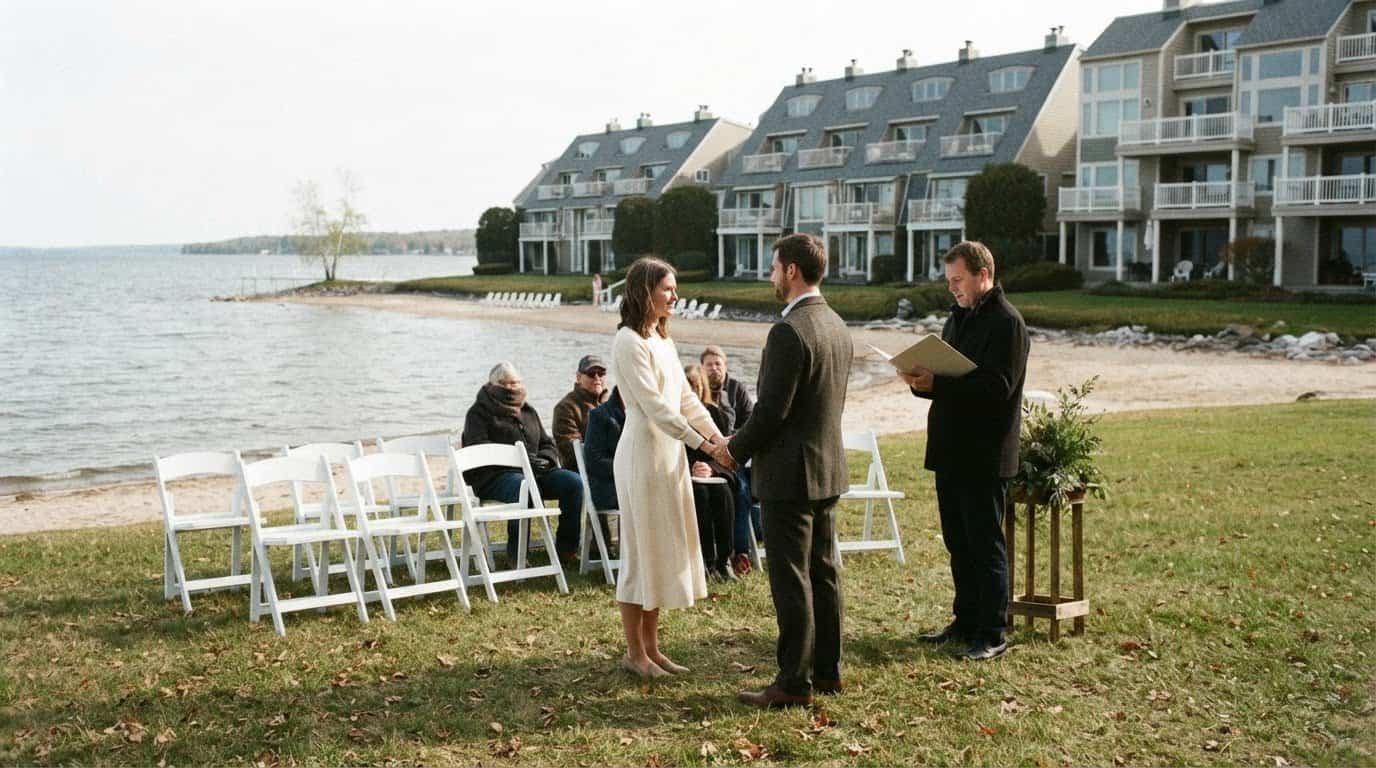
A venue’s existing character can do some of the decorating for you. A lakeside view, garden, historic architecture, or distinctive interior can provide a natural focal point for the reception. Choose a setting that already suits your style, then add a few considered details instead of covering every surface with décor.
During a site visit, look at the ceremony area and reception space in daylight and evening lighting. Notice which features guests will see first, such as a waterfront view, mature trees, or a striking entrance. Then identify where decorations would make a difference, such as a simple centerpiece or flowers near the ceremony area. This keeps purchases focused on visible needs.
Ask for an itemized list of amenities and décor included with the rental. Tables, chairs, linens, lighting, and setup support can affect what you need to source separately. Compare the list with your plans before booking, and remove duplicate rentals from your décor budget. Attractive furnishings don’t necessarily mean they’re included, so check the specific inclusions to see what your vendor still needs to provide.
Make a short visual plan for each space. Mark the ceremony backdrop, guest tables, and entrance, then choose one or two areas for extra attention. This gives your florist or décor vendor clear direction and helps avoid ordering pieces that may go unnoticed. If the venue already has a distinctive interior, choose colors that work with its furnishings.
Natural beauty can also guide practical choices. A garden ceremony may need little backdrop dressing, while an indoor reception with neutral walls may benefit from focused table details. Ask how setup and removal fit into the rental arrangements, and include those tasks in your vendor plan. A setting that feels complete on its own can reduce the décor you need to coordinate, transport, and clear away.
Water Street Inn: Wedding Venue Rental
Water Street Inn offers Wedding Venue Rental for couples seeking a celebration in a serene waterfront setting. The natural scenery can complement the occasion and suit couples who prefer a relaxed atmosphere with simple décor. Consider the venue as you shape the style and priorities for your celebration.
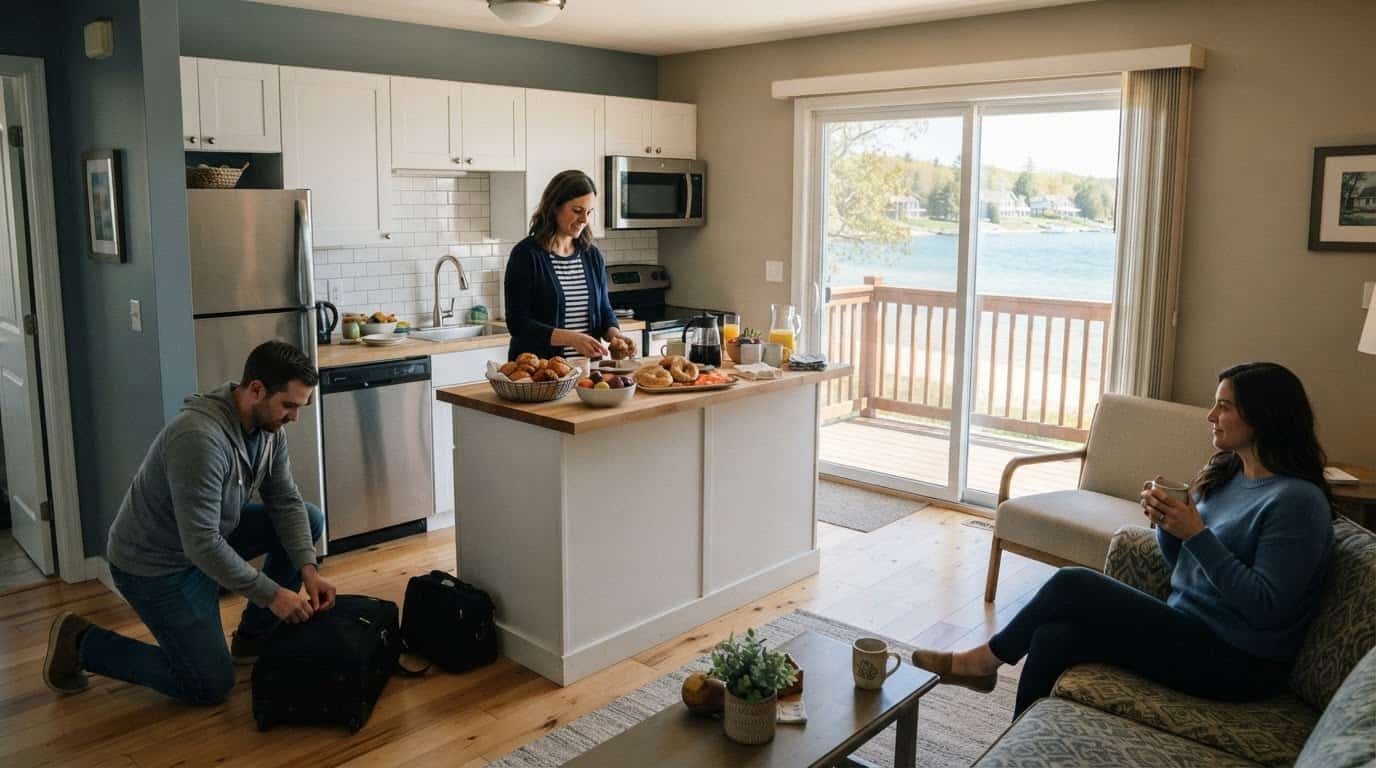
A One Bedroom Suite is also available for a comfortable stay as part of your plans. Its private balcony or patio, kitchen, and fireplace offer home-like comforts during your visit.
For details about Wedding Venue Rental, contact Water Street Inn.
Make Your Next Planning Decision With Confidence
Let your priorities guide your next step. Decide what matters most, whether it’s a particular atmosphere, a relaxed guest experience, or room in the budget for other parts of the day. Then choose one practical trade-off you’re comfortable making. That clear direction can make how to save money on a wedding venue feel less like cutting meaningful details and more like shaping a celebration around what you value.
Before moving forward, write down the parts of your wedding day you want to protect and where you can stay flexible. A short list can keep future decisions aligned and make conversations about your plans more focused. Your celebration should feel like yours, with thoughtful choices supporting both the experience and your budget.
For a natural next step, contact Water Street Inn today to discuss your wedding plans. A considered beginning can make the journey ahead feel a little easier.
Frequently Asked Questions
What wedding venue costs are included in the rental fee, and what costs are extra?
The rental fee may cover the space and specified furnishings, while catering, décor, linens, audio-visual equipment, setup, or overtime may cost extra. The written proposal defines what’s included. Ask for an itemized breakdown of included services, optional add-ons, and charges for extra access or cleanup. For example, clarify whether listed tables include delivery and placement or simply use of the furniture.
When are wedding venues cheapest to book, including off-season and weekday rates?
Late fall, winter, and early spring dates, along with weekdays and Sundays, are generally lower-rate options than Saturdays. Local demand and the venue calendar affect which dates offer the best value. Request quotes for the same event plan on a Saturday, Sunday, and weekday, then compare rates and inclusions. A weekday date may also affect vendor schedules and guests’ travel plans.
How much can couples save by choosing a weekday or off-season wedding date?
Savings equal the difference between comparable quotes for your preferred date and a weekday or off-season date. Compare the same rental hours, guest count, and included services, then account for add-ons and fees in each total. This gives you a date-based estimate for your plans. A lower headline rate alone may not show the full difference if one quote includes more services.
How can couples negotiate wedding venue prices and fees?
Start with an itemized quote and identify specific changes that would make the proposal fit your plans. Ask whether removing an unused service or adjusting access time changes the package. If your date is flexible, ask about dates the venue is looking to fill. Put any agreed changes, inclusions, and fees in the written contract before signing.
What are the pros and cons of all-inclusive wedding venues versus renting a space separately?
An all-inclusive package can simplify planning by coordinating services such as catering, décor, and setup, and bundled services may offer better rates. The trade-off is paying for inclusions you may not need. Renting a space separately gives you more choice over vendors and details, but requires coordinating each service. Compare packages with an à la carte plan based on the same event needs.