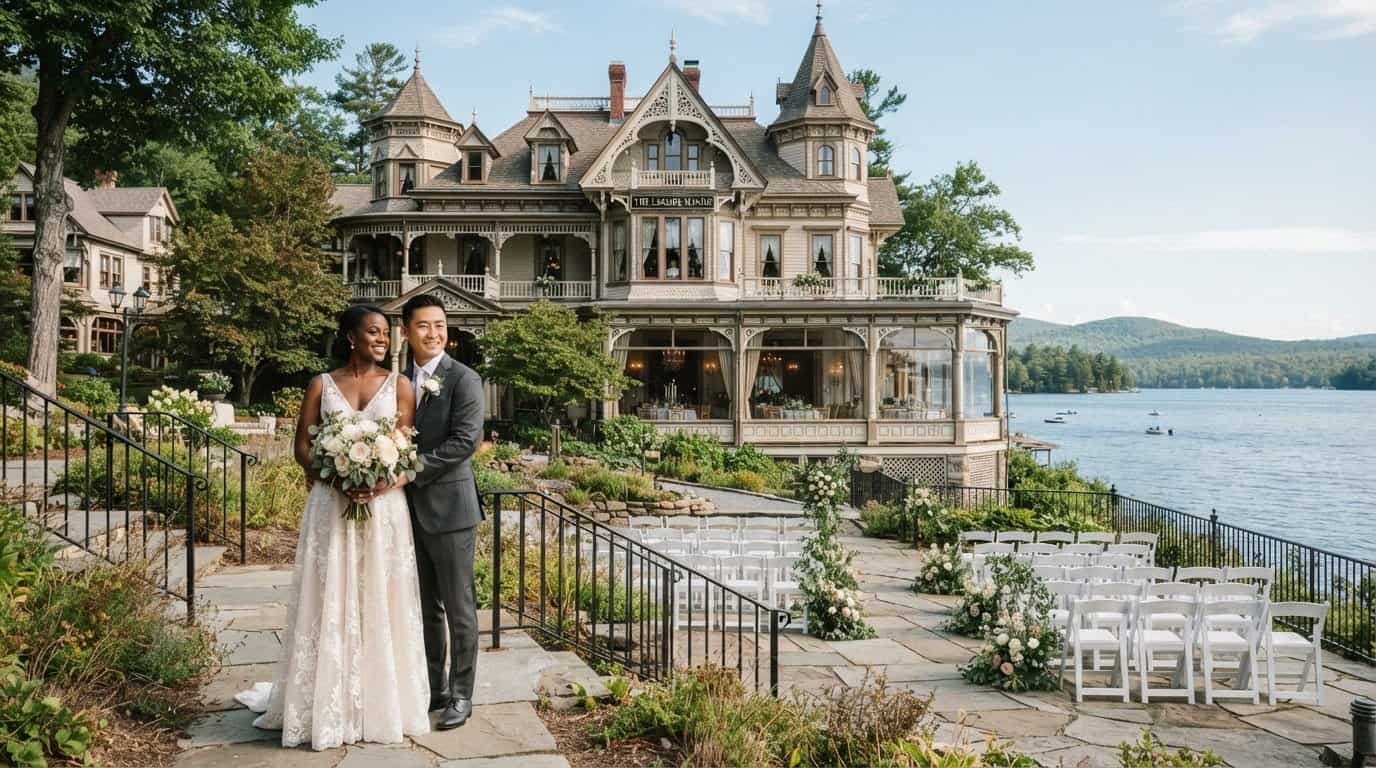

A beautiful room can still hide practical problems. It’s appropriate to ask plenty of questions during a venue tour, because wedding venue red flags to avoid often show up in vague answers about communication, accessibility, costs, contracts, or upkeep. Clear, specific answers help you decide whether the space suits your celebration.
It’s natural to focus first on the setting and imagine your wedding day there. But the venue also needs to be comfortable, well-kept, and practical for your guests and plans. This guide explains what to ask on a tour and how to assess details beyond the first impression, from access and maintenance to costs, contract terms, and communication. You’ll have a practical way to compare spaces and spot concerns before committing.
Key Takeaways
- Look for patterns in reviews and pay attention to how clearly the venue communicates with you.
- Ask how vendor rules, décor limits, and event timelines could shape your plans.
- Consider how guests with mobility needs will move through the venue, from parking to restrooms.
- Read the contract closely and request a clear breakdown of fees, payment terms, and included services.
- During your tour, notice signs of upkeep and ask how the venue handles repairs and event-day preparations.
1. Venue communication and responsiveness
A venue tour shows more than the room. It also reveals how staff handle practical questions. Ask who your main contact will be, which channels they use, and when you can expect replies. Request a clear process for decisions, updates, and event-day changes. If answers about your wedding rental differ between staff members, ask who can confirm details in writing before you sign.
One reported venue took 2–3 weeks to answer emails, a delay that can make planning harder. A few days alone isn’t necessarily a red flag if the venue explains delays and follows up as promised. Notice whether the team answers the question you asked or sends a vague response that leaves key details hidden. A practical test: send one specific question after your tour and assess how clearly the reply addresses it.
Venue reviews can add context to what you observe in person. Look for recurring comments about missed replies, changing information, or difficulty reaching staff, rather than treating one negative review as proof. Read the venue’s public responses, too. A response that argues with a reviewer instead of addressing the concern may offer a clue about how the team handles issues during your celebration.
To see common scouting mistakes in a wedding-planning context, watch this video:
Ask how the venue communicates with your vendors, including who shares schedule changes and setup details. A vendor taking a few days to reply isn’t automatically a problem if they explain the delay. What matters is having a dependable process for questions and decisions. Ask what happens if a key vendor becomes ill or cannot work on the wedding day, and whether the venue has a contingency process.
Ask the venue which permits, insurance documents, and written safety procedures apply to its event space. Requirements vary with local rules and venue operations, so request the relevant details before signing. During the tour, ask staff to point out emergency exits and explain how guests would receive instructions in an emergency.
Repeatedly meeting different venue contacts may point to staff turnover or unclear coordination. Ask who will manage your booking from signing through the event and how they record decisions. Compare the answer with recent reviews and real weddings featured on the venue’s social media. If the process remains unclear, treat it as a wedding venue red flag to avoid and keep comparing options before you commit.
2. What’s the biggest mistake couples make when choosing a venue?
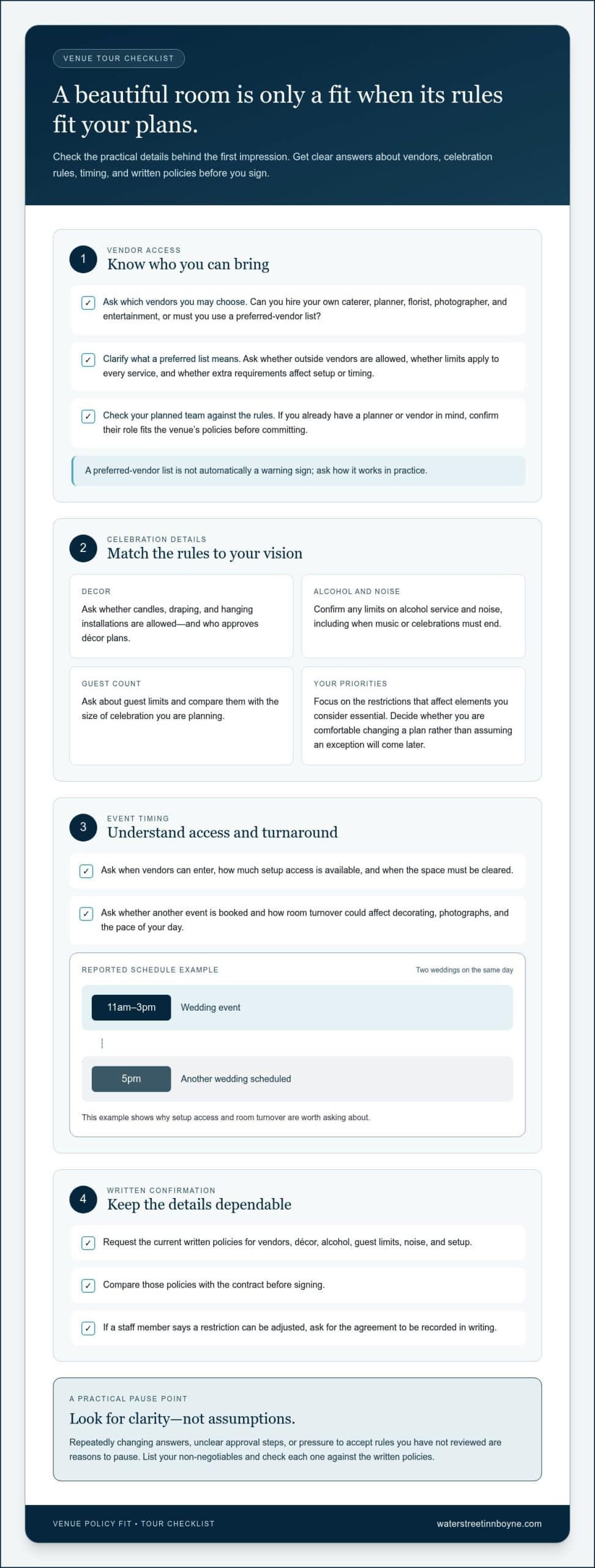
A common mistake is choosing a venue for its appearance before understanding how its policies fit your plans. A graceful room may look perfect, yet restrictions on vendors, décor, alcohol, noise, guest count, or setup access can reshape the celebration. During planning, request a written breakdown of the rules and compare them with your priorities before signing.
Start by asking about vendors. Can you hire your own caterer, planner, florist, photographer, and entertainment, or must you choose from a preferred-vendor list? A preferred list isn’t automatically a warning sign, but the venue should explain what it means in practice. Clarify whether outside vendors are allowed, whether restrictions apply to every service, and whether additional requirements affect setup or timing. If you already have a planner or vendor in mind, confirm their role fits the venue’s policies before committing.
Next, discuss the details that shape your vision. Ask whether candles, draping, or hanging installations are allowed and who approves décor plans. Confirm any limits on alcohol service and noise, as well as when music or celebrations must end. These details matter most when they affect elements you consider essential. If the rules prevent a key part of your plan, decide whether you’re comfortable changing it rather than assuming an exception will be made later.
Timeline flexibility deserves its own conversation. Ask when vendors can enter, how much setup access is available, and when the space must be cleared. One reported schedule had a wedding from 11am to 3pm, followed by another at 5pm the same day. That example shows why couples should ask whether another event is booked and how room turnover affects decorating, photographs, and the pace of the day.
Get answers in writing, not just during the tour. Request the current policies for vendors, décor, alcohol, guest limits, noise, and setup, then compare them with the contract. If a staff member says a restriction can be adjusted, ask for that agreement to be recorded. Written details give you a reliable reference when several people are involved in planning.
Trust your instincts, but ground them in specific details. A venue that explains its limits clearly gives you a fair basis for deciding. Repeatedly changing answers, unclear approval steps, or pressure to accept rules you haven’t reviewed are reasons to pause. Before signing, list your non-negotiables and check each one against the written policies. That makes it easier to spot a mismatch while you still have time to choose a space that supports your plans.
3. Accessibility for guests with mobility needs
Couples can assess capacity, access, and weather backup by walking the guest routes and reviewing the floor plan. Ask the venue to show how the indoor backup would accommodate everyone, then compare those details with the written event layout.
Walk the route from parking to the ceremony, reception, and restrooms. Look for step-free paths, ramps, clear doorways, and places to pause. Ask how guests using mobility devices can reach each event space, and whether older adults or families with young children would face stairs or long outdoor paths. A route that seems manageable during a quiet tour may feel difficult in formal clothing or a crowd.
Check the parking arrangement, too. Ask where guests with mobility needs can park, how they reach the entrance, and whether the route remains accessible in poor weather. Visit the restrooms guests would use and consider whether they are easy to reach. Specific answers matter more than broad assurances. Warning signs include staff who can’t explain the route or an accessible entrance that leads away from the event.
Capacity needs a close look beyond the advertised guest count. Ask what the maximum includes: tables, chairs, a dance floor, stages, and space for guests to move. One reported venue listed capacity at 150 guests, but fitting that number depended on reducing the dance floor. Ask to see a sample layout for your planned guest count, then confirm that it leaves enough room for seating, circulation, and any mobility equipment.
Ask for practical details about the indoor weather backup. Where would an outdoor ceremony move if it rains? Would the space accommodate everyone, and how would the change affect seating and access? During the tour, walk the backup route instead of discussing it from the doorway. Confirm that the accessible path works between the backup ceremony space, reception area, and restrooms.
Use the same checklist at each venue: parking route, entrance, ceremony area, reception layout, and restrooms. Record what you observe, then compare it with the floor plan and written capacity. Online reviews can flag recurring access concerns, but use them to guide specific questions, not as a substitute for a site visit. If a review mentions stairs or difficult parking, ask staff to show you those areas during the tour.
Before signing, make sure the event layout reflects the setup you discussed. A written plan helps you assess whether guest count, seating, access, and the weather backup work together. If staff can’t explain how the space accommodates your guests, or the backup plan leaves people out, consider it a serious warning sign.
4. Clear contracts, pricing, and inclusions
A contract should explain cancellation, refund, and postponement terms in plain language. Look for notice deadlines, how payments are handled, and what happens if you change the date. Before signing, ask for each outcome to be stated clearly, including any conditions that affect the amount refunded or the options available.
When searching for a venue, request an itemized breakdown of the total charges and payment schedule. Check whether cleaning, security, overtime, setup and teardown, parking, or use of the ceremony site are listed as separate costs. Ask which optional services may add charges, and make sure agreed changes appear in the written contract. A vague estimate can leave room for unexpected costs.
Read package descriptions carefully. “All-inclusive” can mean different combinations of services, so ask what the package includes and excludes. Confirm whether tables, chairs, decorating time, setup, cleanup, an indoor ceremony space, or wedding décor are part of the rental. If something is described as available, clarify whether it is included or costs extra.
Specific examples make comparisons easier. Ask whether the venue provides a manager, setup assistance, timeline guidance, or rehearsal support. Clarify who handles each coordination task, when that support begins, and what remains your responsibility. If you need a service that isn’t included, ask whether the venue permits a suitable alternative or offers an upgrade. Record the answer alongside the package details.
Included amenities add value only when they fit your plans. A room with tables and chairs may still need a different layout; an indoor ceremony space may matter if the weather changes. Compare venues using the same checklist, such as furniture, setup time, cleanup, ceremony options, and coordination. This turns broad package descriptions into a practical side-by-side comparison.
Before signing, review the contract alongside the itemized breakdown and package list. Check that the date, rental period, payment schedule, cancellation terms, and agreed services match your discussions. Look for wording that allows additions or changes without explaining how they affect the total. Raise unclear clauses and ask for revised wording before committing.
Keep the final contract and any written amendments together. If a verbal promise about cleanup, décor, or coordination isn’t in the paperwork, ask for it to be added. Clear documentation gives everyone the same reference during planning and helps prevent misunderstandings as the celebration approaches.
5. Venue maintenance and tour preparation
A polished tour room can conceal upkeep problems elsewhere, so inspect the entire guest experience. Walk through the entrance, reception space, restrooms, and outdoor areas guests are likely to use. Look for water stains, peeling finishes, loose handles, damaged flooring, or overflowing bins. One isolated mark may be minor, but several neglected areas suggest the venue’s routine maintenance deserves closer attention.
Use your senses as well as your eyes. Notice musty odors, stuffy rooms, dim corners, or doors that stick. Check that chairs and tables look stable, surfaces are clean, and restroom fixtures work. These details affect comfort during a long celebration. Ask how the venue handles repairs before an event and who addresses problems discovered during setup.
Ask to see the exact spaces included in your booking, not just the most attractive room. If ceremonies, dining, or dancing take place in separate areas, walk between them as guests would. Look for uneven paths, cluttered storage, and signs that shared spaces may be in use. Even a carefully staged tour should let you assess the areas your guests will actually encounter.
Prepare for the visit by bringing your guest-count estimate, a list of planned activities, and any accessibility needs. Ask the venue to show how the layout could accommodate your celebration, then compare its explanation with what you see. If the room is arranged differently from your expected setup, ask for a clear example of table placement, guest circulation, and vendor access.
Pay attention to how staff present the property. A staff member who points out a maintenance issue and explains the repair plan gives you useful information. By contrast, repeated excuses for visible damage or reluctance to show a space included in your rental are warning signs. Ask which areas are refreshed before events, what cleaning is included, and how the team prepares the room after another booking.
Photos and online reviews can help you prepare, but compare them with what you see on the current tour. Look for recent examples of weddings in the same spaces you’ll rent, and note whether the room’s condition matches its presentation. Reviews mentioning cleanliness or repairs can guide your questions, while a walkthrough gives you direct evidence. Don’t rely on a beautiful image alone.
The key is simple: inspect, ask, and record. Take notes during the tour, photograph details with permission, and list any promised repairs in your follow-up. Before booking, decide whether the venue’s upkeep, layout, and preparation process can comfortably accommodate your guests. A calm, thorough walkthrough helps distinguish a temporary blemish from a pattern that could affect the day.
Water Street Inn: One Bedroom Suite
Water Street Inn offers a One Bedroom Suite for couples seeking a comfortable stay alongside their wedding plans. Each suite features a private balcony or patio with lake views, a fully equipped kitchen, and a cozy gas-log fireplace. Guests also enjoy access to a private beach and can walk to nearby shops, restaurants, and local attractions.
For couples considering a celebration at the property, Water Street Inn also offers a Wedding Venue Rental. Review the wedding venue details as you consider whether the setting suits your plans. To learn more, contact Water Street Inn or visit waterstreetinnboyne.com.
Choose a setting that feels right for your celebration
Your final choice should support the day you want to create, not just look appealing in a photograph. Use wedding venue red flags to avoid as a decision framework, then consider which setting feels comfortable, practical, and true to your plans. Write down what matters most and assess how each venue fits that vision.
Water Street Inn offers Wedding Venue Rental and One Bedroom Suites. If you’re considering a celebration there, explore whether its setting and accommodations suit the experience you hope to share with family and friends. A thoughtful choice can help you move forward with greater ease and focus on the moments that make the day your own.
Start a conversation with Water Street Inn about your wedding plans, and take the next step toward a welcoming, memorable celebration.
Frequently Asked Questions
Is it okay to ask a lot of questions during a venue tour?
Yes. Thoughtful questions help you understand how a venue will work for your plans, so bring a written list and take notes. If an answer is unclear, ask for a specific example, such as how a room would be arranged for your reception. You can also send a follow-up email summarizing decisions, giving you a written record to compare with later documents.
What’s the biggest mistake couples make when choosing a venue?
A common mistake is committing based on appearance before checking whether the space and its terms suit the event. Picture your ceremony, meal, dancing, and guest arrival in sequence. For example, a room may feel spacious when empty but less comfortable with tables and entertainment in place. Compare the proposed setup with your priorities before letting a beautiful first impression decide for you.
What are the biggest red flags when touring a wedding venue?
Watch for answers that change between conversations, spaces staff won’t show you, or pressure to book before you’ve reviewed the terms. A mismatch between the tour and the written description also deserves attention. For example, if the room shown differs from the space named in your paperwork, ask which one your booking covers. Consider whether staff address concerns directly and explain things clearly.
What hidden fees should couples look for in wedding venue contracts?
Look for charges tied to choices or circumstances, not just the base rental. An extra hour, a different setup, or use of another space may affect the final bill. Check how the contract handles taxes, service charges, optional add-ons, and changes to the event plan. Ask for an updated written total whenever an agreed detail changes, then compare it with the earlier quote.
What venue restrictions on vendors, catering, alcohol, decor, and music should couples check?
Check whether outside caterers and other vendors are allowed, and whether the venue has approval or setup requirements. Ask which décor materials need permission, what alcohol arrangements are permitted, and whether music has time or volume limits. For example, a band’s equipment may need a different setup from a DJ’s. Write down the rules that affect your plans and make sure the contract reflects them.
How can couples spot misleading wedding venue pricing or sales tactics?
Compare written quotes using the same event details, then look for exclusions, conditional charges, and language that leaves key services undefined. Ask whether the quoted total reflects your chosen layout, rental period, and planned services. Pressure to decide immediately is a reason to pause and review the documents calmly. A clear quote should show what the venue includes and what could change the final amount.
What questions should couples ask before booking a wedding venue?
Ask what happens if your guest count changes, a vendor needs different access, or the event schedule shifts. Clarify who approves changes and how the venue records them. You could also ask whether another event will use nearby spaces on your date. Before booking, compare the answers with your must-haves and ensure important agreements appear in the paperwork rather than relying on conversation alone.
How can couples check a wedding venue’s reviews, references, and reputation?
Look for recurring themes in reviews and note whether the same concerns or strengths appear over time. Compare those accounts with recent wedding photos or galleries, since event setups can show how the space is used. If the venue can provide references, ask about communication, whether agreed arrangements were accurate, and how unexpected issues were handled. Use feedback as context, then form your own view during the tour.