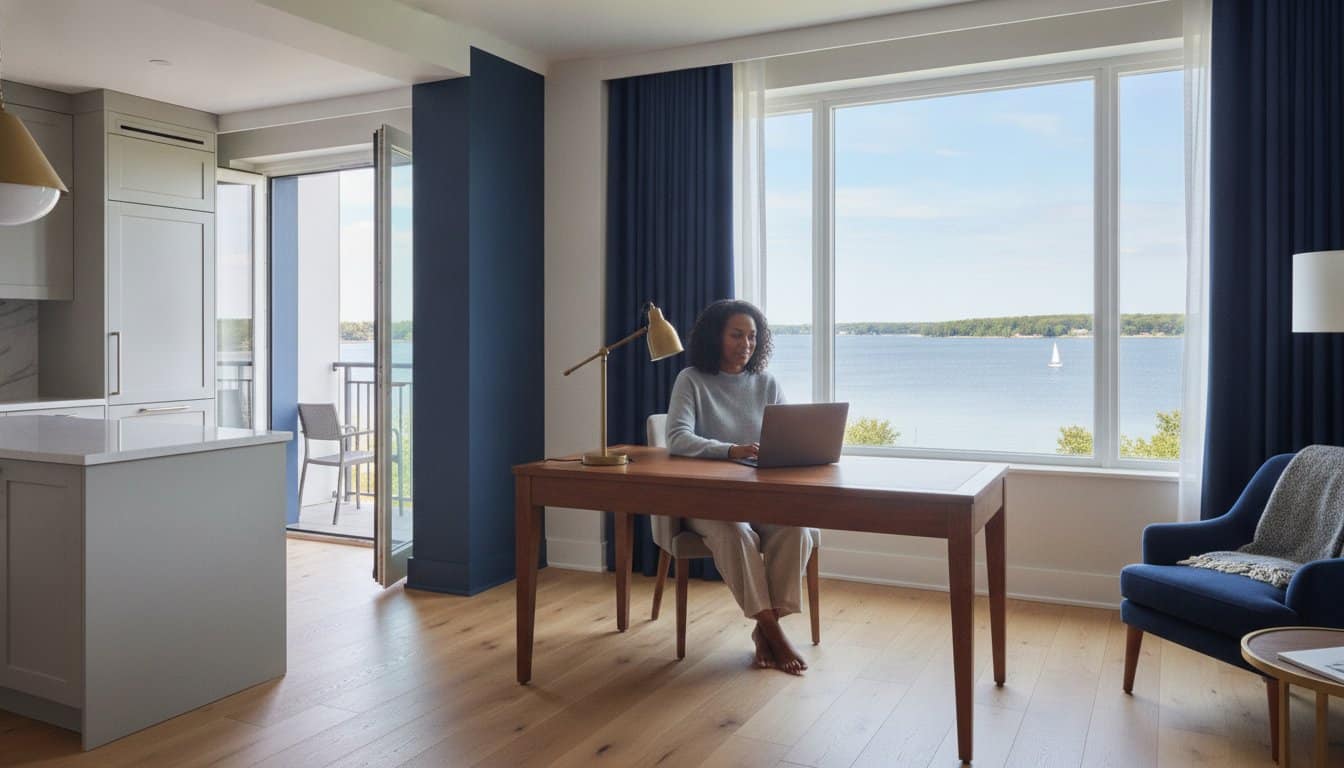
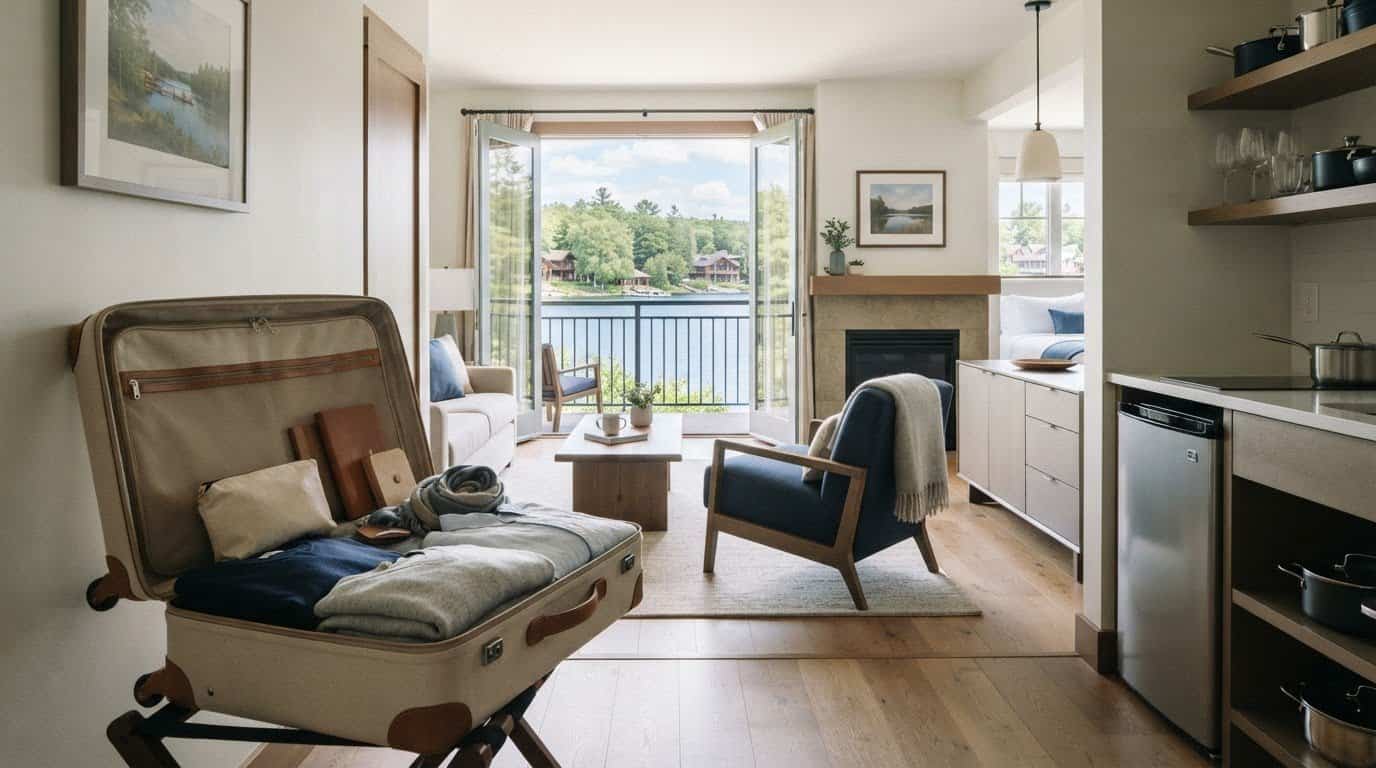
What if you could feel settled without unpacking everything you brought? For an extended stay, living out of a suitcase can make everyday tasks harder, but filling every drawer and surface can leave a furnished space feeling crowded. The better approach is selective: unpack what supports your daily routine and keep occasional-use items contained. These unpacking tips for an extended stay will help you find essentials quickly, make your temporary space more comfortable, and keep checkout simple.
Start with the belongings you use each day, then choose a few familiar comforts that make the space feel welcoming. Give everything a consistent place, and keep track of what you’ve taken out so packing up later is easier. In a furnished suite with a fully equipped kitchen, gas-log fireplace, and private balcony or patio, you can build familiar routines around features already there. Ahead, you’ll find practical ways to unpack with intention, stay organized when storage is limited, and enjoy a home-like rhythm while keeping your stay easy to reset.
Key Takeaways
- Take a moment to assess the room and its available storage before deciding what to unpack.
- Use unpacking tips for an extended stay to choose daily essentials and familiar comforts without crowding your temporary space.
- Sort belongings by how often you’ll use them, how much they matter, and how much room they need.
- A brief daily reset can keep belongings easy to find and make packing up simpler later.
- Build comfortable routines around the features already in your furnished suite, while keeping personal items organized.
Unpacking Tips for an Extended Stay: Start by Reading the Space
Living from a suitcase can feel manageable at first, then turn everyday tasks into a search for socks, toiletries, or a charger. A simple, reversible settling-in plan helps: keep essentials within reach, but leave enough packed that the room stays comfortable and checkout won’t become a scavenger hunt. The goal isn’t to unpack everything. It’s to give the belongings you use most a clear, consistent place.
Before opening every bag, look around. Note which drawers, shelves, closet space, hooks, and clear surfaces are available, then consider how the room’s features fit your routine. In a furnished suite with a fully equipped kitchen, for example, keep kitchen items in that area rather than spreading them across the room. A practical, pared-back approach echoes the principles of long-term travel, where keeping only useful belongings accessible can make life on the move simpler.
A short packing video can offer another perspective on making the most of a hotel room:
What should you check before unpacking?
Identify the storage and surfaces you can use without crowding the room. Check where belongings naturally belong, especially in functional areas such as the kitchen. Pick one easy-to-retrieve spot for valuables, travel documents, and medication. Keeping these essentials together makes them easier to find when you need to head out or pack up.
Which belongings should come out first?
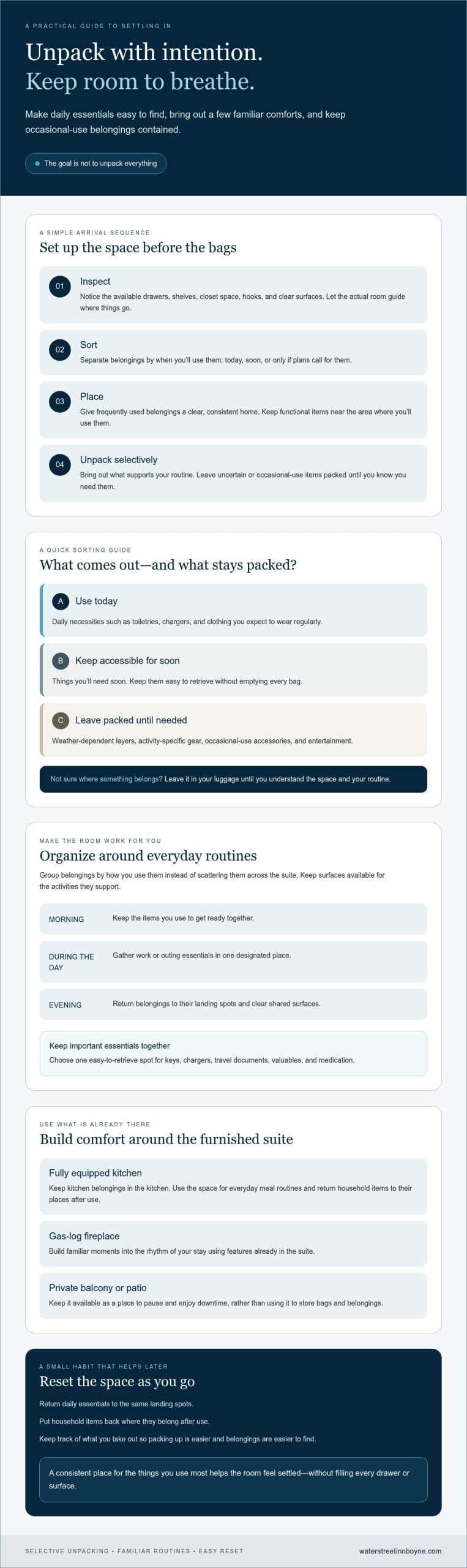
Sort your bags into three groups: essentials for today, items you’ll need soon, and belongings that can stay packed. Unpack daily necessities first, such as toiletries, chargers, and clothing you expect to wear regularly. Keep weather-dependent layers, activity-specific gear, occasional-use accessories, and entertainment packed until plans call for them. If you’re unsure where something belongs, leave it in your luggage until you understand the space and your routine.
The first-arrival sequence is simple: inspect, sort, place essentials, then unpack selectively. Make frequently used belongings accessible without emptying every bag. These unpacking tips for an extended stay help you settle in while leaving room to adjust as the days take shape.
Build Comfortable Extended-Stay Routines Without Unpacking Everything
A familiar rhythm can make temporary lodging more comfortable without turning unpacking into a full-room project. Repeat small habits, such as setting out what you need for the morning or returning your charger to the same spot each evening. These routines make a furnished suite easier to settle into while keeping belongings contained and the space simple to reset.
Choose a landing place for daily essentials so you don’t have to search for the same things repeatedly. Keep frequently used items together, and leave surfaces clear for the activities they support. A little consistency can make your day feel smoother.
How can you make a furnished suite feel settled?
Keep frequently used personal items within easy reach. In a suite with a fully equipped kitchen, for example, use the kitchen for everyday meal routines and return items to their appropriate places afterward. This leaves counters clear for their intended use. A private balcony or patio can be a pleasant place to pause and enjoy downtime, rather than extra storage for bags and belongings.
Each suite may have a different arrangement, so let the space guide your setup. Don’t assume furniture, closet layouts, or storage options will match what you’ve used elsewhere. Start with the spots that seem practical, then adjust as you learn how you move through the room.
How can you keep daily essentials easy to find?
Group your belongings around routines instead of scattering them across the suite. Keep getting-ready items together, place work essentials in one designated area if you need them, and gather evening comforts where they’re easy to reach. Choose one consistent spot for keys, chargers, travel documents, and other daily necessities. Return any household items you move to their original places after use.
- Morning: Keep the items you use to get ready together.
- During the day: Gather work or outing essentials in one place.
- Evening: Return belongings to their landing spots and clear shared surfaces.
These unpacking tips for an extended stay should flex with your plans, not create a strict routine. A few dependable habits can bring a sense of home while keeping the room open and easy to enjoy. If you’re considering a furnished suite for a longer visit, review the inn’s vacation rental information as you plan.
What to Unpack, Keep Packed, or Leave Behind
A longer visit doesn’t mean every item in your luggage needs to come out. The right amount to unpack depends on how long you’ll stay, what you’ll use, and the layout of your suite. To decide, ask three questions: How often will I need this? Will it make the stay easier or more comfortable? Is there a sensible place for it?
Sort belongings into these three groups. You can revisit your choices once you’ve settled in and have a clearer sense of your routine.
| Unpack now | Keep packed for later | Reconsider bringing |
|---|---|---|
| Clothing you expect to wear regularly, daily personal care items, essential documents, and work or comfort items you’ll use often. | Occasional-use clothing, activity-specific gear, extra accessories, and hobbies or entertainment you may want later. | Items you rarely use, duplicates, or belongings that take up space without serving a clear purpose during the stay. |
What should you unpack for regular use?
Start with clothing and personal care items you’ll reach for throughout the stay, then add only the work, hobby, or comfort belongings that fit the available space. Keep valuables and essential documents together in a consistent place so you can locate them easily. These unpacking tips for an extended stay are about making useful items accessible, not filling every drawer or surface.
What is better left in your luggage?
Leave occasional-use items packed until plans call for them. This keeps your living area from becoming crowded and makes less-used belongings easier to repack. Before bringing items that might duplicate a confirmed suite feature, check what that feature includes. A fully equipped kitchen is available, but don’t assume a particular appliance, utensil, or consumable is supplied unless the suite information confirms it.
Use the same judgment before departure. If an item hasn’t been needed and doesn’t add meaningful comfort, it may not need to come out next time. A flexible approach lets you settle in without treating temporary lodging as a permanent home, and helps keep checkout straightforward.
How to Keep Your Temporary Space Tidy and Checkout-Ready
A comfortable suite is easier to enjoy when belongings don’t drift across every surface. A brief daily reset keeps the space orderly without making tidiness a full-time task. Return items to their designated places, clear the counters you’ve used, and check that essentials are still where you expect them to be. Keeping belongings grouped throughout your stay makes the final packing check simpler.
Try a quick reset before settling in for the evening. In a suite with a fully equipped kitchen, put away personal items after preparing food and leave counters clear for their intended use. Keep luggage or personal organizers where they won’t obstruct the room, and avoid spreading belongings across shared living areas.
What simple habits prevent clutter from building up?
Use the same home base for everyday belongings, and return each item after use. Group toiletries, chargers, and other small essentials rather than leaving them on different surfaces. These unpacking tips for an extended stay work best when they fit naturally into your day: put things back as you go instead of waiting for a larger cleanup. Consistent habits help the suite feel calm and make belongings easier to locate.
How can you make departure easier from the start?
Keep a running list of belongings you brought into the suite, especially small items that can be easy to overlook. As you finish using occasional items, return them to their original bags or organizers. This leaves less to gather on departure day and helps you notice anything that’s still out.
Before leaving, take a deliberate look through the spaces where personal belongings may have collected:
- Check drawers, shelves, and closet areas you used.
- Look over the bathroom area for toiletries and personal care items.
- Scan counters and other surfaces for chargers, documents, and small essentials.
- Follow the property’s checkout instructions rather than assuming every stay has the same process.
A final, unhurried walkthrough can bring peace of mind and help you leave the suite orderly. For details about staying in a furnished suite, review the inn’s vacation rental information.
Make an Extended Stay Feel Like Home in a Furnished Suite
Feeling settled doesn’t require emptying every suitcase or arranging the room as if you’ll stay indefinitely. A flexible routine is enough: keep daily belongings accessible, bring out extra items only when they’re useful, and leave surfaces and storage areas comfortable to use. These unpacking tips for an extended stay work best when they adapt to your habits and the space, rather than asking you to follow a strict setup.
A furnished suite can support familiar rhythms while your personal belongings stay organized. Water Street Inn’s furnished vacation rental suites include a fully equipped kitchen, a gas-log fireplace, and a private balcony or patio. Each feature can become part of your routine without requiring extra items or filling every available surface.
How can suite features support a longer stay?
Use the kitchen as a natural home base for familiar meal routines, keeping personal items together and returning them to their appropriate places after use. The gas-log fireplace is a comfort feature to consider as part of the suite, while the private balcony or patio offers an option for a quiet break. Let these features add ease to your stay without treating them as extra storage or assuming details beyond what’s confirmed.
What should you look for when choosing extended-stay lodging?
Before you pack, review the specific accommodation details rather than assuming every suite has the same layout or furnishings. Check which amenities are confirmed, then consider whether the space supports the routines that matter to you, such as preparing meals, unwinding, or keeping daily essentials close by. This makes it easier to decide what to bring and what can remain at home.
Think of settling in as a series of small choices, not a one-time unpacking task. Begin with the belongings you use regularly, add a few meaningful comforts if they fit, and keep the rest packed until you know you need them. That balance can make a temporary stay feel more personal while keeping departure manageable.
If you’re considering a longer visit, review Water Street Inn’s suite and vacation rental information as you plan. The details can help you picture how the space may fit your stay and decide what to bring along.
Settle In With a Routine That Works for You
The most useful unpacking tips for an extended stay don’t ask you to empty every bag. Start by noticing the space, unpack what supports your daily routine, and keep occasional-use belongings grouped until you need them. A simple daily reset and a final check of drawers, shelves, and surfaces can also make departure feel less rushed.
A comfortable stay comes from making the space work for you, not filling it. Water Street Inn is an all-suite condominium hotel, and each unit features a fully equipped kitchen, a gas-log fireplace, and a private balcony or patio. These features can support familiar meal routines and offer inviting ways to unwind while you keep personal belongings organized.
If you’re planning a stay, review the available suite details to see what may suit your needs. Explore the available suite information, then settle in at your own pace and enjoy a space that feels a little more familiar.
Frequently Asked Questions
Can I unpack fully when staying in a furnished suite?
You can unpack what supports your daily routines, but you don’t need to empty every bag. First, check the storage and clear surfaces actually available in your suite. Keep occasional-use belongings packed and group personal items so they’re easy to find and repack. The right approach depends on your length of stay and the suite’s layout, not on a rule that every item needs a permanent place.
How do I unpack for an extended stay without making a mess?
Inspect the room first, then sort belongings by how often you’ll use them. Place daily essentials in consistent locations and keep counters and shared areas clear for their intended use. Unpack in stages instead of opening every bag at once. A brief daily reset, returning items to their places and clearing surfaces, helps prevent clutter and makes belongings easier to find throughout your stay.
What should I unpack first when staying somewhere for a week or longer?
Begin with daily-use clothing, personal care items, medication, travel documents, and chargers. Keep important belongings together in a consistent, easy-to-retrieve place. Next, decide whether work, hobby, or comfort items deserve accessible space. Leave occasional-use belongings packed until needed. Check the available storage before assigning items a place, and don’t assume the accommodation provides unlisted supplies or personal items.
How can I make a temporary suite feel more like home?
Familiar routines can make a temporary suite feel more like home without unpacking everything. Give daily essentials a consistent landing place, and keep a few frequently used personal items within easy reach. Use confirmed suite features to support ordinary habits: a fully equipped kitchen can fit familiar meal routines, while a private balcony or patio offers a place to take a quiet break. Keep the layout uncluttered.
What should I keep packed during an extended stay?
Keep occasional-use clothing, activity-specific gear, and belongings you don’t need yet in your luggage. This helps preserve clear surfaces and keeps items easier to track. Reconsider what to unpack as your plans take shape, using the available storage and your expected routine as guides. Check the accommodation’s confirmed amenities before deciding what to bring, rather than assuming particular supplies or personal items will be provided.
How do I make checkout easier after unpacking?
Keep belongings grouped and maintain a simple list of what you brought. As you finish using occasional items, return them to their bags or organizers instead of leaving everything for departure day. Before leaving, check the drawers, shelves, and bathroom area for personal belongings, then follow the property’s checkout instructions. A tidy routine throughout your stay can make the final packing check more straightforward and less rushed.