

A hotel without a resort fee isn’t always the least expensive stay: the total nightly price matters more than the fee label. Resort fees may be charged per room rather than per guest, so the number of people sharing a room may not change the charge. Hotels that don’t charge resort fees can be a smart choice when the full rate suits your budget and plans.
It’s frustrating to find an extra charge after choosing a room, especially when you’re trying to keep travel costs clear. This guide explains how resort fees are charged, how to ask whether a fee can be waived, and where to look for stays that typically don’t add one. You’ll also find examples and practical ways to compare the full cost of a stay, so you can settle in with fewer surprises and more room to enjoy your trip.
Key Takeaways
- Look beyond amenities included in a resort fee to judge whether they add value to your stay.
- Learn which Las Vegas properties are known for skipping resort fees, and what other charges may still apply.
- Spot hotel brands that typically avoid resort fees while keeping in mind that fee policies can vary by property.
- Explore whether Water Street Inn’s One Bedroom Suite is a good fit for a restful Lake Charlevoix stay.
1. How can I avoid paying resort fees?
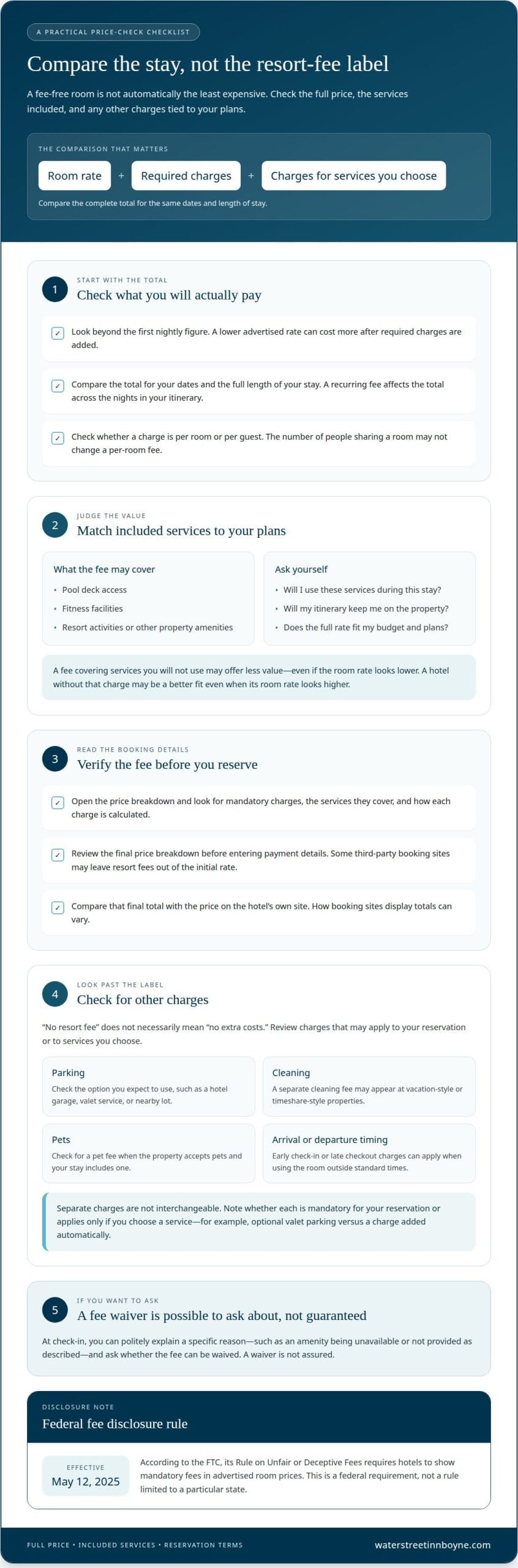
Start with the full room rate, not the nightly figure shown first. A lower advertised rate can cost more once required charges are added.
Compare what each fee includes with what you’ll actually use. A pool deck, fitness access, or resort activities may matter on a leisure trip, but less during a short overnight stay. If a fee covers services you won’t use, a hotel without that charge may offer better value, even if its room rate looks higher.
Before booking, open the price breakdown and read the hotel’s fee details. Look for mandatory charges, the services they cover, and whether a fee is charged per room or per guest. Compare the total for your dates and length of stay. At check-in, you can politely ask whether a fee can be waived, explaining a specific reason, such as an amenity being unavailable or not provided as described. A waiver isn’t assured.
What states require hotels to disclose resort fees upfront? According to the FTC, its Rule on Unfair or Deceptive Fees took effect on May 12, 2025, and requires hotels to show mandatory fees in advertised room prices. This is a federal requirement, rather than a rule limited to a particular state.
Do hotel booking sites include resort fees in the displayed price? It depends on the site and how it displays the total. Some third-party booking sites may leave resort fees out of the initial rate, so review the final price breakdown before entering your credit card details. Compare that total with the price advertised on the hotel’s own site.
3. Las Vegas hotels with no resort fee
When comparing stays, focus on the full room total rather than the fee label. That alone won’t tell you which hotel suits your plans: location, room rate, and included amenities all affect value.
Use the number of nights in your itinerary to see how a recurring fee affects the total. Then compare that amount with the difference between the room rates you’re considering.
Review the amenities and services covered by each rate. A resort fee may include access to a pool deck, fitness facilities, or other property amenities. These can be useful if you plan to spend time on-site, but less valuable if your itinerary keeps you away. Loyalty program members should also read the reservation terms rather than assume membership changes the fee.
Check the complete booking details for charges listed under different names. A property may not charge a resort fee but may list another charge, such as a cleaning fee. This can happen at some timeshare-style properties, so include any listed cleaning charge in your comparison. The label alone doesn’t reveal the final cost.
Before booking, compare the room total, included services, and separate charges for the same dates and length of stay. Consider which amenities you’ll use and whether the property suits your itinerary. A fee-free option can be practical, but the best choice is the one whose total cost and features fit your plans.
4. Hotel brands that typically do not charge resort fees
A brand name alone can’t reliably tell you whether a stay includes a resort fee. The American Hotel and Lodging Association says about 6% of hotels charge resort fees, but that figure doesn’t identify which brands or properties charge them. Treat a brand’s reputation as a starting point, then assess the specific hotel and rate plan before booking.
Use this comparison process for each brand you’re considering. First, select the exact property and travel dates. Next, open the full price breakdown and look for a resort, destination, or amenity fee. Then read the details of what the rate includes. A brand may operate different types of properties, and a resort-style hotel can have a different fee structure from a limited-service location.
Rewards members should read the terms for the specific reservation rather than assume loyalty status removes a charge. Check whether the rate is paid with a credit card, booked with points, or offered as an express or advance-purchase rate. These booking details can affect the terms for that reservation. Compare the final total and included amenities across properties, not just the points required or the room rate.
For a useful shortlist, search brand websites for “resort fee,” “destination fee,” and “mandatory charges.” Repeat the search on the property’s booking page, where details explain the selected rate. Save the total-price screen and fee terms with your confirmation. This gives you a clear record if the amount shown at checkout differs from the booking details.
The key is to look for a consistent, property-specific fee policy, not a blanket promise based on a brand name. A hotel may advertise no resort fee yet charge separately for another service. Compare the complete stay cost, included amenities, and reservation terms before choosing.
4. What fees can hotels charge instead of a resort fee?
A hotel without a resort fee may still list other charges. Common examples include parking, cleaning, pet, and early check-in fees. Each applies to a different service or circumstance, so read the rate details rather than treating “no resort fee” as “no extra costs.” For instance, a timeshare-style property may charge a cleaning fee even when it has no resort fee.
Parking charges can depend on whether you use a hotel garage, valet service, or nearby lot. If you’re driving, include the parking option you expect to use when comparing stays. A room rate that looks attractive, for example, may not reflect overnight parking costs. If you won’t bring a car, that charge may not affect your choice.
Cleaning fees are especially relevant for vacation-style accommodations, where a separate charge may appear alongside the room rate. Pet fees apply when a property accepts pets, while early check-in or late checkout charges relate to using the room outside standard arrival or departure times. These fees aren’t interchangeable, so identify the service each covers.
Review the booking summary for charges related to your plans, including parking, cleaning, pets, or timing. Note whether each amount is mandatory for your reservation or applies only if you choose a service. For example, optional valet parking differs from a charge added automatically to every booking. Don’t assume a fee is included just because it appears near the room total.
At checkout, compare the final total with your reservation details and ask about any charge you don’t recognize. Keep the booking confirmation handy, especially if a cleaning or parking fee appears unexpectedly. For a clear comparison, include the room, required charges, and services you intend to use. That way, a different fee label won’t obscure the actual cost of your stay.
Water Street Inn
Water Street Inn offers a different kind of stay for travelers weighing fee-free options against comfort, space, and setting. Its One Bedroom Suite is part of an all-suite condominium hotel, with a fully equipped kitchen, a private balcony or patio, and a gas-log fireplace for a relaxed return after a day out.
As you compare lodging, consider the reservation details alongside the amenities and setting that matter to your trip. Water Street Inn offers a peaceful stay with a private beach and easy access to shops, restaurants, and local attractions. The inn also offers Wedding Venue Rental for celebrations.
For details about a stay or event, contact Water Street Inn.
Choose the stay that fits your kind of getaway
Let the shape of your trip guide your final choice. A stay built around shows, dining, and pool time calls for different priorities than a quiet escape with room to unwind. Choosing hotels that don’t charge resort fees can narrow your options, but your preferred pace, setting, and included comforts should guide the decision. Focus on what you’ll genuinely use, and let the rest go.
For a slower retreat, picture the moments you want to carry home: a peaceful morning, an easy walk, or time together in a welcoming space. Those details can matter as much as the booking terms. If Water Street Inn feels aligned with the kind of stay you have in mind, contact Water Street Inn to take the next step toward a restful getaway.
Frequently Asked Questions
Are resort fees per person or per room?
In Las Vegas, resort fees are charged per room, regardless of the number of guests. Two people sharing a room generally face the same resort-fee charge as one guest in that room. In other destinations, read the booking terms for the specific property and rate. The fee’s billing unit matters when comparing rooms for a group or family.
How Much Can You Save on Your Vegas Trip?
Your savings depend on the resort fee you avoid and how many nights you stay. Estimate them by multiplying the fee per night by the nights booked, then accounting for taxes or separate charges. Compare that amount with the difference between room rates. A fee-free room saves money only if its total cost is lower for your itinerary.
How can I avoid paying resort fees?
Choose a rate without a mandatory resort fee, or ask the hotel whether it can waive the fee before you book. A clear, specific reason can make the request easier to discuss, such as a promised amenity being unavailable. If the property declines, decide based on the complete stay cost and whether the included services suit your plans.
What Is a Resort Fee?
A resort fee is a mandatory hotel charge, often associated with amenities or services beyond the room itself. A property may describe benefits such as pool access, fitness facilities, or Wi-Fi as included. Since the fee may apply whether or not you use those amenities, consider the services and the complete reservation cost when deciding if the rate works for you.
Which Hotels Don’t Charge Resort Fees?
Casino Royale on the Strip and Four Queens downtown are Las Vegas examples identified as not charging resort fees. Policies and other charges can differ by property and booking, so review the details for your selected room. If you’re looking for hotels that don’t charge resort fees, also consider location, included amenities, and the full reservation total.
Which hotel chains do not charge resort fees?
There isn’t a reliable chain-wide answer that applies to every property and booking. A brand may have hotels with different amenities, locations, and rate terms, so one property’s fee policy doesn’t establish another’s. Search the specific hotel’s booking details for mandatory charges, then compare the total for your dates rather than relying on the chain name.