
A wedding weekend needs a clear plan, not a packed schedule. When creating a wedding weekend itinerary, list each event’s time, location, and activity, then leave room for guests to settle in and enjoy the celebration at their own pace. Since celebrations may span 3–4 days, creating a wedding weekend itinerary also means making the flow between gatherings easy to understand.
It’s natural to want every detail organized, especially when guests are traveling and coordinating their own plans. A thoughtful approach to creating a wedding weekend itinerary makes essential information easy to find without making every activity feel mandatory. This guide covers what to include, how to share optional activities and departure details, and how a simple template can make several celebrations easy to follow.
Key Takeaways
- Shape the weekend around a few meaningful gatherings, with optional plans that let guests choose their own pace.
- Time the farewell brunch around guests’ departures so the final gathering feels relaxed rather than rushed.
- Use the wedding website to share activity suggestions, travel details, and practical notes in one easy-to-find place.
- Adapt a simple itinerary template to highlight key times and locations, then choose a format guests can refer to easily.
1. What is a Wedding Itinerary?
A wedding itinerary is a coordination schedule showing event times, locations, and activities. A celebration may unfold across 3–4 days, from guests’ arrival through a farewell gathering. It helps guests understand where to go, while giving the couple and coordinators a shared plan. It’s a practical guide, not a contract or a requirement to attend every event.
Start by setting a total spending limit, then allocate funds to each event. This makes trade-offs visible: a couple might prioritize the reception and keep the welcome gathering simple. Affordable ideas include a casual evening get-together or a self-guided activity guests can enjoy independently. These plans keep the weekend welcoming without requiring an elaborate program.
Typical events include a welcome party, rehearsal dinner, ceremony, reception, afterparty, and farewell brunch. For a destination wedding, an evening welcome event gives traveling guests time to check in and settle first. It might be a cocktail hour, dinner, or relaxed gathering. Choose events that reflect the couple and the setting, rather than filling every available hour.
Leave open stretches between planned activities so guests can rest, explore, or arrange transportation. Make most wedding-related events optional, and label required gatherings clearly. Share accurate times, locations, dress expectations, and travel details, while respecting guests’ freedom to skip optional plans. A welcome event can bring everyone together without making the weekend feel like a schedule guests must follow.
Plan for photos without making every gathering feel like a formal shoot. Ask trusted guests to capture candid moments, create a wedding hashtag, or use a photo-sharing app. Disposable or Instax cameras invite guests to contribute, while a photo booth can work well at a reception or afterparty. Name the sharing method in the itinerary so guests know where their photos belong, and leave them time to enjoy each event too.
2. Farewell brunch and departure planning
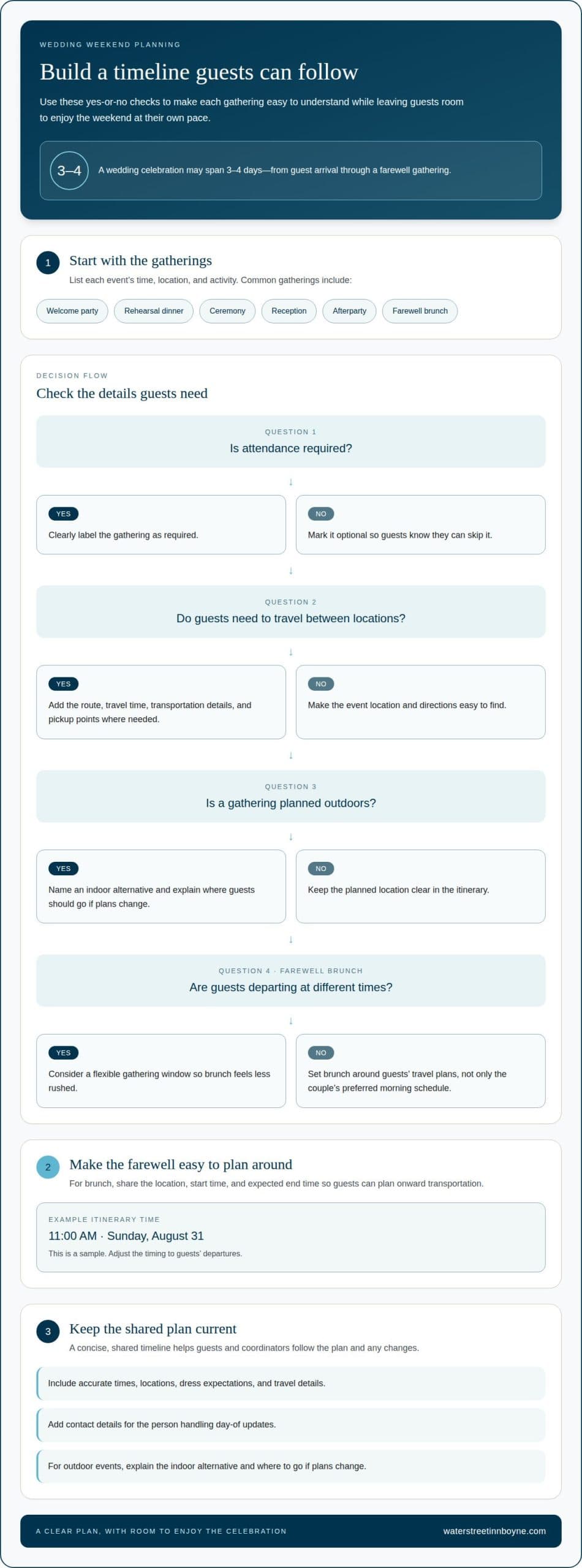
Set the farewell brunch around guests’ travel plans, not just the couple’s preferred morning schedule. A sample itinerary places brunch at 11:00 AM on Sunday, August 31; treat that as an example, then adjust the timing to your guests’ departures. If guests leave throughout the morning, a flexible gathering window can feel less rushed than a tightly timed meal. Share the location, start time, and expected end time so guests can plan transportation onward.
For a destination wedding, map the routes between accommodations, event locations, and departure points before finalizing the timeline. Note where guests need to arrive, how they can travel between locations, and which parts of the weekend require transportation coordination. Check local transportation arrangements and venue policies that affect event timing, guest access, and accessibility. Share practical details in advance, including pickup points and accessible travel options.
A wedding planner can coordinate the timeline with venues, transportation providers, and other vendors, while helping identify gaps between events. If you hire a planner, define their responsibilities early. For example, ask them to manage the master schedule or communicate timing changes. Keep the couple’s decisions clear, and give the planner one current version of the itinerary to share with relevant participants.
Build the schedule step by step: list fixed events and locations, add travel time between them, then place brunch around guests’ departure plans. Include contact details for the person handling day-of updates. For outdoor gatherings, identify an indoor alternative and explain where guests should go if plans change. Consider routes, seating, and transportation needs when selecting locations. Schedule photography so portraits fit naturally into the day and guests aren’t left waiting. A concise, shared timeline helps everyone follow changes without unnecessary stress.
3. Sharing suggested activities on the wedding website
Use the ceremony as the anchor for surrounding activities. Keep the main celebration easy to follow, and avoid stacking major events on the same day. For example, schedule a welcome gathering before the ceremony, then list reception details separately. Guests can see which plans are central and which are suggestions. A wedding website keeps details together, so updates don’t depend on scattered messages.
Offer optional activities for the day or two after the wedding, such as a casual brunch, local walk, or group outing. Leave open time rather than filling every stretch between the ceremony and farewell. A suggested morning activity can include a meeting point and expected finish time, while leaving the afternoon free. This gives guests room to rest, explore, or make their own plans.
For each event, share its name, date, start time, location, dress code, and whether attendance is optional. Add accommodation and transportation details, along with concise directions between venues. Travel time depends on the route, traffic, and how guests are getting around, so describe the route and give a realistic travel window based on your plans. If the reception is at a different location from the ceremony, make that especially clear.
Make the destination part of the invitation without turning recommendations into obligations. Suggest local food, shops, scenic spots, or activities guests can enjoy independently, and include practical details such as addresses and opening information when available. A lakefront wedding, for instance, might feature an optional shoreline stroll. Share local traditions or landscape notes that reflect the setting, and group suggestions by location so guests can choose what suits them. Planning the weekend with these details in view helps guests understand what to expect while keeping their schedules flexible.
4. Wedding weekend itinerary templates
A template gives couples a clear structure to customize, rather than a schedule to copy unchanged. A four-day version can run from the welcome party through the farewell brunch; a three-day version can focus on the main celebration. Start with the event date, title, and locations, then add times, activity descriptions, contact information, and special notes. When creating a wedding weekend itinerary, make optional plans visibly distinct from essential timing.
Use a sample timeline to see how events fit together. For a three-day weekend, the schedule might read:
- Friday, August 29, 7:00 PM: welcome cocktails.
- Saturday, August 30, 4:30 PM: ceremony; 6:00 PM: cocktails and canapés.
- Saturday, 7:30 PM: dinner and toasts; 9:00 PM: dancing.
- Saturday, 10:30 PM: hotel shuttle service.
- Sunday, August 31, 11:00 AM: farewell brunch.
Adapt each entry to your locations and plans. Schedule photography so portraits fit naturally into the day, without leaving guests waiting. Add travel details between venues, and clearly mark any change of location. Creating a wedding weekend itinerary with practical transitions helps guests move smoothly from one event to the next.
Choose a digital version for easy sharing, or a printable card guests can keep nearby. A 5×7-inch card is one suggested format. For printing, save the design as a PDF to preserve its layout, select 100% or actual size, and consider cardstock around 80–110 pounds. Use consistent fonts, spacing, and distinct sections so key times stand out at a glance.
Make the template reflect your beautiful setting and the memories you hope to create, while keeping practical details easy to scan. Couples planning a celebration around a specific venue can explore wedding venue details as they shape their event schedule.
Online templates can be edited, printed, or shared to help coordinate wedding events and reduce confusion among guests and vendors. A sample wedding weekend itinerary might span four days, from a welcome party to a farewell brunch. For destination celebrations, share a clear wedding-day timeline so guests know where to be and when.
Send accommodation, transportation, dress code, event location, and nearby activity information in advance. A destination wedding itinerary can be printed or digital to help guests know where to be and when; printable cards measuring 5×7 are another option.
Water Street Inn: Wedding Venue Rental
Water Street Inn offers a Wedding Venue Rental for couples planning a celebration in a peaceful waterfront setting. Its setting can help anchor a weekend schedule, while nearby shops, restaurants, and local attractions give guests options for independent time between events.
A One Bedroom Suite offers a private balcony or patio with lake views, a fully equipped kitchen, and a cozy gas-log fireplace. It can provide a comfortable place to stay as you plan your wedding weekend. Consider the venue when you’re choosing a setting for your celebration, then build the itinerary around your ceremony, reception, and guest travel plans.
Contact Water Street Inn to discuss its Wedding Venue Rental for your celebration.
Let the setting shape your next step
As you move from a working schedule to decisions about the celebration, consider how the setting can support the pace you want. A well-chosen place gives the weekend a natural center while leaving room for guests to enjoy the destination in their own way. That perspective can make creating a wedding weekend itinerary feel less like fitting events into a calendar and more like shaping a shared experience.
If Lake Charlevoix feels right for your gathering, Water Street Inn offers Wedding Venue Rental and One Bedroom Suites. Consider how the venue and a comfortable stay can fit into your plans. The choices you make now can help clarify the kind of celebration you want to host.
For a conversation about a wedding gathering at Water Street Inn, contact Water Street Inn. Take the next step at a pace that feels right, and let your plans come together with care.
Frequently Asked Questions
What is a Wedding Itinerary?
A wedding itinerary is a schedule that helps guests follow the celebration’s events, locations, and activities. It can be a concise overview for guests, while the couple and coordinators use a more detailed working timeline. For example, guests may need the ceremony start time and address, while the working version also tracks setup, vendor arrivals, and photography cues.
How much does a wedding weekend itinerary or welcome event cost per guest?
There’s no single per-guest cost for a welcome event because the format, venue, food, drinks, activities, and guest count affect the budget. To estimate a per-person share, allocate a budget to that event and divide it by the expected attendance. For a venue rental, pricing depends on the event details and is provided after a quote request.
How do you share a wedding weekend itinerary with guests?
Share the itinerary on the wedding website and include its address in invitation communications, so guests can easily return to the details. Keep one current version as the source of truth; if a time or location changes, update it and send a brief notice pointing guests to the revision. A downloadable PDF can also help guests save the schedule for offline reference.
What local transportation and venue rules should couples check for a wedding weekend?
Check local transportation arrangements and venue policies that affect event timing, guest access, and accessibility. Map routes between accommodations, venues, and departure points, then share pickup points and accessible travel options with guests.