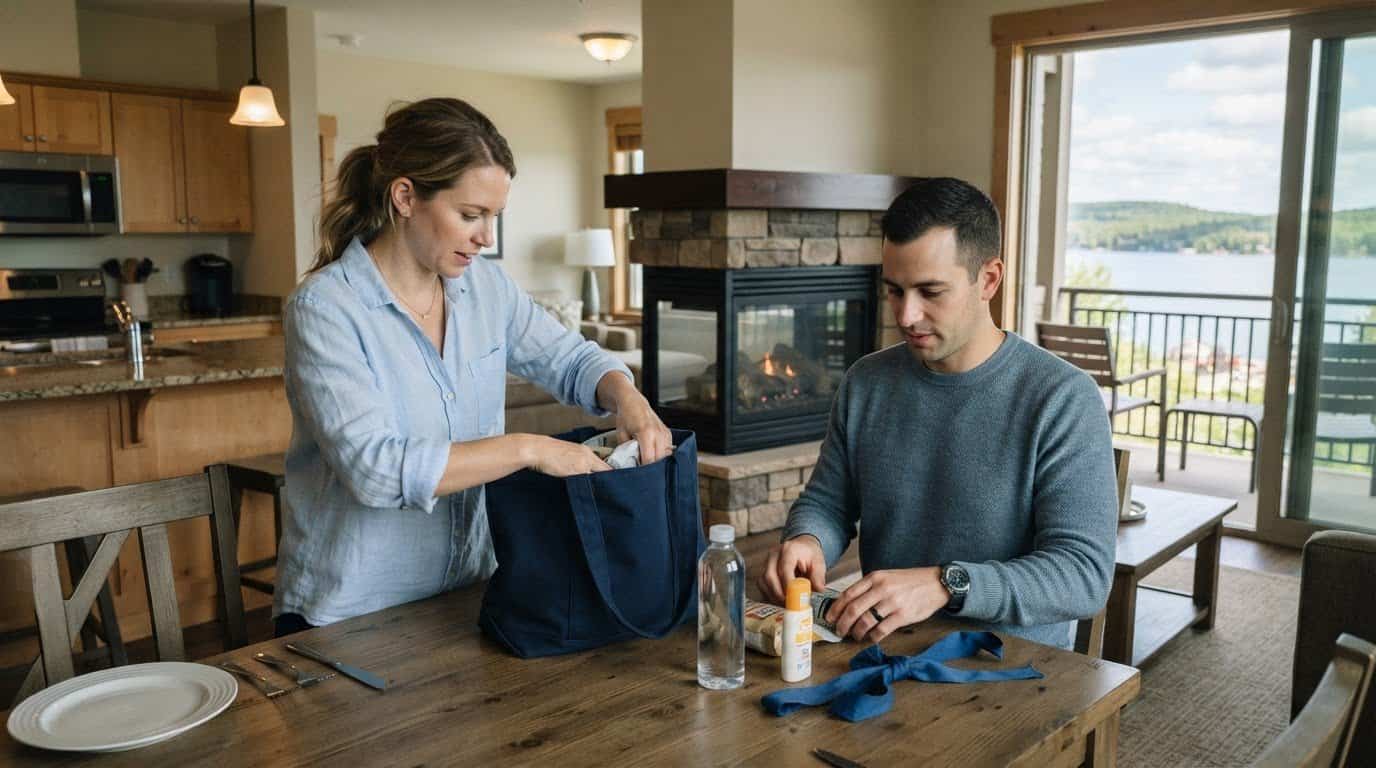
A discounted room block isn’t automatically the lowest-cost option. With a guaranteed block, you may be responsible for rooms guests don’t book; a courtesy block avoids that financial commitment. To book a hotel room block discount, compare the rate with deposits, booking deadlines, and terms for unfilled rooms.
It’s reasonable to want a simple way for guests to reserve nearby rooms at a group rate without adding uncertainty to wedding plans. This guide explains how room blocks work, how to estimate the number of rooms you may need, and how costs and deposits can differ between guaranteed and courtesy arrangements. You’ll also learn what to compare in the contract and how a booking link can give guests access to a special rate.
Key Takeaways
- Estimate room needs from how many guests are traveling and whether they’re likely to share accommodations.
- Compare the full stay terms, including taxes, fees, deposits, cancellation rules, and booking deadlines.
- Understand how courtesy and guaranteed blocks differ before deciding who carries the risk of unbooked rooms.
- Consider whether a discounted booking link could give guests a group rate without a traditional room commitment.
What’s a Hotel Room Block?
For a wedding, a hotel room block groups rooms under shared booking terms for attending guests. Compare the rate with the payment, cancellation, and release conditions before sharing the details.
-
Identify Group Rates and Guest Savings
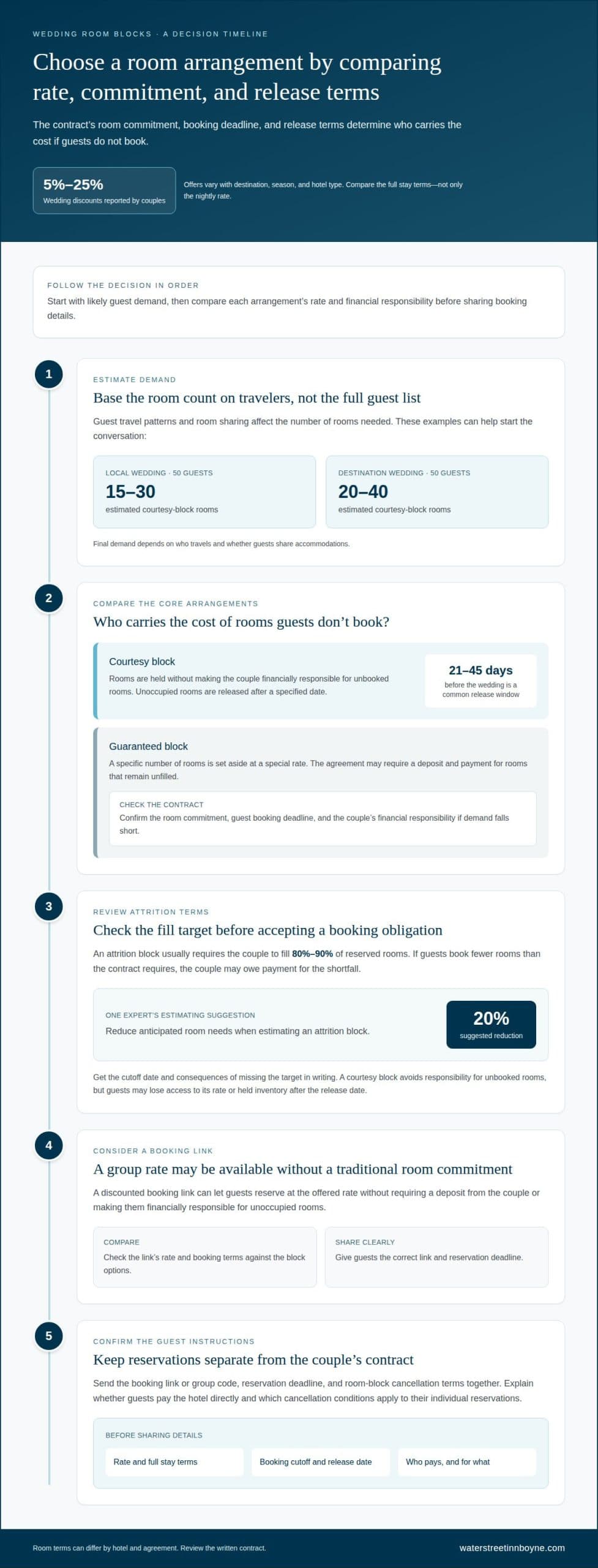
Ask how the discounted rate compares with the hotel’s regular rate for the same dates, room type, and amenities. Wedding discounts reported by couples have ranged from 5% to 25%, but destination, season, and hotel type affect the offer. Compare the full stay terms, not just the nightly rate, so guests can judge whether the block offers useful value.
-
Assess Room Needs and Negotiate Terms
Estimate guest demand before discussing rates. Hotels generally require at least 10 rooms per night for a room block to qualify for a special rate; some require 10-15. Demand and hotel policies shape the offer, while busy seasons and destination weddings may affect room rates. Ask whether the hotel can extend the booking cutoff or include useful perks, such as breakfast or shuttle service. Review deposit, cancellation, and attrition terms together: a typical allowable shrinkage clause lets 10-20% of rooms go unbooked without penalties.
- Plan accommodations around the guests traveling to the wedding, rather than the full guest list alone. For a local wedding with 50 guests, estimate 15-30 rooms for a courtesy block; for a destination wedding with 50 guests, estimate 20-40. These examples can help start the conversation, but guest travel patterns and room sharing affect the final estimate.
- Give guests the booking link or group code, reservation deadline, and room-block cancellation terms in one clear message. Explain whether guests pay the hotel directly and what cancellation conditions apply to their individual reservations. For example, the Centers for Disease Control and Prevention (CDC) used the group code “CDC” for reservations at its group rate. Clear details help out-of-town guests book without confusing their reservation with the wedding’s room commitment.
Room block costs, deposits, and contracts
- Separate guest charges from the couple’s contractual costs. Guests usually reserve and pay for their own hotel rooms, while a contracted block can make the couple responsible for rooms guests don’t book. Read the agreement to identify who pays each charge, when payment is due, and which obligations apply to the group rather than to individual reservations.
- Compare the full room cost, not just the nightly rate. Before signing, confirm whether quoted rates include taxes and fees, and note any additional charges in the agreement. For example, calculate a guest’s total for the planned stay using the quoted nightly rate, number of nights, and listed taxes or fees. This makes hotel comparisons clearer.
- Record every deposit term in one place. The contract should state the deposit amount, payment deadline, and whether the deposit can be refunded or applied to another obligation. Match each date to the wedding planning calendar, then note what happens if the event changes or the hotel block is canceled. Don’t assume the group deposit follows the same cancellation terms as a guest’s reservation.
- Review the room commitment and cancellation terms before accepting a guaranteed block. A contracted block reserves a specific number of rooms, and the couple may owe payment for rooms guests don’t book. Check how the agreement defines the commitment, when guests must reserve, and what financial responsibility remains if demand falls short.
- Keep the signed contract and any later changes together. Create a short record of the room count, group rate, deposit dates, booking cutoff, taxes, fees, and cancellation conditions. If the wedding venue or schedule changes, compare the new arrangements with the existing terms before sharing updated details with guests. This keeps the hotel agreement and booking information aligned.
Guaranteed room blocks, courtesy blocks, and discounted booking links
Choose an arrangement by weighing the group rate against the couple’s financial responsibility. The contract’s room commitment, booking deadline, and release terms determine how each option works.
-
Compare Courtesy and Guaranteed Blocks
Choose a courtesy block when guests need rooms held without making the couple financially responsible for unbooked rooms. The hotel releases unoccupied rooms after a specified date, often 21 to 45 days before the wedding. A guaranteed block sets aside rooms at a special rate, but may require a deposit and payment for rooms that remain unfilled. Compare both commitments before selecting a weekend arrangement.
-
Assess Attrition Block Arrangements
Review the attrition target before agreeing to a block that combines reserved rooms with a booking obligation. An attrition block usually requires the couple to fill 80-90% of the reserved rooms. One expert suggests reducing anticipated room needs by 20% when estimating an attrition block. Compare that adjusted estimate with the guest list, since a smaller commitment can reduce exposure if fewer guests book.
- Get the cutoff date and the consequences of missing the target in writing. For example, if guests reserve fewer rooms than the contract requires, the couple may owe payment for the shortfall. A courtesy block avoids that responsibility, but guests may lose access to its rate or held inventory after the release date. Share the deadline clearly so guests have time to book.
- Consider a discounted booking link if the group wants a special rate without a traditional room commitment. The link can let guests reserve at the offered rate without requiring a deposit from the couple or making them financially responsible for unoccupied rooms. Compare its rate and booking terms with the block options, then send guests the correct link and reservation deadline.
Hotel room block basics and how group booking works
Provide a clear booking path so guests can reserve rooms under the group’s arrangement. Keep reservation instructions separate from the couple’s contractual responsibilities.
-
Understand Group Booking Basics
Map the steps from the hotel’s room inventory to each guest’s reservation. A room block groups hotel rooms under shared dates and booking terms, while guests reserve individually through the method provided. Compare room types, stay dates, rates, and included amenities; don’t assume upgrades come with the group rate. This gives guests a practical picture before they choose a room.
-
Show Guests How to Book Block Rooms
Send guests the booking link or group code, hotel name, stay dates, and reservation deadline together. Guests book by opening the link or entering the code, selecting a room and dates, and completing the hotel’s reservation process. Explain where they’ll see payment and cancellation terms. Guests reserve directly with the hotel using the group’s designated booking method.
- Make the room-block instructions easy to forward. For example, provide one short message with the group-rate details, booking method, deadline, and contact information for reservation questions. Ask guests to use the link or code instead of searching for a standard room listing, which may not show the group terms. Keep the message current if the hotel changes its booking instructions.
- Track reservations without taking over guests’ payments. Maintain a simple record of who has booked and which dates they need, while each guest manages their own reservation with the hotel. If the weekend includes extra nights, state which dates fall under the group arrangement. This helps the couple distinguish confirmed guest stays from rooms still available in the block.
Water Street Inn
Water Street Inn can be a natural next step when choosing a setting for your wedding and accommodations for guests. Its Wedding Venue Rental offers a place to bring your celebration together, with a waterfront setting as the backdrop.
For a stay, the One Bedroom Suite features a fully equipped kitchen, a private balcony or patio, and a gas-log fireplace. These details can help you consider what kind of lodging suits your plans, while the room-block terms discussed above guide how you arrange guests’ reservations. Explore the wedding venue details as you consider the setting for your celebration.
Contact Water Street Inn to discuss your wedding plans.
Shape the Stay Around Your Celebration
As you move from planning room arrangements to imagining the wedding weekend, consider how the setting and your guests’ stay fit together. Booking a hotel room block discount is one part of the experience; choosing a venue and accommodations that suit your plans is another. Water Street Inn offers a Wedding Venue Rental and One Bedroom Suite as options to consider while planning your celebration.
Think about the atmosphere you want, the kind of gathering that feels right, and how guests will enjoy their time together. These details can guide your next planning conversation without making the room-block decision the only consideration.
Contact Water Street Inn to discuss your wedding plans and explore whether the setting fits your vision. A considered choice now can help make the celebration feel more personal and memorable.
Frequently Asked Questions
How Many Rooms Should You Block for a Wedding?
Base the estimate on guest travel plans and the wedding’s location. For a local wedding with 200 guests, a courtesy block estimate is 60-120 rooms; for a destination wedding with 200 guests, it’s 80-160 rooms. These planning ranges help frame a hotel conversation, but the number of out-of-town guests and expected room sharing should guide the final commitment.
How does it all work?
The couple arranges group booking terms with a hotel, then guests reserve their stays through the designated method. For example, a guest can choose arrival and departure dates, select an available room, and complete the reservation directly with the hotel. The couple can share one set of instructions to help guests find the group booking details.
How many rooms should I reserve?
Start with the share of guests likely to need overnight stays, rather than reserving for the entire guest list. One planning approach is to estimate rooms for 30-40% of wedding guests, then adjust for out-of-town attendance and guests sharing rooms. For example, a guest list with few travelers will call for a different estimate than one with many destination-wedding attendees.
Are Rooms Cheaper When Booked in Bulk?
Sometimes, but a group booking isn’t automatically the lowest rate. Compare the block with the hotel’s public rate for matching dates, room type, and stay length, then account for taxes, fees, and cancellation terms. Some hotels offer a group incentive, such as one free room for every 20 rooms booked, so include applicable perks when comparing overall value.
So What Do I Do?
First, estimate how many guests need rooms and when they’ll arrive. Next, request the rate and written terms for the number of rooms you expect to need. Compare payment responsibility, cancellation conditions, and the release deadline before choosing an arrangement. Once the details are settled, send guests one clear message with the booking method, stay dates, and reservation deadline.
What is the average discount for booking a hotel room block?
A typical courtesy room-block discount is 10%-20% off the regular rate, but that range isn’t a guaranteed average for every hotel or date. The offer can vary with destination, season, and hotel type. To judge a particular offer, compare the same room category and dates, and consider the full reservation terms alongside the rate.