

What if the kindest thing you can do for out-of-town wedding guests isn’t choosing one hotel, but making every next step easy to understand? Figuring out how to accommodate out-of-town wedding guests means thinking beyond a place to sleep. Guests need clear details and enough time to plan travel, compare lodging, and feel comfortable with the arrangements.
You may be balancing different budgets, arrival times, and mobility needs while trying to keep wedding updates from becoming scattered. A thoughtful plan doesn’t mean making every decision for your guests. It means putting the essentials in one easy-to-find place and offering useful choices, so each person can plan a stay that works for them.
This guide covers sharing lodging options, organizing travel information, and communicating key details without overwhelming anyone. You’ll also find simple ways to welcome guests, from noting residential-style suites with fully equipped kitchens to sharing a clear weekend itinerary. With practical information in hand, guests can focus less on logistics and more on celebrating with you.
Key Takeaways
- Learn how to accommodate out-of-town wedding guests with a plan that supports different travel needs without taking over every decision.
- Create a simple communication sequence and a reliable hub so guests can find essential details and updates in one place.
- Compare hotels, suites, and shared rentals by the privacy, flexibility, and shared space they offer.
- Prepare practical arrival and comfort details that help guests feel oriented around the celebration.
- See how lodging and venue choices can complement each other while leaving guests free to choose where they stay.
How to Accommodate Out-of-Town Wedding Guests by Starting With Their Needs
Thoughtful planning doesn’t mean managing every trip from departure to check-in. To understand how to accommodate out-of-town wedding guests, start by considering who is traveling, what information they’ll need, and where a little extra guidance could make the celebration easier to attend.
Estimate how many invited guests may be coming from out of town, then consider likely travel patterns. Will people drive, arrive by air, travel together, or come from different directions? You don’t need to predict each person’s itinerary. Look for shared needs, such as clear arrival instructions or information about getting between lodging and the celebration.
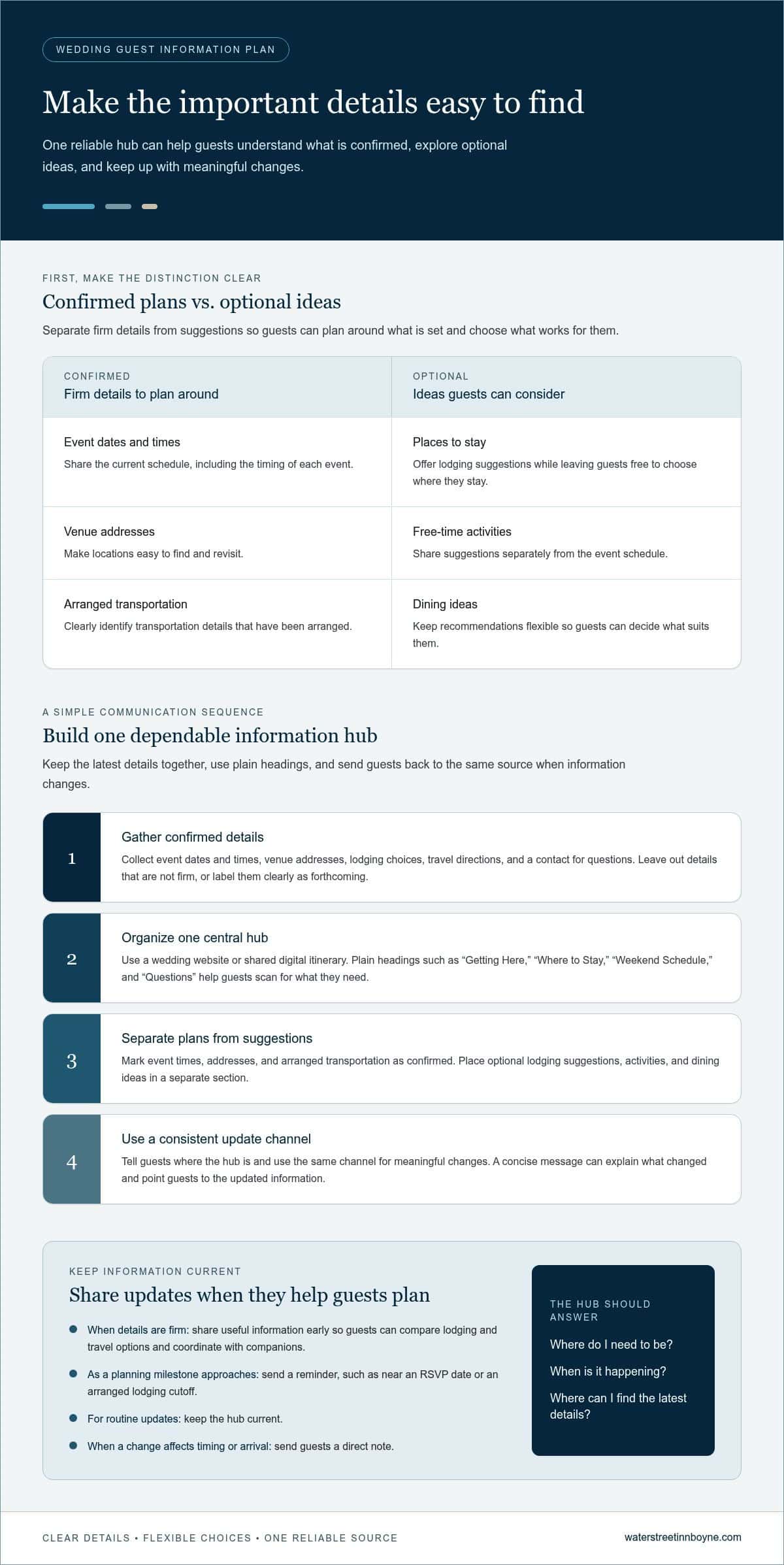
Separate essential details from optional suggestions. Essential information helps guests make decisions: event dates and times, venue address, the schedule, and confirmed travel or lodging details. Optional recommendations might include places to stay, ideas for free time, or suggestions for guests who want to explore. Label the difference so guests know what’s a firm plan and what they can treat as a suggestion.
Which guests need extra planning support?
Consider older relatives, families with children, and guests with mobility needs when reviewing the plan. Preferences vary, so avoid assumptions about what someone can or can’t do. Instead, invite guests to share relevant needs privately, such as step-free access or extra time between events. Ask only for information that helps you plan, and make the request warm and optional.
Think about varied arrival times, too. Some guests may arrive before the wedding day; others may reach their lodging shortly before an event. Make the current schedule easy to find and explain where updates will appear. Guests unfamiliar with the celebration’s format may also appreciate a simple outline, from the ceremony through the reception. A general overview of Wedding Reception Planning can help couples think through the reception’s place in the event schedule.
What should couples decide before sharing lodging ideas?
Set priorities before recommending places to stay. Is convenience near the venue most helpful, or would a range of choices better suit different budgets and preferences? Consider privacy, shared space, and flexibility, while remembering that no single arrangement will suit everyone. Recommendations can guide guests without suggesting they must stay in one place.
Be clear about what you’ll coordinate and what guests will arrange themselves. You might share venue directions, event timing, and lodging ideas, while leaving guests to book their preferred accommodation and plan their route. This keeps your role manageable and gives guests room to make choices that fit their needs.
Before sharing lodging suggestions, gather the details people need to compare options: celebration dates, event locations and times, and any transportation information you have. Sharing these details early gives guests more time to consider travel and coordinate plans with family or companions. A calm, organized starting point can make the journey feel less uncertain, even when each guest’s arrangements differ.
Build a Clear Wedding-Guest Information and Communication Plan
A reliable information hub saves guests from searching old messages for a venue address or schedule change. It also gives you one place to keep details current. When planning how to accommodate out-of-town wedding guests, focus on making essential information easy to find, understand, and revisit, rather than sending more messages.
Build the plan in a simple sequence:
- Gather confirmed details. Collect event dates and times, venue addresses, lodging choices, travel directions, and a contact for questions. If a detail is still being finalized, leave it out or label it clearly as forthcoming rather than presenting a guess as fact.
- Organize one central hub. A wedding website or shared digital itinerary can hold the latest information. Use plain headings such as “Getting Here,” “Where to Stay,” “Weekend Schedule,” and “Questions.” Guests should be able to scan the page and find what they need without reading every section.
- Separate confirmed plans from ideas. Mark event times, addresses, and arranged transportation as confirmed. Put optional lodging suggestions, activities, or dining ideas in a separate section. This helps guests plan around firm details while keeping recommendations flexible.
- Share updates through a consistent channel. Tell guests where the hub is and use the same channel for meaningful changes. A concise message can explain what changed and point to the updated page, rather than repeating every detail in separate texts or emails.
When should guests receive accommodation information?
Share useful details as soon as they’re firm enough to be accurate. Early information gives guests time to compare lodging and travel options and coordinate with companions. Send a reminder as a key planning milestone approaches, such as an RSVP date or a lodging cutoff you’ve arranged. Keep routine updates on the hub, and send a direct note when a change affects the schedule or arrival plan.
For broader ideas about coordinating travel around an event, the U.S. Department of Transportation’s DOT Travel Management for Special Events offers a useful planning reference. Adapt relevant guidance to your celebration and the information you can confirm.
What belongs in a wedding guest information hub?
Include practical directions, lodging choices, the event schedule, and a way to reach the designated contact. Note when the page was last updated so guests can tell they’re viewing current details. If schedules or arrangements change, revise the hub promptly and send a brief notice explaining where the new information appears.
Not everyone checks wedding websites regularly or uses the same technology. Offer a simple alternative, such as a printed itinerary or a direct copy of key details for guests who prefer offline information. Couples can also share the wedding venue details as guests review event information. One current, easy-to-use source helps everyone feel oriented without requiring you to manage each person’s travel plans.
Compare Hotels, Suites, and Shared Rentals for Wedding Guests
Lodging is personal. A solo traveler may want a private room and a simple check-in, while relatives traveling together may value a shared living area where they can spend time between events. When considering how to accommodate out-of-town wedding guests, compare what each format offers instead of assuming one arrangement will suit everyone.
When might a hotel, suite, or shared rental suit guests?
A traditional hotel room can feel familiar and straightforward, especially for guests who want their own private space. Suites may offer a more residential feel, with room to unwind and, depending on the property, amenities such as a kitchen or outdoor space. A shared rental can bring a group under one roof, which some families or friends may enjoy, though shared spaces require coordination.
Household size and travel plans matter. A guest arriving alone may prioritize privacy; a family may appreciate extra space or the flexibility of a kitchen. Friends traveling together might prefer to coordinate a shared stay, while others will want to choose their own lodging.
| Option | Privacy and shared space | Flexibility to consider |
|---|---|---|
| Hotel room | Typically offers a private room, with common areas shared throughout the property. | A familiar, individual stay may work well for guests traveling alone or keeping their own schedule. |
| Suite | May provide a more home-like layout and residential amenities; features vary by property. | Can suit guests who want space to relax or prefer amenities such as a kitchen. |
| Shared rental | Offers group lodging with shared areas, while bedroom privacy depends on the layout. | Can work for guests coordinating plans together, provided they’re comfortable sharing space. |
At Water Street Inn, suites include fully equipped kitchens, private balconies or patios, and gas-log fireplaces. These residential comforts may appeal to guests who want more than a standard hotel-room setting. The vacation-rental information can help guests explore suite-style stays as they compare lodging formats.
How can couples offer choices without creating pressure?
Present lodging types in neutral language. Share a few options and describe practical differences, such as private versus shared space, kitchen access when known, and how each may fit a guest’s travel plans. Avoid implying that a particular property is the expected choice or that guests should book together. Let each person decide what feels comfortable.
Keep comparisons focused on features, not assumptions about who will share a room. If guests ask for recommendations, point them to the priorities that matter to them: privacy, flexibility, household needs, and preferred travel arrangements. A considerate range of choices gives people room to plan a stay that feels right, while keeping your role focused on sharing helpful information rather than arranging everyone’s lodging.
Coordinate Arrivals, Meals, and Comfort for Traveling Wedding Guests
A smooth wedding weekend doesn’t require you to organize every guest’s itinerary. It helps to anticipate small points where travel can feel uncertain: finding the right entrance, knowing when an event begins, or working out what to do between gatherings. A practical checklist can make arrival and downtime more comfortable for everyone.
What travel details make arrival easier?
For each event, share the full address, start time, and useful arrival instructions, such as where to enter or where parking is available. If transit information is relevant, include it alongside directions; for guests flying in, sharing trusted airport transfer providers such as 1Executive Car can make ground travel effortless. Name a contact person for questions on the day, and make clear when guests can access scheduled events. If the celebration begins later than their arrival, let guests know they’ll need to plan that interval independently.
Keep the information easy to scan. A short arrival note might say: “The welcome gathering begins at the posted time. Please use the main entrance; the current schedule and directions are on the wedding information page.” If a delay or change affects guests, send a concise message through the channel you’ve already shared, state what changed, and point them to the updated schedule. Clear updates reduce uncertainty without filling inboxes with repeated details.
Comfort also includes access. Provide practical information you know about the event space, and give guests a private, low-pressure way to request assistance with arrival or moving between scheduled activities. You don’t need to ask for personal details that aren’t relevant. A simple invitation to share what would make the day easier gives guests a chance to speak up.
How can couples make downtime feel welcoming?
Travel can leave guests ready for a quiet stretch, not another activity. Leave breathing room between arrival and the first gathering, and avoid making optional plans feel like part of the required itinerary. A relaxed afternoon or open evening gives guests time to settle in, rest, or catch up with family at their own pace.
Meal gaps deserve a little thought. Mark which meals or gatherings you’re hosting and which are independent, so nobody has to guess whether food is part of the plan. If guests will need to arrange their own meal, say so plainly and offer optional dining suggestions. Pointing to curated regional experiences—similar to how destination hosts might highlight day outings like Wine Tours of Sedona—can also give guests inspiring ideas for making the most of their free time.
- Before arrival: Share event addresses, start times, directions, and the day-of contact.
- Between events: Identify unscheduled time and clarify whether meals are hosted or independent.
- If plans change: Send a brief update and direct guests to the current schedule.
- For individual needs: Offer a private way to request relevant assistance.
These simple touches are central to how to accommodate out-of-town wedding guests without taking responsibility for every travel decision. Couples considering a celebration at Water Street Inn can explore the wedding venue as they shape a welcoming plan for the events around it.
Make Wedding Guest Lodging Part of a Welcoming Venue Plan
A wedding venue and guest lodging can shape one another without requiring every guest to stay in the same place. Consider the feel of the celebration alongside the kinds of stays your guests may prefer. Some may appreciate a familiar hotel room, while others may value room to settle in and enjoy residential comforts. The goal is to make the options feel connected, not prescribed.
Water Street Inn is an all-suite condominium hotel with wedding venue offerings. Its suites include fully equipped kitchens, private balconies or patios, and gas-log fireplaces. These features can appeal to guests who value a home-like setting during a wedding trip, especially if they appreciate having a comfortable place to return to between events. Guests can still choose lodging that fits their own plans and preferences.
What should couples consider when venue and lodging are connected?
Think about how the venue setting may complement the guest experience. Water Street Inn’s wedding venue rental includes access to a private beach area and indoor event spaces, offering different settings within the property. Describe these features accurately, without implying a particular ceremony or reception setup. Guests can then understand the character of the venue as they consider their accommodation and travel choices.
Venue and lodging details can also help you build a more coherent weekend plan. Clear event timing and directions remain useful whether guests stay nearby or make other arrangements. Guests who prefer a suite with residential amenities can weigh those comforts against their travel needs. Thoughtful guidance lets guests make their own decisions while giving them a clearer picture of how the celebration and stay may fit together.
Couples considering Water Street Inn can explore the wedding venue details to learn more about its event spaces and private beach access. Reviewing venue features alongside guest priorities is a practical final step in deciding what information to share and which lodging choices to present.
How can couples take the next planning step?
Make a short comparison between your guests’ likely preferences and the features available. For example, consider whether residential comforts, a private outdoor space, or an indoor event setting may matter to your plans. Keep confirmed property features distinct from the arrangements each guest will make independently.
This final check brings the planning back to the central question of how to accommodate out-of-town wedding guests: how can you make attending more comfortable while respecting each person’s choices? Share what’s useful, leave room for different arrangements, and let guests decide what works for them. If you’re considering a venue with wedding spaces and suite lodging, explore Water Street Inn as you plan.
Shape a Welcome That Feels Like You
A reassuring guest experience often begins before anyone arrives, with a plan that feels considered, clear, and true to the celebration you want to host. Picture the first few hours of the wedding weekend from a guest’s perspective. What would help them feel oriented, comfortable, and free to enjoy the occasion? That question can guide your final choices.
There’s no single formula for how to accommodate out-of-town wedding guests. Your plan can be thoughtful without being elaborate, and welcoming without asking you to manage every detail. Let your guests’ needs and the atmosphere you hope to create lead the way.
As you explore a setting for your celebration, discover how Water Street Inn’s venue and accommodations could complement your plans. Explore Water Street Inn and take the next step toward a gathering that feels warm, personal, and easy to look forward to.
Frequently Asked Questions
Can I recommend one place for wedding guests to stay?
Yes, you can name a preferred place, as long as guests understand it’s a suggestion rather than a condition of attending. Explain why you chose it, such as its location relative to the event or the kind of stay it offers, and include other options when practical. A warm note like “This is one convenient choice, but please book wherever suits you” keeps the invitation welcoming and leaves the decision with each guest.
How far in advance should I share wedding lodging information?
Share lodging details once the core wedding plans are settled enough to be accurate. For couples deciding how to accommodate out-of-town wedding guests, providing information early gives people time to coordinate dates, companions, and travel arrangements. Timing depends on your wedding schedule and on how far guests are traveling or what support they need. If a detail changes, update the information so guests aren’t relying on an outdated message.
Is it okay to ask wedding guests about accessibility needs?
Yes. Invite guests to share relevant accessibility needs privately, using a short, respectful message rather than asking in a group chat. You might offer a direct email or phone contact and ask only what would help them take part comfortably. Early notice can help you provide useful event information and plan thoughtfully. Keep personal details discreet, and describe arrangements accurately without assuming what any guest can do.
What should a wedding welcome bag include for out-of-town guests?
A welcome bag can include a brief note, a concise itinerary, practical contact details, and a small refreshment suited to the guests you’re welcoming. Choose items that are easy to carry and useful after arrival, rather than filling the bag for appearance alone. It’s an optional gesture, not a requirement or a measure of hospitality. A sincere greeting and clear event information can feel just as thoughtful without a gift.
Can wedding guests stay together in a shared rental?
Yes, a shared rental may work for friends or relatives who want to coordinate their stay, but it won’t suit every group. Consider whether guests are comfortable sharing common areas, how household routines may differ, and whether anyone values a private retreat. Present shared lodging alongside individual-room options, and let guests decide independently. The best fit depends on each group’s relationships, preferences, and travel plans.
What happens if a guest’s travel plans change at the last minute?
If a guest’s plans shift, keep the wedding-day schedule and designated contact easy to access, then share changes that affect event timing or attendance. Guests may need to adjust their own route or lodging, while your update can clarify whether a gathering time or meeting point has changed. Avoid promising to solve travel disruptions. A calm, concise message helps everyone work from the same current event information.