What if the most relaxing part of your getaway happens after you return from exploring? Hotels with comfortable living room areas can make downtime feel like part of the trip, but a room description may not tell you whether the seating is comfortable, the layout is practical, or there’s enough room to spend time together.
Look beyond room labels and attractive photos. The right fit depends on how the space is arranged, whether you want privacy, and which amenities will make your stay easier. This guide explains how to assess those details, compare standard rooms with suite-style accommodations, and choose a space that suits the way you travel.
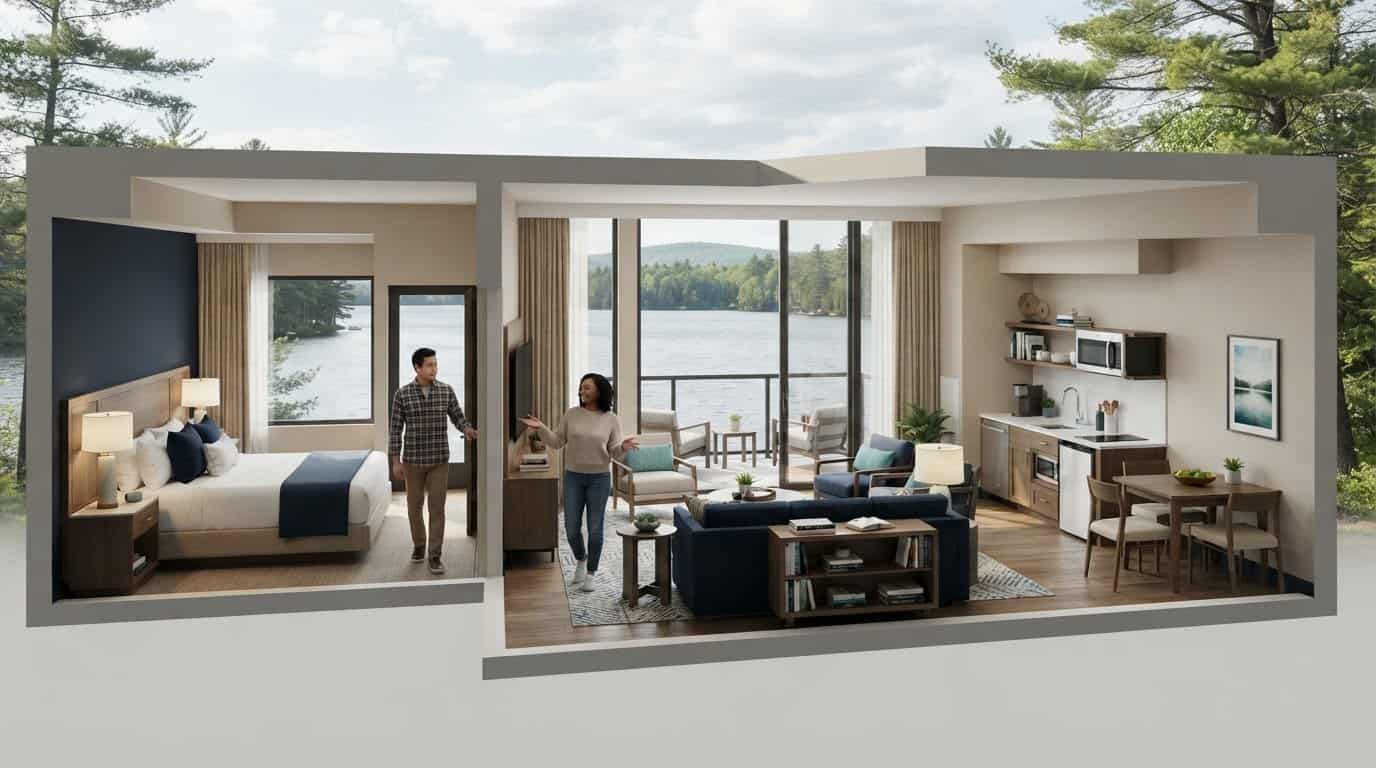
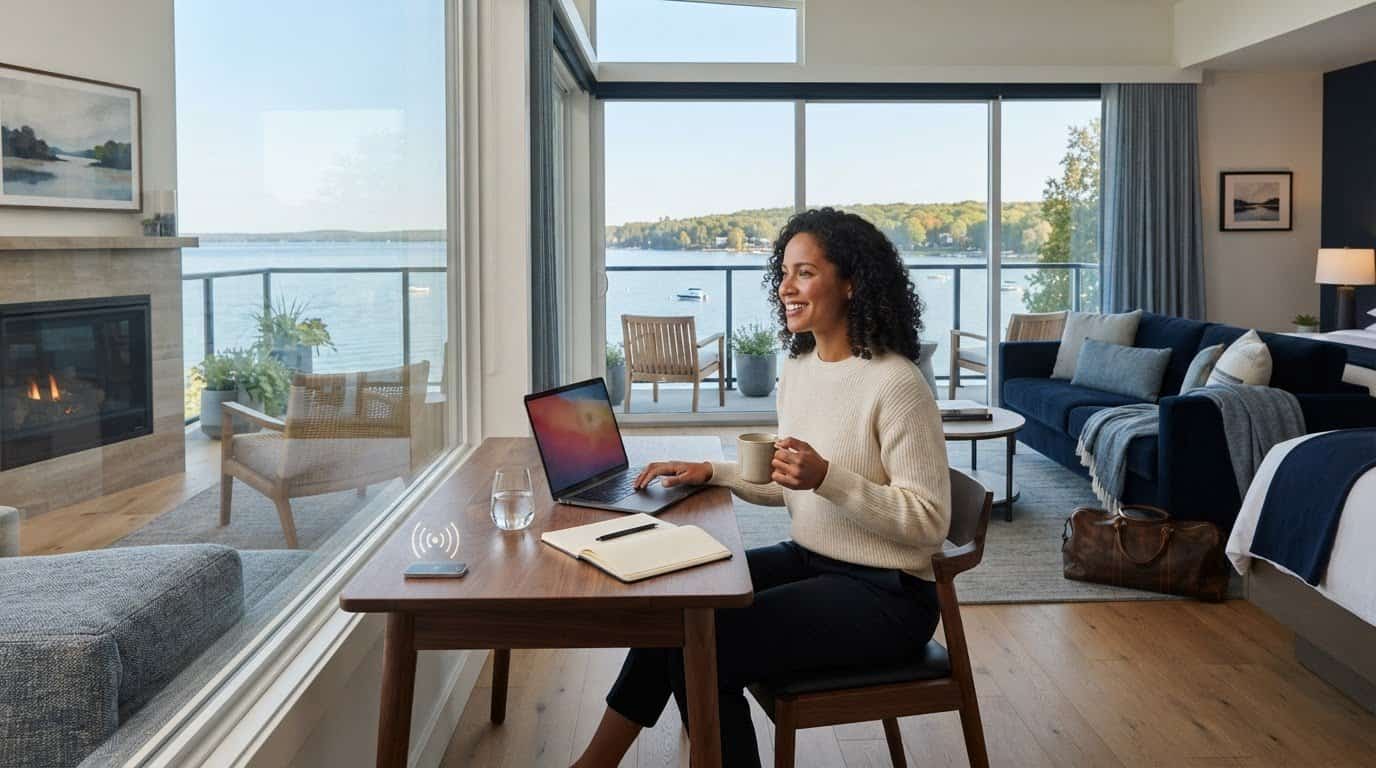
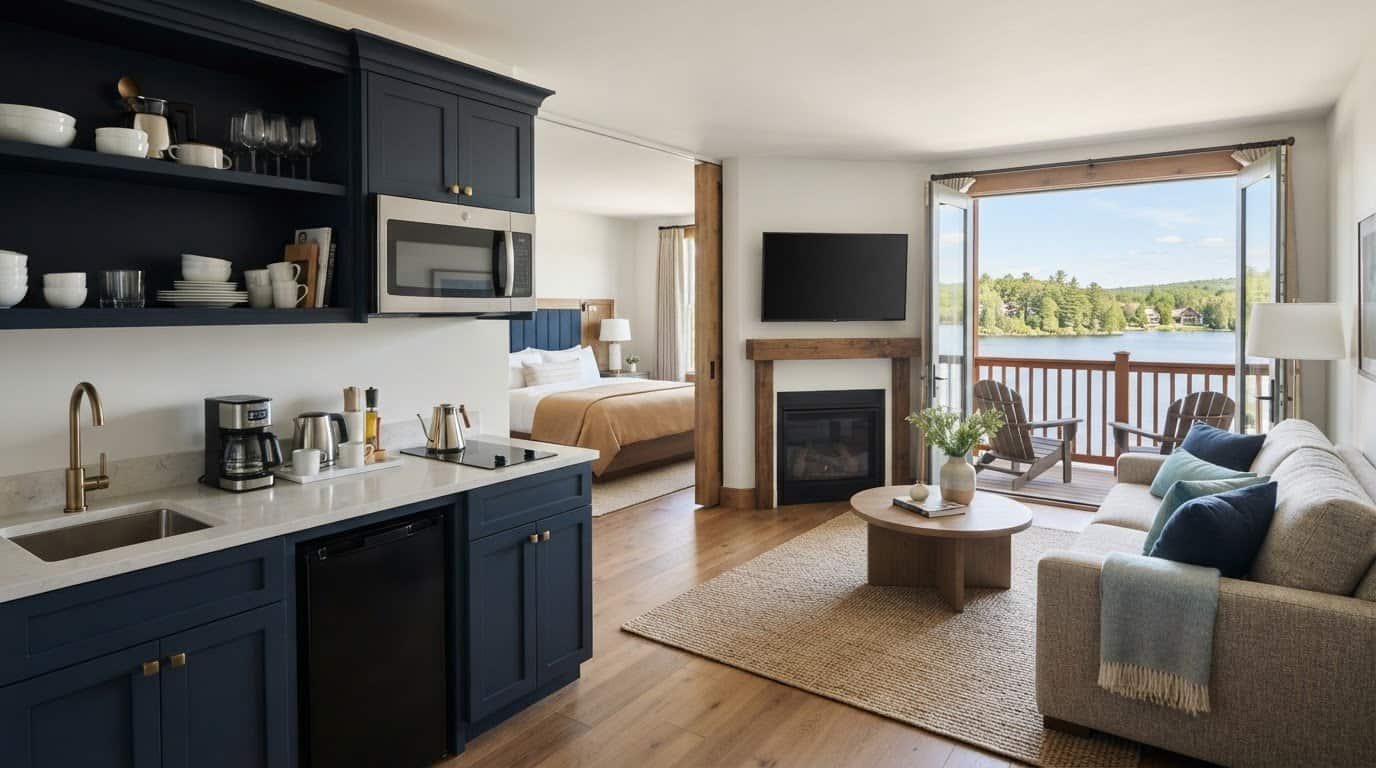
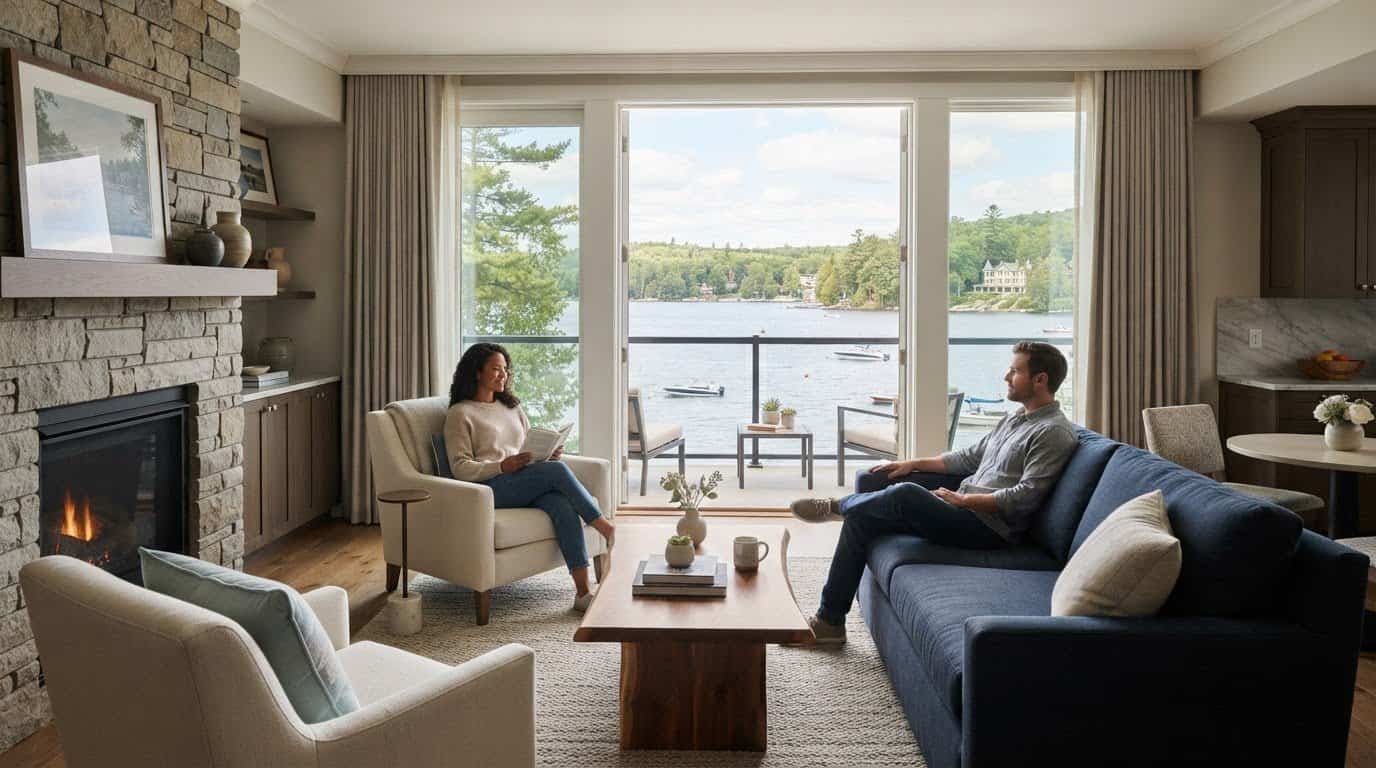
Water Street Inn is an all-suite condominium hotel. Each suite includes a fully equipped kitchen, a gas-log fireplace, and a private balcony or patio with lake views. These home-like features offer inviting ways to enjoy a quiet moment between outings, without implying a particular living-room layout. Here’s what to look for when choosing a comfortable place to return to at the end of the day.
Key Takeaways
- Look beyond a sofa in the room description: consider seating comfort, room to move, and whether the layout suits how you’ll spend downtime.
- When comparing hotels with comfortable living room areas, weigh the privacy of an in-room space against the shared setting of a hotel lounge.
- Match the accommodation to your trip by deciding whether private relaxation, time together, or practical amenities matter most.
- Use room photos and layout details to judge how the space may work for your stay, rather than relying on labels alone.
- Consider whether a suite-style stay and its amenities offer the kind of residential feel you want between outings.
Why a Comfortable Hotel Living Room Area Changes the Feel of a Stay
A hotel living area is a place to relax beyond the bed, such as a dedicated lounge or a small seating nook. Its size and layout vary by property, so the label alone won’t tell you how the space will work in practice.
That difference matters after a full day out. Comfortable seating gives you somewhere to read, chat, plan the next outing, or take a break without settling on the bed. Room to move and a layout that suits your routine also help downtime feel restful rather than cramped. When comparing hotels with comfortable living room areas, focus less on a particular room style and more on whether the space supports the way you want to spend your time.
What counts as a hotel living room area?
A dedicated lounge is a distinct area set aside for sitting and relaxing. A seating corner may be a chair or sofa within the main room. Neither label guarantees a specific amount of space or arrangement. Hotel suites can include a living or sitting area, but terminology and layouts differ. For background, see hotel suite definitions and features.
Look for photos and descriptions that show where the seating sits in relation to the bed and other furnishings. Images can help you judge whether there appears to be a clear path through the room; a written layout description may clarify whether the seating is in a separate zone or shares the bedroom. Consider what you’ll do there instead of assuming that “sitting area” means a full lounge.
When is separate relaxation space most useful?
Extra seating is useful when you want to rest without lying down, spend a quiet evening indoors, or take a break between outings. On a longer stay, a place to sit can make the room more adaptable from day to day. Think of practical uses such as reading, conversation, or taking a pause between plans.
Traveling with someone else can make that flexibility especially valuable. More than one place to sit gives each person options, whether one wants to read while another talks or checks plans. It doesn’t guarantee privacy, and a small nook won’t function like a separate lounge, but even modest seating can make shared downtime feel less limited.
Consider the living area as part of the stay, not just an extra furnishing. The best fit depends on your routines, who’s traveling with you, and how much time you expect to spend in the room. Reviewing the layout before booking helps set realistic expectations and narrow your choices.
The Comfort Details to Notice in a Hotel Living Area
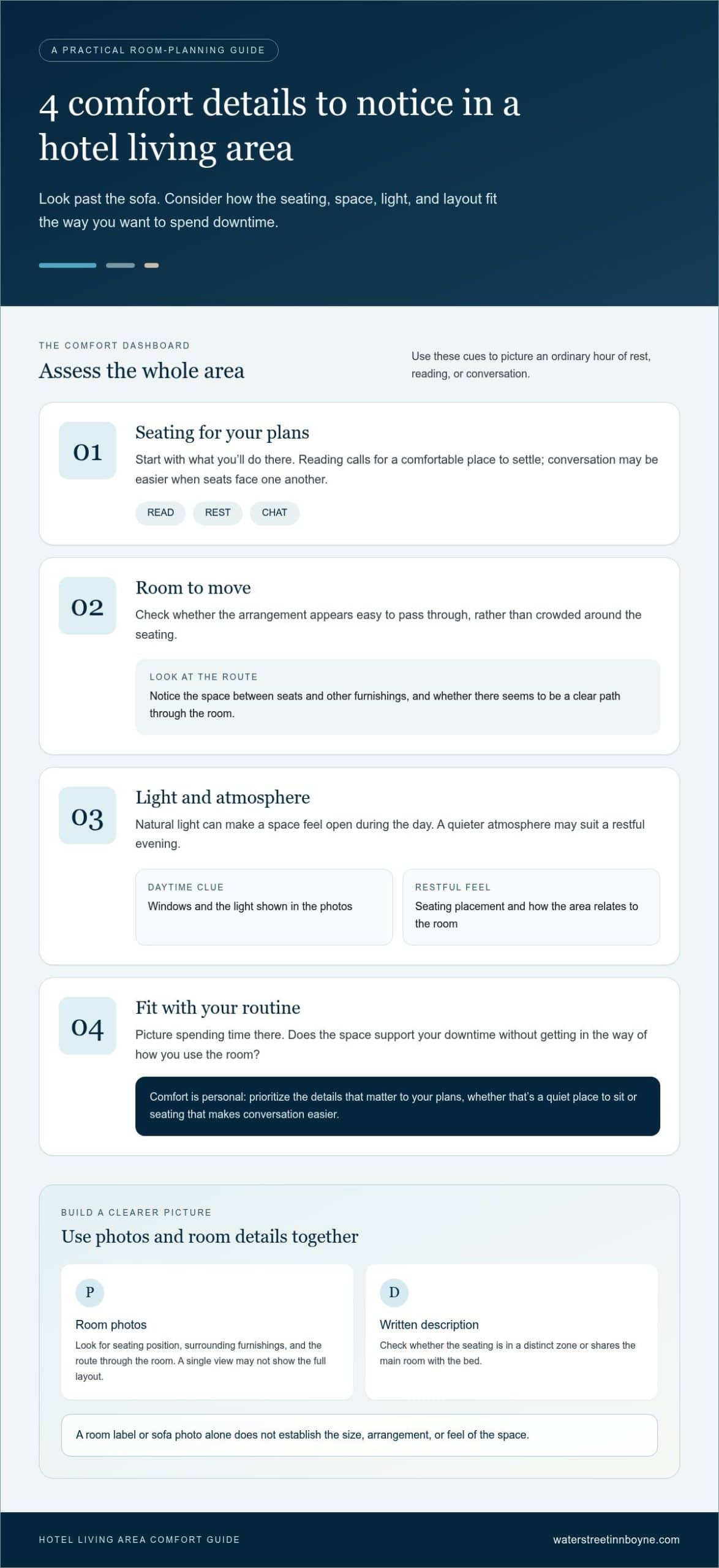
A sofa in a room photo can look inviting, but comfort depends on how the whole area works for you. Consider what you’ll do there, how easily you can move around, and whether the light and atmosphere suit a quiet break. These details help distinguish a useful lounge from seating that’s present but awkward to use.
Seating and space that support real downtime
Start with the activity you have in mind. Reading calls for a comfortable place to settle; conversation may be easier when the seating faces another person. Check the position of the seats and whether the arrangement appears to leave a clear path through the room.
Lighting and atmosphere for a relaxing stay
Natural light can make a space feel open during the day, while a quieter atmosphere may suit a restful evening. Photos offer clues, including the windows, seating placement, and how the living area relates to the rest of the room. Use them alongside the written description, since photos can’t show every detail.
Comfort is personal, not a furniture checklist. Someone planning to read in the evenings may prioritize a peaceful place to sit, while travel companions may care more about seating that makes conversation easy. Before booking, picture a typical hour of downtime and consider whether the space shown would support it.
Use the property’s photos and room description together. Look beyond a close-up of a sofa: does the image show the surrounding area, the route between furnishings, and the relationship between seating and sleeping space? Then check whether the description identifies a distinct zone or a combined room. If there’s only one view, don’t assume it shows the full layout.
- Seating: Does it look suited to your plans, such as reading, resting, or chatting?
- Room to move: Does the arrangement appear easy to pass through, rather than crowded around the seating?
- Light: Do the photos suggest a bright daytime setting or a more sheltered, restful feel?
- Overall use: Can you picture spending time there without the space getting in the way of your routine?
A functional hotel lounge has seating suited to your downtime, a layout that’s easy to move through, and an atmosphere that feels restful. That’s a more useful measure than the presence of a sofa alone. To compare hotels with comfortable living room areas, match these visible clues to your needs. If you’re considering suite-style accommodations, browse Water Street Inn’s vacation rental accommodations.
Hotel Room, Suite, or Shared Lounge: Which Space Fits Your Stay?
Each type of space supports a different rhythm. A standard room centers on sleeping and essential downtime. A suite-style accommodation may offer a more residential feel, while a shared lounge gives you somewhere to relax outside your room. Choose based on how much time you expect to spend indoors and whether you prefer a private retreat or a communal setting.
| Space | Typical layout | Downtime | May suit |
|---|---|---|---|
| Standard room | Sleeping area, sometimes with a small seating corner | Resting briefly, reading, or preparing for the next outing | Short stays or trips spent mostly outside the accommodation |
| Suite-style accommodation | Configurations vary; some include a sitting or living area | Relaxing in a more residential setting, depending on the layout | Longer stays or travelers who expect to spend more time in their room |
| Shared hotel lounge | Communal seating outside guest rooms | Taking a break in a common space | Guests who don’t need all relaxation space to be private |
Room labels are a starting point, not a floor plan. A suite doesn’t automatically include a separate living room, and a standard room may have a seating nook that works well for a short evening break. Compare the stated layout and features with your plans.
When a standard hotel room may be enough
If your itinerary keeps you out for most of the day and you mainly need a comfortable place to sleep, a standard room may be a good fit. A small seating corner can work for a quiet drink, a few pages of a book, or a moment to regroup. Its suitability depends on what you need from the room, not on the category alone.
When suite-style lodging may suit a more relaxed pace
A suite-style stay may suit you if you expect slower mornings, restful evenings, or more time in your accommodation. Water Street Inn’s all-suite condominium hotel offers home-like amenities, including a fully equipped kitchen and gas-log fireplace. Those features don’t establish a particular room layout. Explore the suite-style vacation accommodations as you consider this kind of stay.
A shared lounge is an alternative when you want a change of setting but don’t need private seating in your room. Its communal nature can work well for a short pause, though it won’t provide the same personal space as an in-room area. Consider when you’d use it and whether sharing the space suits your plans.
Compare function as well as room labels. Layout, privacy, intended use, and the amount of time you’ll spend relaxing all help determine whether a standard room, suite, or shared lounge best fits your stay.
How to Evaluate Hotel Living Room Areas Before You Book
A few deliberate checks can turn room descriptions and photos into a practical comparison. Start with how you’ll use the space, then assess the available information against your priorities. This keeps the decision grounded in your trip rather than an appealing label or a single photo.
Match the living area to your travel plans
Consider who’s traveling, how long you’ll stay, and when you expect to spend time in the accommodation. A short visit with full days outdoors may call for different comforts than a longer stay with quiet evenings inside. Separate your must-haves from pleasant extras, since travelers’ schedules and priorities differ.
- Define the trip’s rhythm. Think about whether you’ll mostly return to sleep, pause between outings, or spend unhurried time indoors. If your plans depend on the season, consider how outdoor activities and time in your room will balance. For cold-weather inspiration, explore winter activities as you plan the pace of your stay.
- Decide what matters most. Choose whether private relaxation, shared downtime, or practical amenities should guide your search. You might prioritize a private place to unwind or value a kitchen for preparing simple meals. Keep essential needs separate from features that would simply make the stay more appealing.
- Inspect the layout information. Read the room or suite description, then compare it with the photos. Look for clear details about the spaces and features shown. Notice whether there’s more than one view, but don’t infer separate rooms, exact dimensions, or a specific arrangement from a cropped photo.
- Compare and choose. Review your strongest options against the same short list of priorities. Ask whether the described space suits your plans, the visible layout looks practical, and the accommodation includes the amenities you value. Choose the option whose stated features best match your trip, rather than the one with the most appealing label.
Read room descriptions and photos with care
Descriptions can clarify which amenities are part of an accommodation, while photos offer visual clues about how spaces relate to one another. Neither guarantees how the room will feel in person. Use both, and treat details that aren’t clearly shown or described as unknown rather than filling the gaps with assumptions.
This process helps narrow your options without overvaluing a sofa or a suite label. When comparing hotels with comfortable living room areas, focus on your own routines: how you’ll relax, which amenities will help, and whether the available information supports your plans. Choose a stay that leaves room for both outings and a welcome pause indoors.
A Suite-Style Stay with Room to Unwind at Water Street Inn
For travelers looking for hotels with comfortable living room areas, a suite-style stay can offer more than a place to sleep. Water Street Inn is an all-suite condominium hotel with home-like amenities for a slower, more flexible pace. The combination of practical comforts and places to pause can appeal to travelers who want downtime built into their stay, without assuming that every suite has the same living-room layout.
Everyday comforts that make a stay feel more residential
A fully equipped kitchen in each unit can make daily routines more flexible. It gives guests the option to prepare food during a getaway, whether they want a simple start to the day or a quiet break between plans. Kitchen facilities can also help guests settle into a familiar rhythm during a longer stay.
Each unit also features a gas-log fireplace, adding a warm, inviting element to time indoors. It can be part of an evening set aside for conversation or a peaceful pause after a day out. The fireplace is a suite amenity, but it doesn’t establish where it sits in the unit or indicate a separate living room. Consider it alongside the kitchen and other features when assessing the overall suite experience.
Together, these amenities offer a residential alternative to a standard hotel-room experience. Practical features shape a stay throughout the day, not just at bedtime. Guests can take a pause indoors and make room for unplanned downtime, while keeping in mind that amenities and the arrangement of each space are separate considerations.
A change of scene beyond the suite
Every unit has a private balcony or patio with lake views, extending the stay outdoors without requiring a particular room layout. It’s another place to pause, take in the view, or enjoy a quiet transition between activities. Guests also have access to a private beach as a separate property amenity.
These features offer more to consider than indoor furnishings alone. A kitchen supports practical routines, a fireplace brings a welcoming note to time inside, and a private balcony or patio provides another place to enjoy the surroundings. Access to the beach adds an outdoor option. Each feature has a distinct role in creating a stay with room for both activity and rest.
If this blend of residential amenities and lakeside downtime suits your getaway, explore Water Street Inn’s suite accommodations and start planning your stay. Choose the comforts that fit your pace, with a welcoming place to return to between outings.
Choose a Stay That Makes Room for Your Own Pace
As you plan, picture the moments between the main events: returning after a day out, easing into a quiet evening, or taking an unhurried start before heading out again. That can help you decide which comforts matter and whether an accommodation suits the way you want to travel. The best fit isn’t necessarily the one with the grandest label. It’s the one that makes downtime feel like a welcome part of the experience.
Use that picture as your guide while exploring hotels with comfortable living room areas. Keep your priorities in mind and choose a stay with a pleasant place to return to at the end of the day. For a suite-style option, explore Water Street Inn’s vacation rental suites.
Your getaway can include both memorable outings and peaceful pauses. Choose a setting that lets you enjoy each at your own pace.
Frequently Asked Questions
What makes a hotel living room area comfortable?
A comfortable hotel living room area supports how you want to spend time between activities. When comparing hotels with comfortable living room areas, consider whether you can settle in for a conversation, read without feeling cramped, or take a quiet break without sitting on the bed. Think about your own routine: a space that works well for an evening chat may not be the best fit if you plan to spend hours reading.
Do all hotel suites have a separate living room?
No. The word “suite” doesn’t always mean there’s a separate living room. Some suites have a distinct sitting area, while others combine sleeping and seating in one room. Before booking, read the room description and look for photos that show how the spaces connect. If a separate room matters to your plans, rely on an explicit layout description rather than assuming the suite label guarantees one.
Is a hotel suite better than a standard room for relaxing?
Not necessarily. The better choice depends on how you’ll use the accommodation. A standard room can work well if your plans keep you out most of the day and you want a comfortable place to rest. A suite may appeal if you expect to spend more time indoors or want additional amenities. Compare the specific layout and features, then choose according to your trip rather than the room category alone.
Can a hotel living area make a longer stay more comfortable?
Yes. A useful living area can make a longer stay more flexible. You might want a place to sit for breakfast, pause between plans, or spend an evening that doesn’t revolve around the bed. Think through a typical day from morning to night and identify when you’d use the space. That will help you decide whether lounge seating supports your routine or is simply an occasional extra.
How can I tell whether a hotel room has enough lounge space?
Compare the room photos and written description, looking for views that show the seating in context rather than in close-up. Notice whether the arrangement appears to leave a clear route through the room and whether the seating looks suited to your plans. Images can’t establish exact dimensions, so avoid guessing from perspective. If the layout isn’t clear, weigh the other stated details carefully.
What is the difference between a hotel lounge and an in-room living area?
A hotel lounge is a shared space outside guest rooms, while an in-room living area is part of a guest’s own room or suite. The key difference is whether the space is communal. A shared lounge offers a change of setting; an in-room area lets you relax without leaving your accommodation. Consider which setting better suits your preferred pace.
Can a kitchen and fireplace add to a hotel suite’s comfort?
Yes. A kitchen can make everyday routines more flexible, such as preparing a simple meal or keeping a familiar morning rhythm. A fireplace can contribute a warm, restful atmosphere during time indoors. These amenities can make a suite feel more residential, but they don’t by themselves indicate a separate living room or a particular layout. Review the accommodation description to see which features are included.