

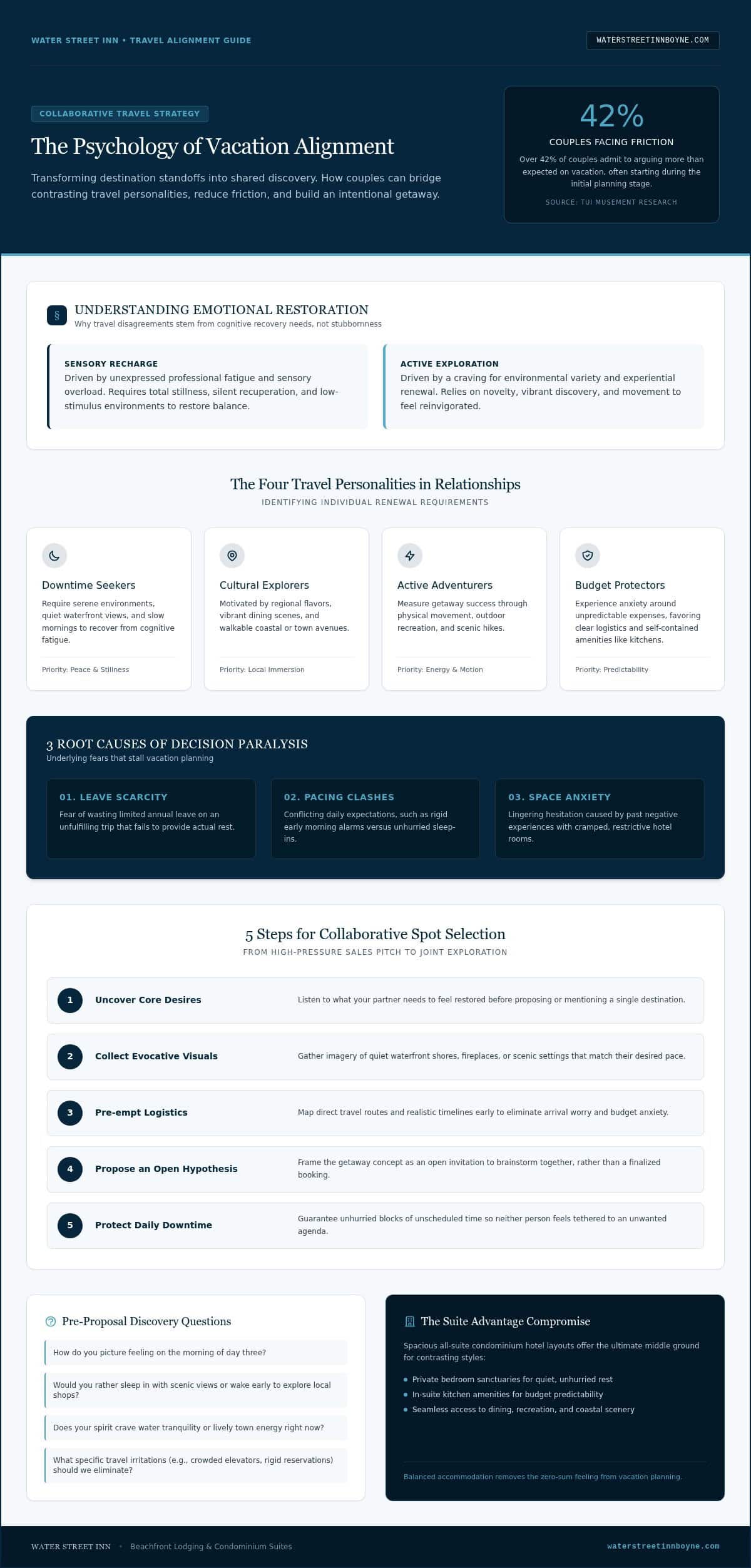
According to research by TUI Musement, over 42% of couples admit to arguing more than expected on vacation, and that friction often begins long before anyone packs a bag. When you are yearning for a peaceful, sunlit retreat while your significant other envisions a packed itinerary, convincing your partner on a vacation spot can easily feel like an exhausting sales pitch rather than an inspiring conversation.
You shouldn’t have to spend your hard-earned vacation days worrying about whether your partner is secretly having a miserable time. Vacation alignment isn’t about wearing someone down; it is about shared discovery. In this guide, you’ll discover collaborative strategies to uncover each other’s true travel motivations, resolve destination standoffs, and design a getaway you both genuinely love. We’ll walk you through practical ways to bridge contrasting travel styles, balance quiet relaxation with local exploration, and select spacious suite accommodations where both of you can truly unwind.
Key Takeaways
- Reframe travel disagreements as a healthy difference in emotional restoration needs rather than stubbornness, distinguishing sensory recharge from active exploration.
- Learn a gentle method for convincing your partner on a vacation spot by listening to their core desires before suggesting a single itinerary.
- Establish daily independence ground rules so neither person feels tethered to activities they don’t enjoy, protecting your shared connection.
- Craft a low-pressure visual proposal complete with smooth travel logistics to alleviate arrival worries and budget anxieties early on.
- Discover why spacious all-suite condominium hotel layouts provide the ultimate compromise, balancing private bedroom sanctuaries with seamless access to dining and coastal scenery.
Understanding the Psychology of Vacation Disagreements Between Partners
Vacation debates rarely stem from simple stubbornness. Instead, they reflect deeply personal differences in emotional restoration needs. When one person craves silent recuperation and the other longs for vibrant discovery, friction naturally surfaces. Persuasion strategies often stumble because one partner approaches convincing your partner on a vacation spot as a zero-sum debate. Real resolution begins by understanding the psychological motivations shaping what each traveler truly needs from their time off.
Much of this tension traces back to how unexpressed professional fatigue shapes expectations. An overwhelmed partner operating under sensory overload typically guards their limited free time fiercely, resisting active itineraries in favor of total stillness. Mastering the art of compromise means viewing trip planning through an integrative lens, transforming competing desires into shared solutions rather than a high-pressure sales pitch.
To better understand how these dynamics play out in real life, watch this helpful video:
The Four Distinct Travel Personalities in Relationships
Every traveler belongs to one of four primary temperaments, each requiring specific environmental conditions to feel renewed:
- Downtime seekers who require serene environments, quiet waterfront views, and slow mornings to recover from cognitive fatigue.
- Cultural explorers motivated by discovering regional flavors, vibrant dining, and walkable scenes.
- Active adventurers who measure trip success by outdoor recreation, scenic hikes, and physical movement.
- Budget protectors who experience intense anxiety around unpredictable travel expenses, favoring predictable logistics and self-contained amenities like in-suite kitchens.
Root Causes of Vacation Spot Decision Paralysis
When couples hit a standstill, decision paralysis usually boils down to three shared anxieties. First, partners fear wasting limited annual leave on an unfulfilling trip. Second, clashing expectations regarding daily pacing disrupt harmony, such as early morning alarms versus unhurried sleep-ins. Finally, past negative experiences with cramped hotel rooms create lingering hesitation. Recognizing these root fears shifts the dialogue away from pressure, transforming convincing your partner on a vacation spot into a peaceful collaboration.
Five Steps for Convincing Your Partner on a Vacation Spot Collaboratively
Shifting from an aggressive pitch to mutual discovery changes the entire dynamic. Rather than trying to sell an idea outright, convincing your partner on a vacation spot works best when approached as a shared exploration. By following a structured five-step framework, you can build enthusiasm naturally while honoring each other’s comfort levels.
- Step 1: Uncover core desires. Listen to what your partner needs to feel restored before mentioning a single location.
- Step 2: Collect evocative visuals. Gather images of quiet waterfront shores or cozy fireplaces that reflect their pace.
- Step 3: Pre-empt logistics. Map out direct travel routes and realistic schedules to eliminate arrival anxiety early.
- Step 4: Propose an open hypothesis. Present your destination concept as an invitation to brainstorm, not a finalized booking.
- Step 5: Protect daily downtime. Guarantee unhurried blocks of unscheduled time so neither person feels trapped by a rigid agenda.
Discovery Questions to Ask Before Proposing a Destination
Insightful conversations begin with thoughtful questions. Ask your partner how they want to feel on the morning of day three. Do they picture sleeping in with scenic views, or waking up early to explore local shops? Clarify whether their spirit craves water tranquility or lively town energy. You should also identify specific travel irritations, such as crowded elevator waits or strict dining reservations, so you can intentionally design around them.
Framing Your Destination Idea Around Mutual Benefit
When presenting your vision, frame the getaway as a meaningful ritual of connection designed around both of your rhythms. Lead directly with features that ease their worries. If your partner fears exhaustion, highlight quiet private balconies and immediate beach access for effortless recharging. At the same time, point out exciting opportunities for recreation, such as scenic summer water activities and nearby dining just a short stroll away.
Approaching the decision together removes defensiveness. When convincing your partner on a vacation spot feels like an equal partnership, excitement replaces hesitation. Consider reviewing peaceful options together, such as the spacious condominium suites at Water Street Inn, where self-contained comfort meets coastal recreation seamlessly.
Mastering the Art of Compromise: Balancing Rest, Adventure, and Budget
Compromise isn’t about half-hearted sacrifices. Successful travel negotiation hinges on building an environment where neither person feels tethered to an exhausting agenda or trapped in a cramped room. A transparent spending plan also clears away financial anxiety before departure, allowing both partners to focus entirely on mutual enjoyment. By creating a daily rhythm that alternates active exploration with restorative pauses, convincing your partner on a vacation spot becomes a practical conversation about balance rather than sacrifice.
The Split Itinerary Method for Couples
Couples often fall into the trap of believing they must spend every waking moment together. Embracing a split itinerary liberates both travelers from unspoken resentment. One partner can spend the morning exploring local trails or enjoying invigorating winter activities, while the other savors a quiet waterfront walk and an unhurried morning read. In the afternoon, both partners reconvene with renewed energy to stroll a private beach, share a scenic meal, or watch the sunset together. Meaningful independence during the day enriches your shared connection in the evening.
Lodging Compromises That Eliminate Common Friction Points
Where you stay plays a decisive role when convincing your partner on a vacation spot, especially if mismatched routines have derailed past getaways. Standard hotel rooms force couples into tight quarters, amplifying clashes over bedtime routines, television habits, and early alarms. Opting for a spacious one-bedroom suite solves this by separating the sleeping sanctuary from the main living area, letting early risers enjoy their morning routine without disturbing their sleeping partner.
Accommodations with fully equipped kitchens also soften the financial and physical strain of dining out for every single meal. You can easily prepare quiet breakfasts, assemble picnic lunches, and save your dining budget for memorable evening dinners nearby. Ending the night beside a warm gas-log fireplace or stepping onto a private balcony creates an unhurried, restorative atmosphere that satisfies both the budget-minded planner and the comfort-focused traveler.
How to Build an Irresistible Vacation Proposal That Wins Over Your Partner
Surprising your significant other with non-refundable tickets might sound romantic in movies, but in reality, ambush planning often triggers deep stress. A thoughtful proposal respects personal boundaries and addresses logistical doubts before they turn into hesitation. When convincing your partner on a vacation spot, assembling a tranquil, visual concept board works far better than an aggressive sales pitch. Gather photos of glowing sunsets, quiet private balconies, and soothing shorelines to help them envision the restorative pacing of the trip.
Alongside imagery, present pre-researched travel routes that eliminate arrival fatigue. Outline direct flight or drive times clearly, and sketch a relaxed sample schedule showing plenty of blank spaces. Proving that days won’t be crammed with nonstop commitments lets your partner visualize true rest rather than an overwhelming marathon.
Addressing Practical Objections: Time, Cost, and Hassle
Hesitation usually stems from three practical worries: wasted money, complicated transit, and exhaustive schedules. You can resolve these concerns up front by emphasizing the inherent value of an all-suite condominium hotel. Having a separate living area and a fully equipped kitchen provides the generous space of a multi-room booking without unnecessary overhead. Highlighting walkable access to local commerce also proves that you won’t spend precious getaway hours stuck behind the wheel searching for parking.
Instead of relying on stressful reservations, showcase casual strolls to memorable dining and evening entertainment nearby. This shows your partner that delicious meals and coastal ambiance are right at their doorstep whenever hunger strikes.
Choosing the Optimal Moment for the Vacation Conversation
Timing alters how your ideas are received. Never bring up vacation logistics during mid-week work deadlines, bill-paying sessions, or late at night when cognitive energy is drained. Pick an unhurried weekend morning over fresh coffee or during a quiet dinner at home when both of you feel grounded.
Present your visual ideas as a casual concept, then give your partner forty-eight hours to absorb the details without pressure. Making convincing your partner on a vacation spot an unhurried discussion fosters genuine enthusiasm. If you are ready to craft the perfect collaborative escape, explore spacious condominium suite rentals that effortlessly balance coastal serenity with walkable local charms.
Selecting Accommodations That Satisfy Both Partners: The Suite Advantage
Room layout directly dictates vacation satisfaction. When couples feel confined to a single, cramped room, minor habit differences can quickly create unnecessary irritation. Choosing an all-suite condominium hotel solves this dynamic by uniting the effortless comforts of home with elevated hospitality standards. This setup satisfies both the homebody seeking quiet seclusion and the energetic explorer eager to wander, ensuring everyone enjoys their stay without compromise.
Thoughtful layouts prevent the claustrophobia common in traditional lodging. By providing designated spaces for restorative quiet and shared leisure, convincing your partner on a vacation spot becomes significantly simpler when the property itself addresses their personal space needs.
Why One Bedroom Suites Provide the Ultimate Couple Balance
Spacious one-bedroom suite accommodations create natural boundaries between shared connection and individual recovery. Early risers can brew coffee and relax in the open living room without waking a sleeping partner in the bedroom sanctuary. Step outside onto a private balcony to enjoy fresh breezes and coastal views at an unhurried pace. In the evening, an in-suite gas-log fireplace offers an intimate backdrop to unwind, discuss the day, and connect away from crowded public spaces.
Locking in Your Waterfront Escape With Confidence
Finalizing your getaway comes down to reviewing details that remove uncertainty. Dedicated private beach access gives couples an uncrowded shoreline for quiet afternoons with a book, eliminating the headache of searching for public parking or jostling for space. At the same time, pedestrian-friendly access to nearby shops and dining ensures exploration remains effortless and accessible whenever you want to venture out.
Reviewing floor plans together turns decision-making into an empowering, collaborative exercise. Touring comfortable waterfront suite rentals helps both of you visualize daily ease, reassuring your partner that their comfort, privacy, and pace are fully supported. When every detail honors both travelers, convincing your partner on a vacation spot evolves naturally into a shared, enthusiastic departure.
Start Planning Your Seamless Couple Getaway
Planning a trip shouldn’t feel like a high-stakes negotiation. When you prioritize emotional replenishment, respect differing energy levels, and design itineraries with healthy daily independence, convincing your partner on a vacation spot becomes a collaborative joy. The right setting bridges every divide, turning simple compromise into a shared celebration of rest and connection.
Thoughtful accommodations ensure both travelers thrive without feeling crowded. With a serene all-suite condominium retreat, couples enjoy a spacious One Bedroom Suite layout combining a quiet private bedroom sanctuary with an open living room. Unwind beside a cozy gas-log fireplace, prepare unhurried meals in your fully equipped kitchen, and wander from exclusive private beach access directly to vibrant downtown dining. Take the guesswork out of your next escape and find your ideal couple getaway suite where you can both truly unwind together.
Frequently Asked Questions
How do you convince your partner to travel somewhere they have never considered?
Connect the unknown destination directly to experiences they already love. Highlight specific activities, such as quiet beach strolls or cozy dinners by a fireplace, rather than broad geographic landmarks. Sharing visual snippets of spacious lodging and walkable downtowns helps them picture daily comfort. When convincing your partner on a vacation spot that feels unfamiliar, framing the trip around shared relaxation reduces hesitation and sparks genuine curiosity.
What should you do if your partner hates planning vacations?
Curate two or three fully formed, low-effort options rather than asking open-ended questions that cause decision fatigue. Research smooth transit routes, book comfortable suite accommodations, and handle the logistical details yourself. Present your findings as simple choices, such as picking between two scenic waterfront getaways. This lets your partner contribute preferences without feeling overwhelmed by spreadsheets or complex schedules.
How do you handle a vacation disagreement when one partner wants adventure and the other wants rest?
Choose an all-suite retreat that serves as a quiet basecamp near diverse outdoor activities. This allows the active traveler to hike trails or kayak in the morning while the other rests undisturbed on a private balcony. By booking lodging with dedicated living and sleeping quarters, both partners can follow their natural daily rhythms and reconvene in the afternoon for beach walks or shared dinners.
Is it okay for partners to take separate vacations if they cannot agree?
Taking separate trips is completely healthy and can refresh a relationship when individual travel goals simply do not align. A solo getaway or weekend trip with friends satisfies niche hobbies without putting pressure on your partner. However, balancing these individual trips with shorter, low-pressure couple escapes ensures you still nurture shared memories throughout the year.
How far in advance should couples start planning a vacation together?
Begin discussions three to six months before domestic trips, especially for peak summer or winter getaways. Starting early removes the frantic rush that sparks arguments and gives both partners adequate time to adjust work schedules. Early conversations also broaden lodging availability, allowing you to secure preferred layouts like waterfront one-bedroom suites with full kitchens and scenic balconies.
What is the best way to handle budget disagreements when choosing a vacation spot?
Establish a transparent overall spending cap before browsing any destinations or accommodations. Select self-contained condominium suites with fully equipped kitchens to keep routine expenses predictable through leisurely breakfasts and casual snacks. This strategy preserves funds for special local dinners and outdoor outings, eliminating on-site financial anxiety and making convincing your partner on a vacation spot much smoother.
Why do so many couples argue during the vacation planning process?
Vacation debates usually ignite because travel planning brings unspoken financial stresses and emotional exhaustion to the surface. When one partner is deeply fatigued, an energetic itinerary can feel like a burden rather than a reward. Disagreements typically reflect protective boundaries around scarce free time rather than relationship friction, which is why focusing on mutual comfort resolves tension fastest.