

A vacation can feel more stressful when every hour is planned than when some details remain open. The mistakes to avoid when planning a vacation often stem from trying to fit in too much, relying on advice that doesn’t suit your destination, or leaving payment preparations until the last minute.
It’s natural to want to make the most of your time away, especially when a destination has plenty to discover. A little preparation can help you feel more at ease without turning your trip into a rigid checklist.
Learn how to find reliable destination advice, prepare payment options, and keep your itinerary manageable. These practical steps can help you plan with confidence and leave room to enjoy the moments that make a vacation memorable.
Key Takeaways
- Use destination-specific advice to spot practical details that broad travel tips may miss.
- Prepare more than one payment option and account for local schedules before departure.
- Leave breathing room between activities so delays or spontaneous discoveries don’t derail the day.
- Build a vacation budget around your plans and allow flexibility for expenses that can vary.
1. Using destination-specific travel blogs and personal recommendations
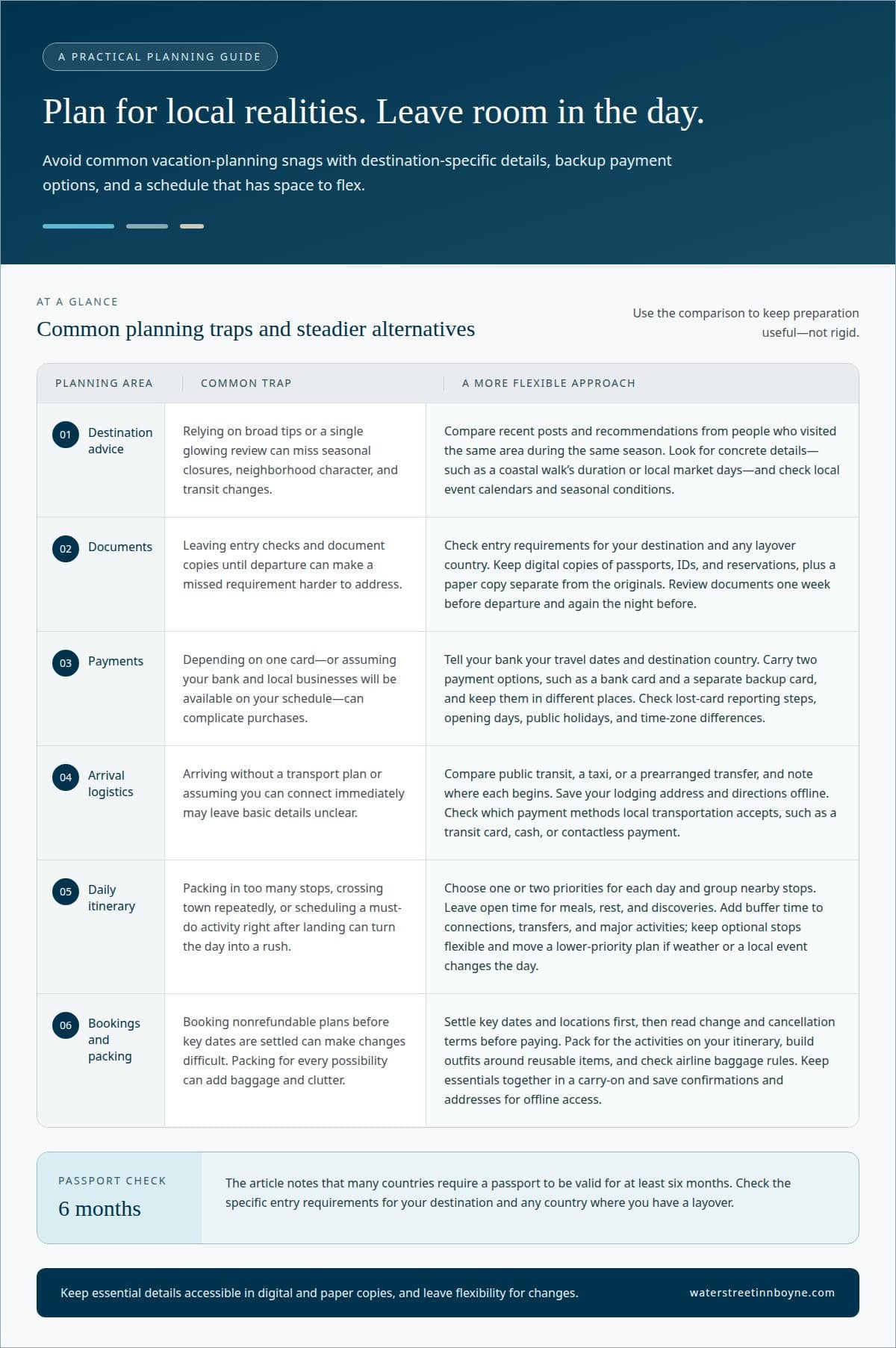
Destination-specific travel blogs can reveal details that broad guides miss, such as seasonal closures, neighborhood character, or transit changes. Compare recent posts with recommendations from people who visited the same area during the same season. Look for concrete details, such as how long a coastal walk takes or which days a local market operates, rather than relying on a single glowing review.
Flexible travel dates can make it easier to avoid rainy or busy seasons. Compare your preferred dates with local event calendars and seasonal conditions, then weigh quieter surroundings against activities that may run less often. A travel advisor can explain destination-specific guidelines and restrictions, especially when an international itinerary includes several stops.
For international travel, check entry requirements for your destination and any country where you have a layover. According to the U.S. Department of State, many countries require a passport to be valid for at least six months. Keep digital copies of passports, IDs, and reservations, and store a paper copy separately from the originals. Check your documents one week before departure and again the night before.
Compare travel insurance coverage for cancellation, interruption, medical needs, and baggage, including exclusions and claim requirements. Match the policy details to your itinerary and the expenses you want to protect before booking.
To reduce the risk of tourist scams or unsafe areas, compare recent local recommendations with official destination advisories. Watch for repeated warnings about specific neighborhoods or common approaches, such as unsolicited offers, and use established transport and payment methods.
For cancellations, delays, or lost luggage, understand change and cancellation options before booking. Keep reservation details and essential contact information accessible in digital and paper copies. Leave flexibility in your plans so a disruption doesn’t unravel the whole trip.
2. Arranging local currency and payment methods
Before leaving, tell your bank your travel dates and destination country. This can help prevent routine card activity from interrupting purchases abroad. Carry two payment options, such as a bank card and a separate backup card, and keep them in different places so a lost wallet doesn’t leave you without a way to pay. Review your bank’s steps for reporting a lost card and any travel notice requirements. For international travel, learn how to access your account if your primary card stops working.
Local schedules can affect where you can pay and when you can get help. Check opening days, public holidays, and time-zone differences before departure. A bank branch or small business, for example, may keep different hours during a local holiday. Note the destination’s time zone beside your flight arrival time, then plan purchases around businesses that will be open. This can help you avoid arriving after a service has closed or trying to contact your bank while its support team is offline.
Plan how you’ll get from the airport to your lodging and back for departure before your flight. Compare options such as public transit, a taxi, or a prearranged transfer, and note where each one begins. Save the arrival address and directions offline in case you can’t connect immediately. If you’ll use local transportation, check which payment methods it accepts. Knowing whether you need a transit card, cash, or contactless payment can reduce confusion after a long journey.
Learn a few local customs and useful greetings before arriving. A simple “hello” or “thank you” in the local language can make everyday interactions warmer, and learning customary service etiquette can help avoid awkward assumptions. To connect with residents, visit a neighborhood market or ask a shopkeeper about a locally popular dish. Respect posted rules and ask before photographing people or private spaces. These choices help you experience a place thoughtfully, without treating local routines as tourist attractions.
3. Avoiding an overcrowded vacation itinerary
A packed itinerary can turn a relaxing trip into a series of deadlines. Start with the activities that matter most, then group nearby stops together. For example, plan a museum and a neighboring market on the same day instead of crossing town twice. Leave open time for meals, rest, and discoveries you didn’t plan. A shorter list also makes it easier to remember the moments you wanted to enjoy, rather than forget them while rushing to the next reservation.
Build buffer time into flight connections, airport transfers, and major activities. A delayed arrival can affect a timed tour, while traffic can push back a dinner reservation. Give each travel leg room for delays, and avoid scheduling a must-do activity immediately after landing. Check the route between stops before putting them on the same day. Distance on a map doesn’t always reflect travel time.
Wait to book nonrefundable flights and hotels until your itinerary’s key dates and locations are settled. A changed arrival day or an activity in another town can make a fixed reservation difficult to use. Read change and cancellation terms before paying, then coordinate flights, lodging, and timed plans around confirmed details.
Choose one or two priorities for each day, such as a morning hike and an unhurried dinner. Treat optional stops as flexible, not obligatory. If a local event or change in weather alters your plans, move a lower-priority activity instead of squeezing everything into the remaining hours.
To avoid overpacking and extra baggage fees, lay out your clothes and travel essentials, then remove half. Build outfits around items you can wear more than once, and pack for the activities actually on your itinerary. Check your airline’s baggage rules before packing, since limits and fees vary. Keep essentials together in a carry-on, so a delayed checked bag doesn’t disrupt your first plans.
Before departure, save confirmations and addresses where you can access them offline. A simple daily plan with transport details, reservation times, and one backup activity adds structure without filling every hour.
4. What is the best way to set a realistic vacation budget and account for hidden costs?
Plan for the whole trip, not just the flight and lodging. List major categories such as transportation, meals, activities, and accommodation, then estimate costs based on your plans. A road trip, for example, needs a different budget from a city break built around public transit. Separating categories shows where your budget is committed and where you can adjust.
Next, identify expenses that are easy to overlook. Include airport transfers, parking, local transit, baggage charges, admission fees, and taxes where they apply. For a day trip, account for the ride to the departure point and meals away from your lodging. These smaller costs can add up, even when each seems manageable on its own.
Replace rough estimates with confirmed bookings and current details as your plans take shape. Record what is already paid, what remains due, and when each payment is expected. For example, list a prepaid room and an activity booked separately as distinct expenses. This helps you see your remaining spending money without counting the same expense twice.
Keep flexible spending separate from essentials. Set aside money for meals, local purchases, or an activity you decide to add, while protecting the funds needed for transport and lodging. If the total feels too high, adjust a flexible part of the trip, such as choosing fewer paid attractions or a simpler transport route. Don’t cut an essential cost without understanding how it affects your plans.
Track spending during the trip with a notes app or a simple written list. Group purchases by category, such as meals or transit, and compare them with your plan before making larger optional purchases. This helps you spot an unexpected increase early and adjust calmly instead of discovering the difference at the end.
As you estimate lodging alongside the rest of your expenses, plan a stay that fits your vacation budget.
Water Street Inn
Water Street Inn’s One Bedroom Suite offers travelers a comfortable home base for a getaway. A private balcony or patio, fully equipped kitchen, and gas-log fireplace create a welcoming place to unwind between outings. Guests also have access to a private beach for time outdoors.
As you shape your itinerary, consider whether a stay with room to relax suits your travel style. The One Bedroom Suite can suit a quieter getaway, while Wedding Venue Rental is an option for couples planning a celebration. Choose the kind of stay that supports the pace and purpose of your trip.
For details about planning your stay or event, contact Water Street Inn.
Choose the pace you want to remember
Before finalizing your plans, decide how you want the trip to feel. A vacation centered on quiet mornings needs a different rhythm from one built around events and outings. Let that intention guide your choices, from how much you schedule to where you stay. It gives each decision a useful reference point, especially when tempting options compete for your time.
One of the mistakes to avoid when planning a vacation is treating every available activity as something you must fit in. Give yourself room for a slower start, an unexpected invitation, or simply enjoying your surroundings. A thoughtful plan isn’t measured by how much it contains, but by whether it leaves you present enough to enjoy the experience.
If your next getaway is taking shape, contact Water Street Inn to discuss your plans. Take the next step at a pace that feels right, and look forward to a trip with room to breathe.
Frequently Asked Questions
What are the most common mistakes to avoid when planning a vacation?
Common missteps include treating one traveler’s recommendation as universal, leaving important decisions until arrival, and planning around activities that don’t suit everyone in the group. Another mistake to avoid when planning a vacation is letting a long wish list set the pace. Ask each traveler to name a priority, then build around shared interests and keep less essential choices flexible.
How far in advance should you book flights and hotels for the best prices?
The best time to book depends on your destination, season, and how fixed your dates are. AAA recommends planning at least nine months ahead for vacation packages with Preferred Partners, and some AAA Preferred Partners open bookings two or more years ahead. Travelers with flexible schedules may find last-minute package deals one to four weeks before departure. Compare dates, booking terms, and what each package includes.
How do you check passport validity, visa requirements, and entry rules before traveling?
Check passport validity, visa requirements, and entry rules for every country on your route, including transit stops. Start with country-specific travel information from the U.S. Department of State, then consult the destination’s official immigration authority for entry details. Requirements can depend on your travel purpose and length of stay. Keep relevant confirmations and documents accessible so you can refer to them during check-in or transit.
How much time should you leave between connecting flights?
Choose a connection based on the airport, ticket arrangement, and steps required between flights. A transfer may take longer if you need to change terminals, clear immigration, collect checked bags, or pass through security again. Check the airline’s connection guidance and consider the consequences of a delay before booking a separate onward flight. A longer connection can make the journey less rushed, especially at an unfamiliar airport.
What should you know about local customs, weather, and public holidays at your destination?
Before choosing travel dates, review the destination’s holiday calendar, seasonal weather, and etiquette for public spaces. A holiday may affect museum hours or local transportation, while rain can change outdoor plans. Look up expectations around greetings, dining, dress, and photography, particularly near religious or community spaces. Save an indoor alternative for weather-sensitive outings and note which attractions require reservations on your planned dates.