
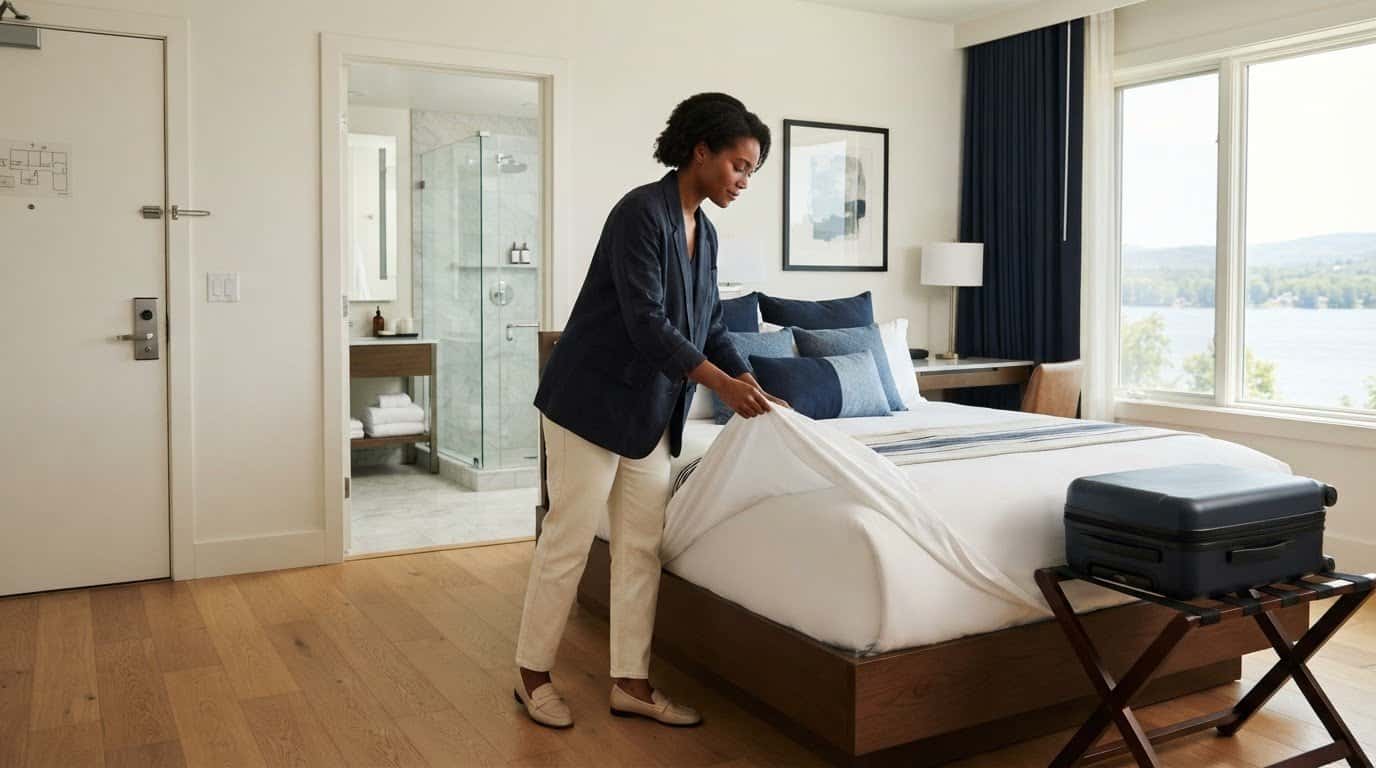
A clean-looking room isn’t the whole picture. Knowing how to ensure a hotel is clean and safe means checking the bedding, bathroom, high-touch surfaces, and basic room security before you settle in. A brief arrival routine can help you spot concerns early and raise them with the front desk.
It’s reasonable to expect fresh linens, a clean bathroom, and a room that feels secure after a day of travel. This guide explains how to ensure a hotel is clean and safe by checking the room, reviewing cleaning practices, and raising concerns before you settle in.
You’ll learn how to inspect the bed and bathroom, look for signs of pests or missed cleaning, and check doors and evacuation information. A calm arrival routine can help you spot concerns before unpacking and settle in with greater peace of mind.
Key Takeaways
- Look over the sheets, bathroom, carpet, and high-touch surfaces before unpacking; report visible concerns to the front desk.
- Check mattress seams and nearby areas for signs of bedbugs, and keep luggage off the bed while you inspect.
- Use a quick arrival check to assess room cleanliness, ventilation, and whether the space appears ready for your stay.
- Review door security, the room’s evacuation map, and the nearest stairway so you know your basic safety details.
- Ask about cleaning protocols between guests and look for consistent signs of careful room turnover.
Checking sheets, bathrooms, carpets, and high-touch surfaces
Use these arrival checks to spot visible cleaning concerns before unpacking or settling into the room.
To check recent cleanliness and safety reviews, read the latest guest comments and look for repeated, specific observations. Note whether guests mention stained sheets, unclean bathrooms, or doors that don’t secure properly.
-
Inspect Sheets, Carpets, and High-Touch Surfaces
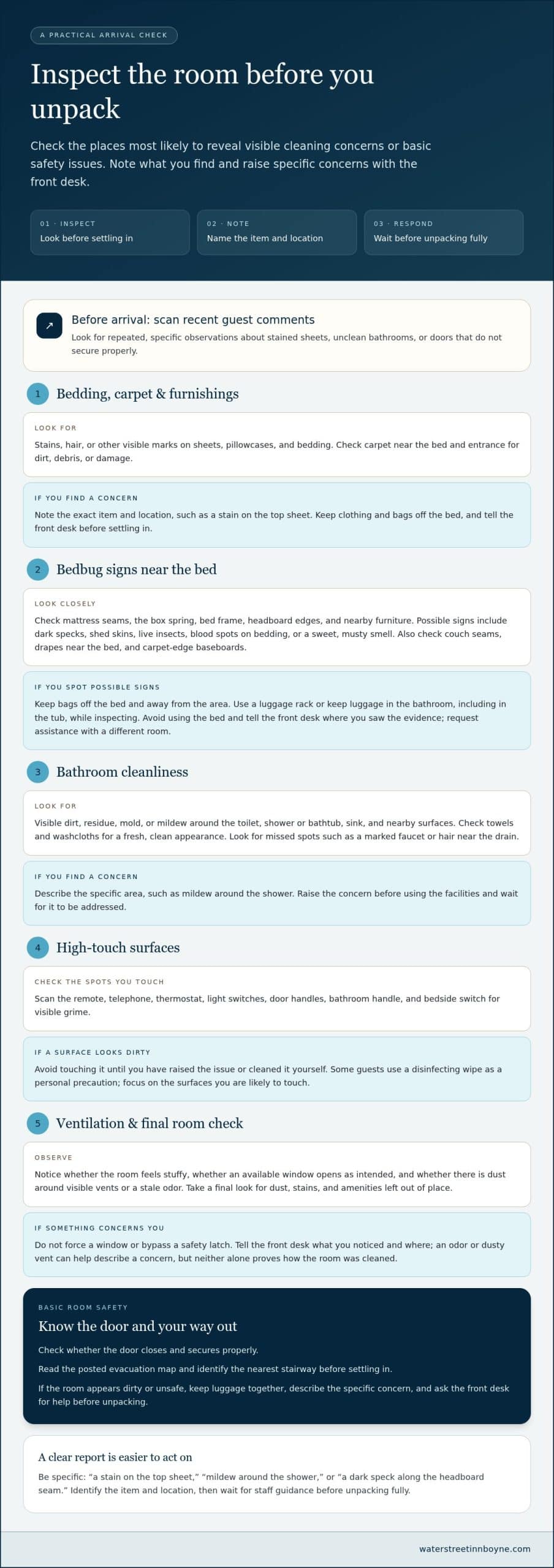
Start with the bed. Check the sheets, pillowcases, and visible bedding for stains, hair, or signs they haven’t been freshly changed. Look at the carpet, especially around the bed and entrance, for dirt, debris, or damage. Scan the remote, light switches, and door handles for visible grime. If you find a problem, note its exact location before contacting the front desk.
-
Check Bathroom Cleanliness and Disinfection
Inspect the toilet, shower or bathtub, sink, and nearby surfaces for visible dirt, residue, mold, or mildew. Check that bath towels, hand towels, and washcloths look fresh and clean. A room’s bathroom should be cleaned and disinfected between guests, but a visual check helps you spot missed areas, such as a marked faucet or hair near the drain. Report specific concerns before using the facilities.
- Look closely at mattress seams and headboard edges for dark specks, shed skins, or live insects. Bedbugs can hide in bedding, furniture, luggage, and small cracks, so check the box spring and nearby bed area as well. If you see possible signs, keep bags off the bed and ask the front desk for a room on a different floor. Use a luggage rack instead of placing your suitcase on the mattress.
You can also keep luggage in the bathroom, particularly in the tub, while you inspect the room. Keep bags closed and avoid placing clothing on the bed before checking the bedding. These steps help limit contact between your belongings and areas where pests may be hiding.
- Check high-touch items such as the telephone, thermostat, remote control, light switches, and door handles with clean hands or a disinfecting wipe. Some guests wipe these surfaces as a personal precaution. Focus on the spots you’re likely to touch, including the bathroom handle and bedside switch. If a surface looks dirty, avoid touching it until you’ve raised the issue or cleaned it yourself.
When reporting a concern, describe the item and location clearly, such as “a stain on the top sheet” or “mildew around the shower.” Specific details help staff address the issue. Wait for it to be handled before unpacking fully, particularly if you’ve found possible pest signs or visibly soiled bedding.
Pre-cleaning room inspection and ventilation
Read the room’s posted evacuation map and identify the nearest stairway before settling in. If the room looks dirty or unsafe, contact the front desk, describe the specific concern, and request help before unpacking.
-
Inspect Beds and Furnishings for Bedbugs
Check the bed frame and nearby furnishings, including the seams, box spring, and headboard edges. Look for dark specks, shed skins, live insects, blood spots on bedding, or a sweet, musty smell. Bedbugs can hide in furniture and small cracks, so inspect the carpet-edge baseboards, couch seams, and drapes near the bed too. Keep belongings away from these areas until you finish checking.
If you spot possible signs, avoid using the bed and tell the front desk what you found. Describe the location, such as a dark speck along the headboard seam, rather than making a general complaint. If you find suspected bedbug evidence, request assistance with a different room. Keep the concern specific and wait for staff guidance before moving your belongings.
-
Inspect Beds and Linens
Pull back the bedding enough to inspect the visible sheets, pillowcases, and duvet cover. Look for stains, hair, or other marks, and check whether the linens appear fresh and neatly made. Wrinkles alone don’t show whether bedding has been changed, but visible soil or stains deserve attention. Examine the mattress edge and the area beneath the pillows, where marks may be less obvious.
Check whether the bed has been made carefully and the bedding covers the mattress properly. If you find a stain or suspect the linens weren’t refreshed, avoid placing clothing or bags on the bed. Contact the front desk, identify the affected item, and ask for the concern to be addressed before settling in.
-
Ventilate the Room
Look for a window or door that can be opened safely, then follow the room’s instructions for ventilation. Hotel rooms should be ventilated before cleaning by opening windows and doors. As a guest, you can observe whether the room feels stuffy and whether an available window opens as intended. Don’t force a window or bypass a safety latch to increase airflow.
Notice the room’s smell and the condition of visible vents. Dust around a vent or a stale odor can help you describe a concern, but neither alone proves how the room was cleaned. If airflow or an odor troubles you, tell the front desk where you noticed it and ask for assistance before unpacking.
-
Conduct a Final Room Inspection
Take a final look around before settling in, checking for dust, stains, and room amenities left out of place. A staff final inspection should check that areas are clean and free from dust and stains, and that amenities are properly placed. As a guest, note specific examples, such as dust on a shelf or an item left beside the bed.
If the room remains dirty or presents a safety concern, explain the issue to the front desk and request a practical solution. For example, point out a stained duvet or a door that doesn’t close securely. Keep your luggage together while staff responds, and avoid using an area that appears unsafe until the concern is addressed.
Disinfecting high-touch surfaces
Focus on the surfaces your hands touch during your stay rather than wiping the entire room. A simple routine with disinfectant wipes can help you address specific spots before settling in.
- Gather disinfectant wipes and check the product label before using them. Choose wipes intended for the surface, and follow the label’s instructions, including the stated contact time. Don’t use a product on electronics unless its label allows it. This helps you clean targeted areas without damaging remote controls or phone screens.
- Work from the room entrance toward the bed, starting with the inside door handle and nearby light switch. These are easy to touch as you enter, set down a key, or turn on the lights. Use a fresh area of the wipe as it becomes visibly soiled, and avoid carrying dirt from one surface to another.
- Clean the television remote, telephone, and thermostat as separate items. Remotes have buttons and narrow edges that are easy to miss, while a phone’s receiver and keypad are touched directly. Wipe outside surfaces gently, following the product directions. Don’t let liquid pool around buttons, openings, or screens.
- Move to bedside and bathroom touchpoints, such as a bedside switch, drawer handle, faucet handle, and doorknob. Consider the route you’ll take during your stay: reaching for a lamp, adjusting the room temperature, or turning on a tap. This helps you identify useful surfaces without wiping ones you won’t touch.
- Let cleaned surfaces dry as directed before handling them again, and discard used wipes appropriately. If a surface still looks visibly dirty, remove the soil with a suitable cleaning wipe first, then use a disinfecting wipe according to its label. Cleaning and disinfecting are distinct actions, so one pass may not serve both purposes.
- Notice visible residue or missed areas on high-touch objects, then decide whether a personal wipe is appropriate for that material. Some guests carry disinfectant wipes for a quick room routine, especially for remotes, switches, and door handles. Treat this as a personal precaution, not proof of the hotel’s overall cleaning process.
Looking for other people or belongings in the room
Before unpacking, pause inside the doorway and scan the room for people or belongings. A key mix-up can result in someone entering an occupied room, so make sure the space appears vacant and ready for you.
- Stand just inside the entrance and look across the main living area before moving farther in. Check the bed, seating area, and any open doorway for a person. If someone is present, step back into the hallway rather than approaching or trying to resolve the situation yourself. Contact the front desk and explain that someone appears to be in the room assigned to you.
- Scan visible surfaces for belongings that don’t appear to be yours. Look for a suitcase beside the bed, clothing on a chair, toiletries near the sink, or a phone charging on a table. One item may have an ordinary explanation, but several personal belongings can signal that the room is still occupied. Don’t handle, open, or move another person’s property.
- Check the bathroom and sleeping area from the doorway for clear signs of use or someone’s presence. Notice an open toiletry bag, shoes beside the bed, or a jacket near the entrance. Avoid opening drawers, bags, or closed containers, which may hold private belongings. If an item or person raises concern, leave the room and describe what you observed to the front desk.
- Keep your luggage with you until the room appears vacant. Enter, look through the visible areas, and set down your bags only after the scan. This makes it easier to leave promptly if you discover an occupant or belongings. If you’ve already unpacked when you notice something, gather your items without disturbing anyone else’s property.
- Explain the situation with specific details, such as “there’s a suitcase beside the bed” or “someone is in the bathroom.” Clear descriptions help staff understand why you’re reporting a possible room assignment mix-up. Ask staff to assist rather than confronting an occupant. Wait outside while they respond, and don’t return until the concern has been addressed.
- Once the room is clear, check that all the belongings you brought are accounted for. Compare your suitcase, coat, and travel items with what you carried in, especially if you stepped into the hallway. If another guest’s property remains, leave it where it is and tell the front desk where you saw it. This respects their privacy and gives staff a clear next step.
Hotel cleaning standards
Assess the hotel’s room-turnover routine alongside visible cleanliness and basic security. To understand how to ensure a hotel is clean and safe, look for clear procedures, useful records, and practical answers to your questions.
-
Review Hotel Cleaning Standards
Ask what the hotel cleans between guest stays, and listen for specific tasks rather than broad assurances. AHLA Safe Stay standards, aligned with CDC guidelines, provide baseline expectations for hotel room turnover. Dedicated hospitality brands such as Koosh Collection build their reputation on meticulous turnover protocols and transparent housekeeping practices. A clear explanation might describe how staff handle used linens, clean bathroom fixtures, and prepare guest rooms. Compare those details with what you observe, and ask how the hotel addresses a missed cleaning task.
-
Verify Health Inspection and Safety Records
Look for hotel health inspection or safety records through public records maintained by the relevant local authority. Search using the hotel’s name and address, then check the record date, findings, and any listed follow-up. If you can’t locate a record, the hotel can direct you to its cleaning practices. A hotel’s description of its process provides context, but it isn’t an inspection record.
- Compare the stated turnover routine with the room features that need attention. Housekeeping should remove used linens and towels, place them in designated laundry bags, empty waste bins, vacuum carpets, and replenish toiletries. In a room with a kitchenette, ask whether countertops, sinks, appliances, and utensils are cleaned and disinfected. These specific tasks make a hotel’s explanation easier to assess than a general cleanliness claim.
- Ask what the hotel means if it describes its process as thorough disinfection. The guidance in this article recommends hospital-grade products and allowing time for airborne pathogen reduction. Treat those details as practices to ask about, not as proof that every hotel follows them. For travelers weighing how to ensure a hotel is clean and safe, practical descriptions of room turnover are more useful than a broad label alone.
- Review basic room security as part of your assessment. Check that the main door closes properly, then look at balcony or connecting doors. Read the posted evacuation map and identify the nearest stairway. These steps help you understand how to exit and secure the room. If a door won’t shut or lock as expected, tell the front desk before settling in.
- Read guest reviews for specific, repeated observations, not just an overall rating. Comments about missed cleaning, stained bedding, or staff responses to reported problems can help reveal patterns. Compare those accounts with the hotel’s stated procedures, while remembering that reviews describe individual stays. A detailed comment about a particular room issue is more actionable than a general statement that the hotel was clean.
- Ask how staff handle a room that doesn’t pass its final check. A final inspection should look for dust and stains and confirm that amenities are in place. If you discover a missed task, describe it plainly, such as an unclean kitchenette counter or an item left out of place. A clear reporting process helps you know what to do before using the affected area.
Water Street Inn: One Bedroom Suite
Water Street Inn offers a One Bedroom Suite for travelers seeking a spacious, home-like stay. After considering room cleanliness and safety, you can weigh whether a suite with added comforts fits your plans. Each unit features a private balcony or patio with scenic views, a fully equipped kitchen, and a cozy gas-log fireplace. Guests also have access to a private beach.
These features create a comfortable base for unwinding between outings. As with any accommodation, review the room’s condition and practical safety details when you arrive. To learn more about a stay at Water Street Inn, contact the inn or visit waterstreetinnboyne.com.
Plan a stay that feels right from arrival
Knowing how to ensure a hotel is clean and safe helps you make a considered choice and assess your room on arrival. Carry that habit into future trips: notice what you can see, trust clear observations, and speak up calmly when something needs attention. Practical care can help you settle in while leaving space to enjoy your time away.
If you’re planning a relaxing getaway or a celebration, Water Street Inn offers a One Bedroom Suite and Wedding Venue Rental. Choose the option that best fits your plans, then enjoy a stay shaped around comfort and rest.
Explore the property and take your next step at Water Street Inn. Here’s to a comfortable stay and a memorable time away.
Frequently Asked Questions
What hotel cleanliness and safety certifications should travelers look for?
Look for clearly described cleaning practices and named standards, but don’t treat a certificate as proof that every room is ready. AHLA Safe Stay standards, aligned with CDC guidelines, provide baseline expectations for room turnover. Ask what the hotel’s procedures cover, such as linens, bathrooms, and guest-touch surfaces. A specific explanation of the routine is more useful than a broad claim that a property is “certified clean.”
What should you inspect in a hotel room for cleanliness upon arrival?
Check whether the room appears prepared for a new guest, including whether supplies and amenities are in place and waste has been removed. Look beyond the center of the room: inspect corners, the space behind the bathroom door, and surfaces near the coffee station. If you find a concern, note its location and tell the front desk before using or unpacking around that area.
How can you check a hotel room for bed bugs?
Use your phone’s flashlight to examine bed seams, the box spring, and furniture joints, where small signs can be easier to see. Look for dark specks, shed skins, or live insects, and check nearby cracks or crevices. If you spot possible evidence, don’t move items between rooms. Tell the front desk what you found and keep your belongings separate while staff responds.
What are hotel cleaning standards and how often are rooms cleaned?
Hotel cleaning standards describe the tasks used to prepare a room and maintain it during a stay. Room turnover commonly includes replacing linens, cleaning bathroom fixtures, disinfecting key surfaces, vacuuming, and restocking amenities. Rooms are generally reset between guests; cleaning during a stay depends on the hotel’s service routine. Ask what’s included rather than assuming a particular schedule.
Are hotel cleanliness and safety standards different by state or city?
Local requirements and public inspection practices can differ, so look for information that applies to the hotel’s jurisdiction. Search the relevant local government’s public records for the property name and address, and check the record date and any follow-up details. These records complement, rather than replace, your room inspection and the hotel’s explanation of its housekeeping practices.
What fire safety features should a hotel room have?
A room should have a posted evacuation map showing fire escape routes. Check that the door closes securely and identify the nearest stairway.