

Could the easiest suite to reach also be the one that feels less private? When weighing the pros and cons of first floor vs top floor suite, it’s natural to focus on stairs, elevator access, and the view. But floor level alone won’t tell you how a particular stay will feel.
First-floor access can make arriving with luggage, groceries, or mobility needs simpler, while a top-floor suite may mean fewer sounds from neighbors above. Either choice can come with trade-offs in privacy, noise, and the view, so it pays to check the details rather than rely on assumptions.
This guide will help you compare the practical benefits of each floor and choose what suits your mobility and travel routine. Before booking, verify the specific suite’s floor, stairs or elevator access, accessibility details, view, and outdoor space. At an all-suite condominium hotel such as Water Street Inn, also compare the individual suite’s home-like features, including its fully equipped kitchen, gas-log fireplace, and private balcony or patio. These details can shape your stay as much as the floor label.
Key Takeaways
- Floor labels describe a suite’s position in a building, but they don’t guarantee a particular view, outdoor space, or level of privacy.
- Use the pros and cons of first floor vs top floor suite to weigh potential convenience against possible privacy and access trade-offs.
- Compare your priorities, suite layouts, and access routes before deciding which floor best fits your daily routine.
- Check the specific suite’s view, outdoor space, and accessibility details instead of assuming they come with its floor level.
- Compare home-like features, such as a fully equipped kitchen and gas-log fireplace, alongside floor position when choosing a suite.
First-Floor vs. Top-Floor Suites: What the Difference Really Means
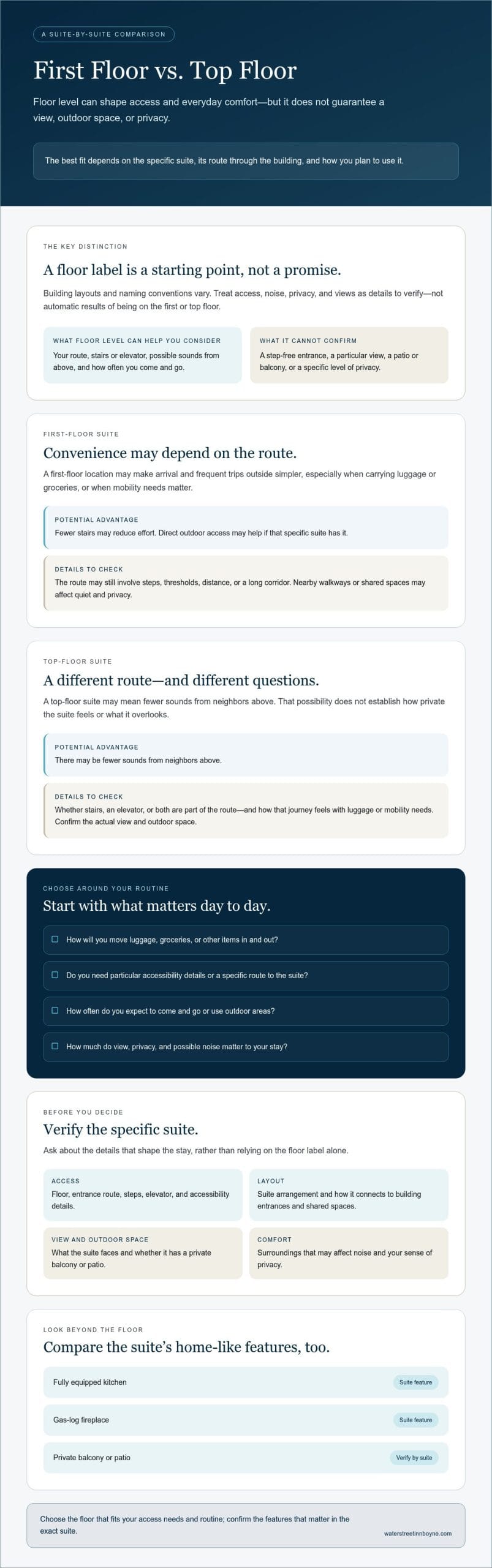
A first-floor or top-floor label tells you where a suite sits within a building, but it doesn’t tell the whole story. Building layouts and naming conventions can vary, so the pros and cons of first floor vs top floor suite depend on the actual route, layout, and surroundings. Treat possible differences in access, noise, privacy, and views as things to check, not promises tied to a floor.
A useful starting point is to consider how you’ll move through the property and use the suite. Think about luggage, stairs or elevators, your preferred level of privacy, and whether a view or outdoor space matters to your stay.
For another perspective on how hotel facilities can vary, see this Hotel overview. It’s still the details of the specific suite and building that will guide your choice.
To explore how floor height can shape everyday living, watch this video:
What does first floor mean in a suite?
“First floor” usually refers to a suite on the lowest level counted as a floor, but the building’s terminology and entry arrangements may affect what that means in practice. Ask whether the suite entrance is level with the building entrance, or whether steps or another route are involved. A private patio is distinct from floor level, just as a balcony doesn’t establish how easy the suite is to reach. Confirm the specific unit’s outdoor space.
What does top floor mean in a suite?
“Top floor” identifies a suite’s position at the highest level of a building. It doesn’t establish the quality of the suite, how private it feels, or what it overlooks. Before booking, check whether stairs, an elevator, or both are part of the route, and consider how that journey may feel with luggage or mobility needs. Floor labels alone cannot confirm a suite’s view or access.
Compare the details that will shape your routine, rather than choosing by label alone:
- Access: Confirm the route from the building entrance to the suite.
- Layout: Ask about steps, elevator access, and the suite’s arrangement.
- View and outdoor space: Verify what the particular suite faces and whether it has a patio or balcony.
- Noise and privacy: Consider the suite’s surroundings and what may affect your comfort.
- Personal needs: Weigh mobility, luggage, and how often you expect to come and go.
First-Floor Suite Pros and Cons: Easier Access, With Details to Check
A first-floor suite may suit a travel routine that involves frequent trips outside, but “first floor” doesn’t automatically mean step-free or close to the entrance. The practical benefit depends on the building’s layout and the specific route to the door. For a balanced look at floor-level trade-offs, Rent.com’s guide to the best floor to live on also considers how location within a building can affect everyday living.
When can a first-floor suite be more convenient?
Fewer stairs can make arrival and departure easier when you’re carrying bags, managing mobility needs, or planning to come and go throughout the day. Direct outdoor access may add convenience if the specific suite has it. Before booking, ask about the route from the building entrance, including steps, thresholds, and distance. A short, level path and a direct exit are different from a suite that’s technically on the first floor but still requires navigating stairs or a long corridor.
Think through your own routine. Will you bring luggage in all at once, carry items back and forth, or need to reach outdoor areas easily? A first-floor location could reduce effort if the route supports those needs. If accessibility is important, describe the specific requirements and ask for clear details about the suite and the path to it instead of relying on the floor label alone.
What should you check before choosing a first-floor suite?
Ask where the suite sits in relation to building entrances, shared spaces, and outdoor routes. If windows or an outdoor area face a walkway, nearby activity may affect your sense of privacy or quiet. That’s a possibility to verify, not an automatic drawback of every first-floor suite. Request details about the individual unit’s orientation and access, and consider whether the layout fits how you want to spend time indoors and outside.
Convenience depends on the route and layout, not the floor label. That’s the central point to keep in mind as you compare the pros and cons of first floor vs top floor suite. A lower-level suite can be a practical choice when entry is straightforward, but nearby foot traffic or an unexpected set of steps may change the experience. Confirm the details before deciding.
- Ask whether the entrance route includes steps, thresholds, or a long walk.
- Check for direct outdoor access rather than assuming it comes with a first-floor location.
- Find out whether shared routes or nearby activity could affect your preferred level of privacy.
For a home-like stay, you can also compare the confirmed features of Water Street Inn’s furnished suites alongside the specific access details, without assuming those features belong to a particular floor.
Top-Floor Suite Pros and Cons: Privacy and Views Aren’t Guaranteed
A top-floor suite may appeal if you’re hoping for a more open outlook or fewer people passing directly by your door. Height can change sightlines, but it doesn’t guarantee a scenic view or greater privacy. The direction the suite faces, nearby buildings, windows, and shared areas all shape what you’ll actually experience.
Could a top-floor suite offer more privacy or a better view?
Being higher up may change what you can see from a window or balcony, while fewer neighboring suites nearby could affect the sense of seclusion. Neither benefit is automatic. A top-floor suite might face another building, a wall, or a busy shared area. Ask about the view from the specific unit and whether its outdoor space, if included, looks onto a private or shared setting.
Don’t assume a higher floor is quieter, either. Noise can come from different parts of a property, and the floor label alone can’t predict what you’ll hear. If a peaceful stay matters, ask what surrounds the suite and whether it’s near shared routes or activity areas. Focus on details that can be confirmed rather than relying on general expectations about upper floors.
What are the possible drawbacks of a top-floor suite?
Getting to an upper-level suite may involve stairs, an elevator, or a combination of routes. That could be less convenient if you’re carrying luggage, have mobility considerations, or expect to make frequent trips outside, but the impact depends on the property’s layout. Before booking, ask how far the suite is from the entrance, whether an elevator serves its floor, and what the route involves.
The trade-offs in the pros and cons of first floor vs top floor suite become clearer when you compare a specific unit with your routine. Use this quick checklist:
| Potential benefit | Possible drawback | Detail to verify |
|---|---|---|
| A higher sightline may open up a different view. | Nearby buildings or the suite’s orientation may limit it. | What the specific suite faces from its windows and outdoor space. |
| Fewer passersby may support a greater sense of privacy. | Shared areas or neighboring windows may still affect privacy. | Suite position relative to walkways and other units. |
| An upper-level location may suit guests who prefer it. | Stairs or elevator reliance may add effort. | Route, elevator access, distance, and any steps. |
A higher floor isn’t automatically quieter or more scenic. Ask for suite-specific information, then weigh the confirmed view, privacy, and access against what matters most during your stay.
How to Choose Between a First-Floor and Top-Floor Suite
The right floor is the one that fits the way you’ll use the suite. Before comparing labels, picture a typical day: arriving with luggage, stepping outside, relaxing indoors, and moving through the property. This practical approach to the pros and cons of first floor vs top floor suite keeps the decision grounded in your needs rather than assumptions about what a floor should offer.
Which floor works better for different travel needs?
Start with your priorities. If mobility or luggage is a concern, focus on the complete route from the building entrance to the suite, including stairs, elevator access, and distance. For privacy or views, consider the suite’s orientation and surroundings. If you expect frequent trips outdoors, ask how the entrance, patio or balcony, and outdoor path connect. The most suitable option depends on the specific layout and your routine.
Use this four-step process to compare options:
- 1. Identify your needs. Decide how much weight to give mobility, privacy, outdoor access, views, and quiet.
- 2. Compare layouts. Look beyond floor position to the room arrangement and the features you’ll use during your stay.
- 3. Confirm access. Ask about the route, stairs or elevator, entrance details, and distance to shared or outdoor areas.
- 4. Decide by priority. Choose the suite whose verified details best support your travel routine, even if its floor label wasn’t your first assumption.
Questions to ask before booking a suite
If the listing leaves details unclear, ask which floor the specific suite occupies and how guests reach its entrance. Confirm the actual view and whether the suite has a balcony or patio, then ask about any access features that matter to you. It’s also useful to check whether the photos and descriptions show the exact suite being offered or illustrate a general layout.
At Water Street Inn, furnished suites include fully equipped kitchens, gas-log fireplaces, and private balconies or patios. Compare these home-like features alongside the floor, but verify the individual suite’s view, outdoor space, and access rather than assuming they’re tied to a particular level.
Once you know what matters most, review the specific suite details before settling on a floor. Explore suite options and compare the features that will shape your stay.
Compare Suite Details Before You Book Your Stay
The best choice depends on the details of the specific suite and what matters most to you. Floor position can influence your routine, but it won’t confirm the view, outdoor access, or route to the door. Compare the features you can verify, then weigh them against your priorities for access, privacy, and daily convenience.
What to compare in a specific Water Street Inn suite
Water Street Inn is an all-suite condominium hotel with furnished suites that include fully equipped kitchens and gas-log fireplaces. Each unit has a private balcony or patio. These home-like features can help shape a comfortable stay, but they don’t indicate which floor a suite occupies or what it overlooks.
Before choosing, confirm the exact floor, view, and route to the suite. Ask whether stairs or an elevator are involved, and check how the balcony or patio connects to the suite. Don’t assume every unit has the same layout, outlook, or access arrangements. The more closely the details match your needs, the easier it is to picture your stay.
Make your choice with confidence
Bring the comparison back to your everyday plans. If mobility or luggage is a priority, focus on the full route into the suite. If privacy or a particular view matters, ask about the specific unit’s orientation and surroundings. If you expect to spend time outdoors, confirm the patio or balcony and how you’ll reach it. The pros and cons of first floor vs top floor suite are most useful when measured against these verified details, not assumptions about floor labels.
Review the vacation rental suite details and compare the features relevant to your stay. If anything remains unclear, contact the property to confirm the suite information before making your choice. A little care at the planning stage can help you settle into a space that feels right for your travel routine.
Compare available suite options to find the ideal match for your next getaway.
Choose the Suite That Fits Your Stay
The pros and cons of first floor vs top floor suite come down to your routine and the details of the individual suite. A first-floor location may simplify access if the route supports it, while a top-floor position doesn’t automatically promise a quieter stay or a better view. Confirm the entrance, stairs or elevator, view, and outdoor access before choosing.
Water Street Inn is an all-suite condominium hotel. Its units have private balconies or patios, fully equipped kitchens, and gas-log fireplaces, but those features don’t indicate a suite’s floor, view, or layout. Compare the specific details with your priorities for mobility, privacy, and everyday convenience.
Take a calm, informed next step and review the available suite information before you decide. Compare available suite options and choose the setting that feels right for your stay.
Frequently Asked Questions
Is a first-floor suite better than a top-floor suite?
Neither is universally better; the right choice depends on your priorities and the specific suite. A first-floor location may be more convenient if its route has fewer steps, while an upper-level suite may suit you if its verified outlook or position feels preferable. Compare access, privacy, view, and your daily routine. The pros and cons of first floor vs top floor suite vary with each property’s layout.
Are first-floor suites easier to access?
They can be, but the floor label alone doesn’t confirm an easy route. A first-floor suite might still require steps, a long walk, or passage through shared areas. If you’re carrying luggage or have mobility needs, ask about the full route from the building entrance to the suite, including thresholds and any stairs. Confirm the details for the specific unit before booking.
Can a top-floor suite have a better view?
It can, but height doesn’t guarantee a particular view. The direction the suite faces, nearby buildings, and the placement of windows or outdoor space all affect what you’ll see. Ask about the outlook from the exact suite being offered, and check whether listing photos show that unit. If the view matters to your stay, get specific confirmation rather than relying on the floor description.
Is a top-floor suite quieter than a first-floor suite?
Not necessarily. A top-floor suite won’t have a suite directly above it, but that alone doesn’t establish how quiet it will be. Sound can come from nearby units, shared spaces, or activity around the building. A first-floor suite may be close to walkways, though that varies by layout. Ask about the specific suite’s surroundings if quiet is a priority.
What should I ask before booking a first-floor or top-floor suite?
Ask which floor the specific suite occupies and how you reach its entrance. Confirm whether stairs or an elevator are involved, how far the route is, and whether there are thresholds or other access considerations. Also ask what the suite faces, whether it has a balcony or patio, and whether the photos and description represent the exact unit offered. Clear answers help you compare what matters to your stay.
Does a first-floor suite always include a patio?
No. A first-floor label doesn’t guarantee a patio, just as an upper-floor label doesn’t confirm a balcony. Outdoor space depends on the specific unit and property. At Water Street Inn, each unit has a private balcony or patio, but that feature doesn’t establish the suite’s floor, view, or route to its entrance. Confirm the exact outdoor space and access details for the suite you’re considering.
Should I choose a top-floor suite if I want more privacy?
Only if the specific suite’s position and surroundings support the privacy you’re seeking. A higher floor may change sightlines, but nearby buildings, windows, and shared areas can still affect how private a suite feels. Ask what the unit faces and whether its outdoor space is exposed to neighboring views or activity. Compare those details with your comfort level before choosing by floor alone.