The most memorable wedding settings aren’t always the grandest. What makes a wedding venue unique is how its atmosphere, distinctive details, and sense of place reflect the couple. A historic Victorian property, a light-filled gallery, or a setting with several appealing backdrops can each create a different mood. The right choice makes the celebration feel personal, not simply picturesque.
It’s natural to want a venue that looks beautiful in photographs and feels special to guests. But uniqueness isn’t only about dramatic architecture or unusual décor. It can come from how the space flows from ceremony to reception, details that tell a story, or the feeling guests take away with them.
This guide explores how atmosphere and photography backdrops shape a venue’s character, what features can make a setting memorable, and how historic Victorian architecture and personal style influence the experience. You’ll also find practical ways to look beyond appearances and choose a venue that feels right for the celebration you’re planning.
Key Takeaways
- Look for a setting whose atmosphere feels true to your celebration, rather than choosing a venue for appearance alone.
- Notice whether the property offers visually distinct areas that can give wedding photos variety and a strong sense of place.
- Weigh distinctive features alongside guest comfort, including how the spaces support the flow of the celebration.
- Use a historic Victorian venue’s architecture and character to guide décor choices that feel cohesive rather than competing.
- Match the setting to your shared interests and priorities so the celebration feels personal to you and welcoming to your guests.
1. Ambiance and photography backdrop
A wedding venue’s atmosphere shapes how guests experience the ceremony and reception. A bright gallery feels entirely different from a candlelit Victorian hall, even before decorations arrive. That contrast helps explain what makes a wedding venue unique: the setting gives the celebration a distinct mood and a ready-made visual backdrop.
Consider how one couple transformed rooms in the bride’s family home into event spaces. They created dedicated areas for popcorn and photos, making familiar rooms part of the celebration. The example shows how a meaningful location can gain character through thoughtful use, without relying on grand architecture or elaborate decoration.
For a closer look at choosing a setting, watch this guide:
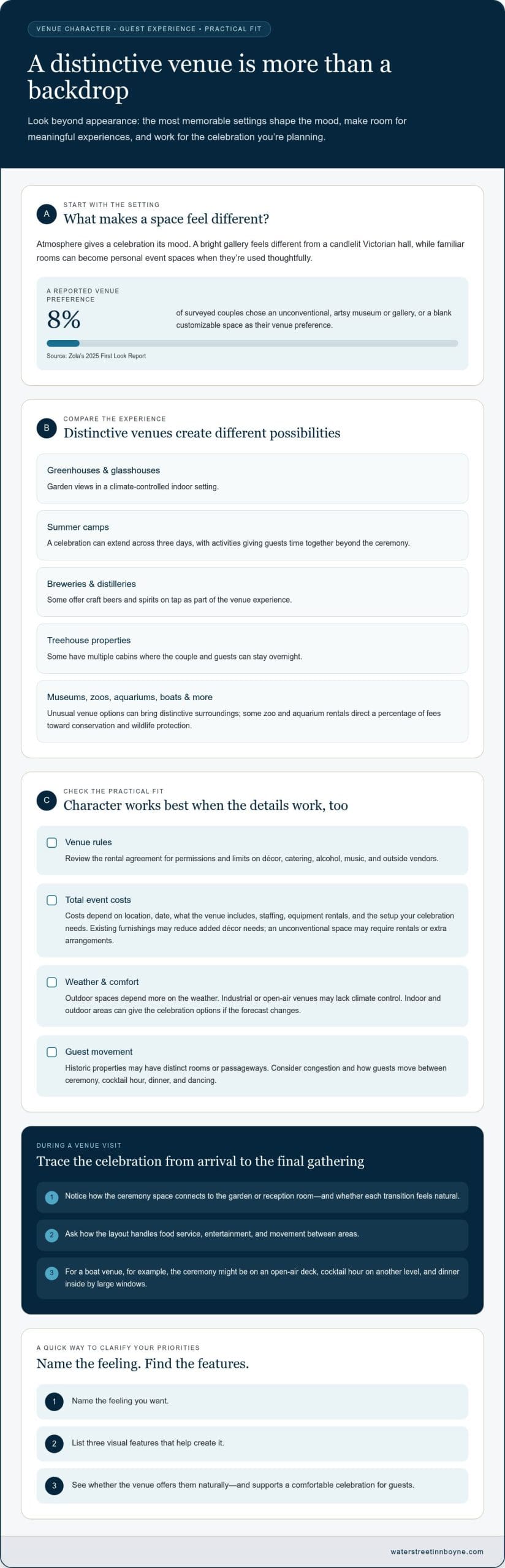
Start by noticing the venue’s existing visual details. Museums, libraries, and galleries can offer artwork, shelves, architectural lines, or exhibit spaces as striking backdrops. These features may need little extra décor to establish a clear look. According to Zola’s 2025 First Look Report, 8% of surveyed couples chose an unconventional, artsy museum or gallery, or blank customizable space as their venue preference.
Look for variety, too. A property with several visually distinct areas can offer photographs with different moods without requiring a change of location. Picture portraits beside a garden, candid moments in a bright indoor room, and group photos near a distinctive architectural feature. During a visit, note potential photo spots and consider how guests will move between them.
Light also changes how a space feels. Large windows can give an indoor ceremony a soft, open quality, while a shaded garden creates a quieter backdrop. Visit the venue at the time of day you expect to use it. Notice where sunlight falls, what views will appear behind the ceremony, and whether the setting still feels inviting in less direct light.
Finally, consider how the backdrop fits the event’s flow. A photo area beside the reception entrance can draw guests naturally, while a separate portrait spot can keep the main gathering space clear. For a festival-style wedding, tents, lawn games, food trucks, fire pits, and music can create an open-air atmosphere. Choose details that support the mood rather than compete with it.
A simple exercise can clarify your choice: name the feeling you want, list three visual features that help create it, then see whether the venue offers them naturally. A welcoming home, a dramatic gallery, or a garden with distinct corners can each tell a different story. The strongest backdrop feels connected to the couple and comfortable for guests throughout the celebration.
2. Characteristics of unique wedding venues
Unique venues stand out through the experiences their spaces make possible. A greenhouse, for example, combines garden views with a climate-controlled indoor setting. A summer-camp celebration can extend across three days, with activities giving guests time together beyond the ceremony. These features shape the event itself, not just its appearance.
Unusual venue types across the United States include greenhouses, zoos, aquariums, breweries, distilleries, nightclubs, treehouses, boats, and summer camps. Each offers a distinct atmosphere: breweries may serve craft beers on tap, while some treehouse properties have cabins for overnight stays. Some zoo and aquarium rentals also direct a percentage of fees toward conservation and wildlife protection.
Venue rules affect décor, catering, alcohol, music, and outside vendors. The rental agreement spells out specific permissions and limits, so review its terms against your plans before settling on a design or vendor lineup.
There’s no single cost comparison for unusual and traditional venues. The total depends on location, date, what the venue includes, staffing, equipment rentals, and the setup your celebration needs. A beautiful historic property with existing furnishings may need less added décor, while an unconventional space could require rentals or extra event arrangements.
Outdoor and historic settings bring practical considerations alongside their character. Outdoor spaces depend more on the weather, while industrial or open-air venues may lack climate control, affecting guests’ comfort in different conditions. Historic properties may have distinct rooms or passageways, so consider whether guests can move between spaces without congestion. A venue with indoor and outdoor areas gives the celebration options if the forecast changes.
To find distinctive spaces, search by town or region and venue type, such as “garden wedding venue” or “historic theater wedding.” Then compare how each setting supports the ceremony, cocktail hour, dinner, and dancing. A boat, for instance, might hold the ceremony on an open-air deck, cocktail hour on another level, and dinner inside by large windows.
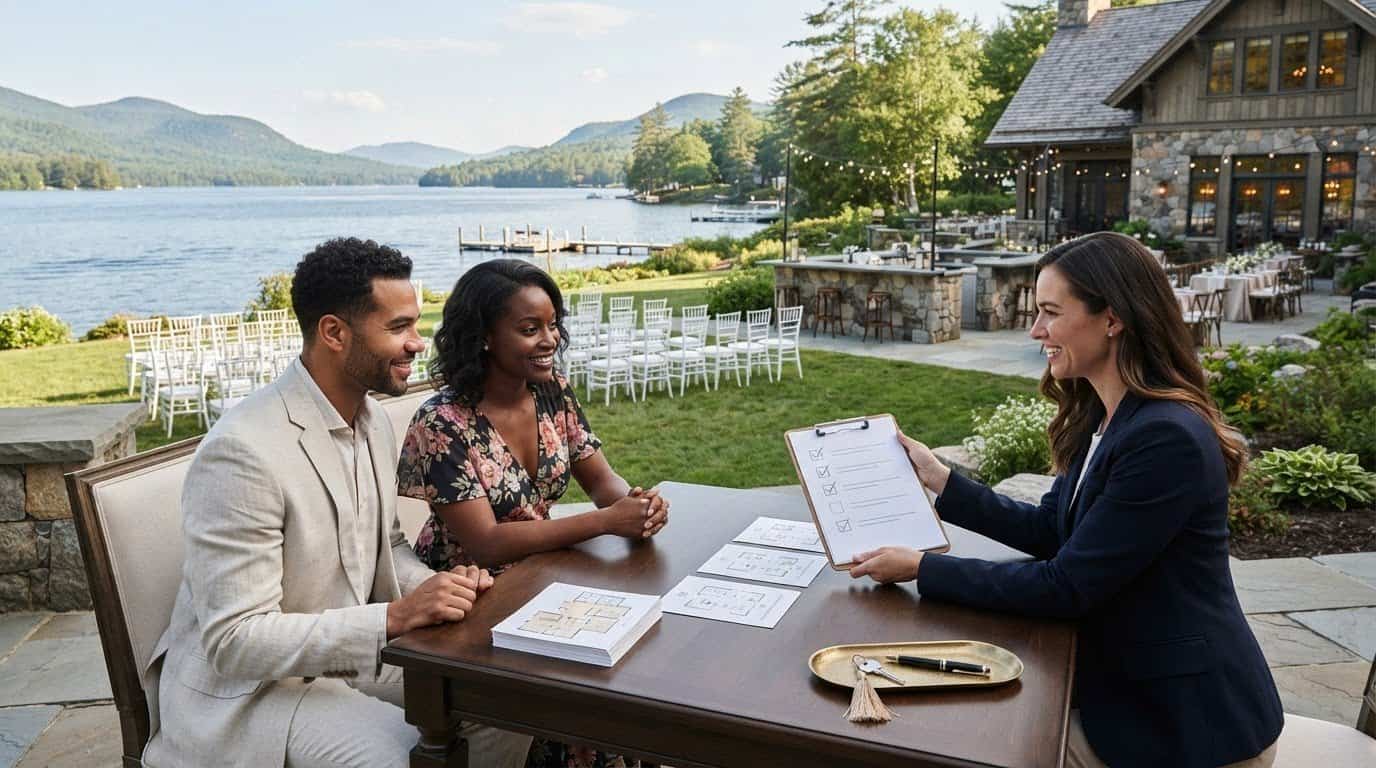
At a venue visit, trace the guest experience from arrival through the final gathering. Notice how the ceremony space connects to the garden or reception room, and whether each transition feels natural. Ask how the layout handles food service, entertainment, and movement between areas. Water Street Inn offers wedding venue rental for couples considering a scenic waterfront setting for their celebration.
Venue-specific amenities can make the setting part of the guest experience. Greenhouse and glasshouse wedding venues can offer garden views in a climate-controlled indoor space, while brewery and distillery wedding venues often serve a variety of craft beers and spirits on tap. Some treehouse wedding venues have multiple cabins where the couple and guests can stay overnight, making the property useful beyond the event itself.
Nightclubs may let wedding parties continue past the typical wedding venue curfew because they do not normally have noise restrictions. Some boat wedding venues offer an open-air top-deck ceremony, cocktail hour on a second deck, and dinner in an enclosed dining room with floor-to-ceiling windows; for couples planning destination events or private celebrations on the water, charter services like lisboncatamarantours.com show how scenic boat excursions can create a distinctive open-air backdrop. During a visit, assess whether guests can explore without congestion, especially when several spaces are in use.
3. Historic Victorian setting
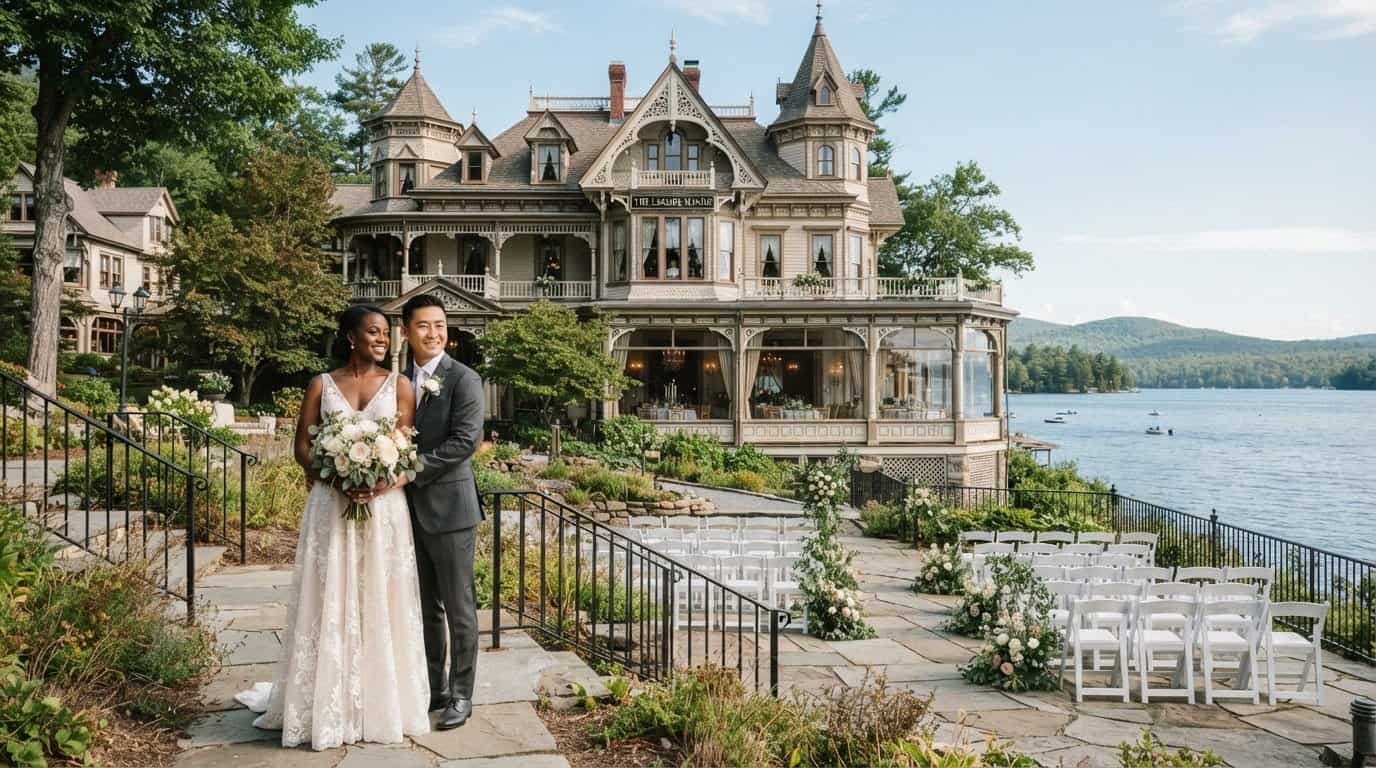
A historic Victorian setting brings its own visual language to a wedding. Tall windows, decorative trim, patterned floors, and graceful staircases can make a striking first impression before any flowers arrive. These details give the celebration a sense of place, while the building’s history adds character that a newly built event space may not have.
Interest in historic properties appears in recent venue preferences. According to Zola’s 2025 First Look Report, 11% of couples chose a vintage or historic property as their venue preference. A Victorian home, theater, or other period building can feel especially distinctive when its existing features become part of the event design.
Start with the architecture, not a decoration theme. If a room has ornate wallpaper or carved woodwork, choose flowers and linens that complement those patterns instead of competing with them. A restrained palette can let original details lead, while a simple ceremony arrangement keeps the focal point clear. In a ballroom with a prominent fireplace, for example, the ceremony layout could naturally frame the feature.
Historic character can also shape the celebration’s atmosphere. A couple hosting a reception in an independent historic theater served popcorn, candy, and sodas at its refreshment stand. That choice made the building’s original purpose part of the guests’ experience, rather than treating it as just a decorative backdrop. In a Victorian venue, a similar approach might draw on a distinctive room or architectural feature.
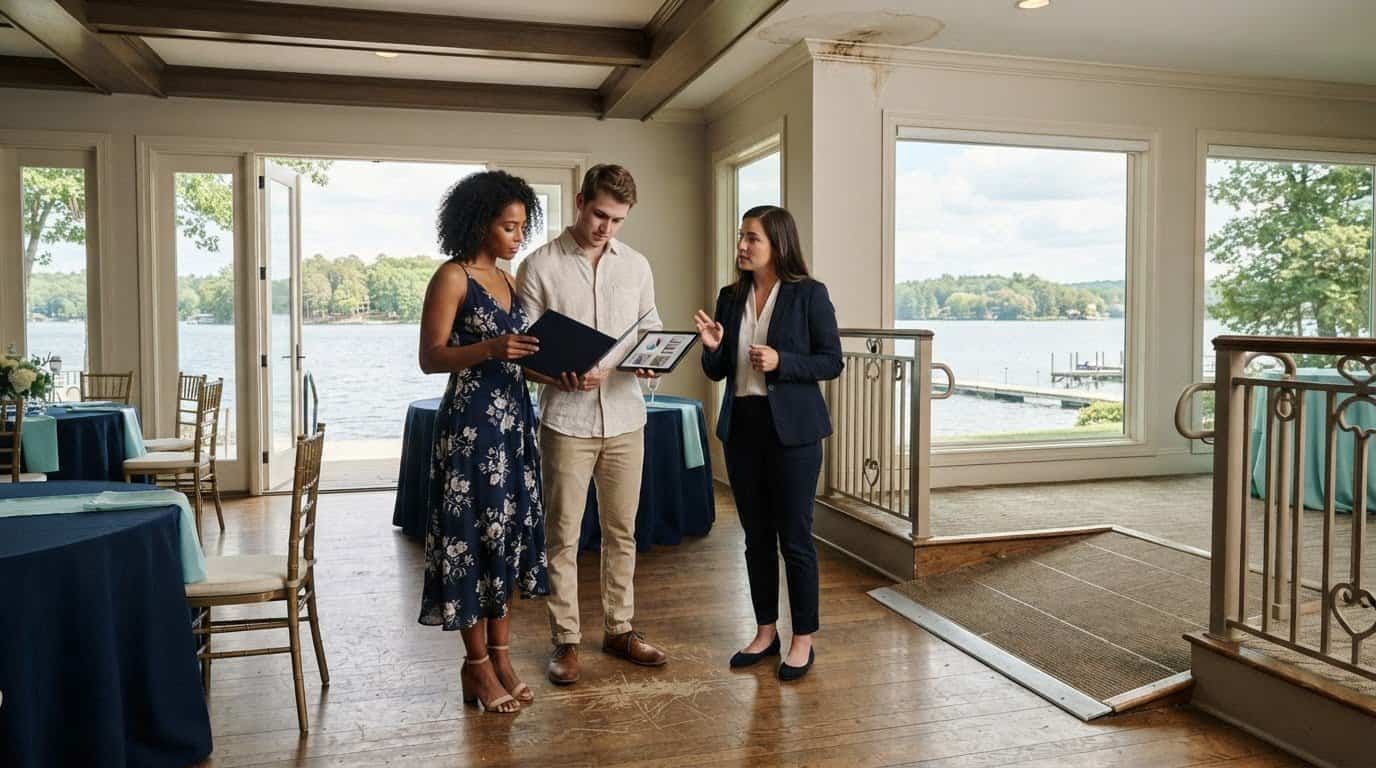
Plan practical details alongside the styling. During a site visit, walk from the entrance to the ceremony area, dining space, and restrooms. Notice narrow doorways, staircases, uneven floors, or rooms that sit far apart. These features can affect guest movement, accessibility needs, furniture placement, and the timing of transitions. A floor plan helps show whether the event can flow comfortably through the available rooms.
Ask how the building can be used and which areas are available for the event. Historic properties may have preservation needs or room-specific guidelines that shape décor and setup. Consider candles, hanging installations, and large furniture when discussing the design, since the building’s surfaces and layout affect what works well. A clear plan helps protect the property’s character while making the space welcoming.
Finally, consider how a Victorian setting will feel throughout the day. Look at natural light in the ceremony room, the distance between reception spaces, and any outdoor areas guests can enjoy. Pairing antique architectural details with thoughtful modern comforts can create a warm, personal celebration that’s easy to enjoy. History can enrich the gathering without taking attention away from the couple.
4. Matching a venue to a couple’s personality
A venue feels personal when its setting supports how a couple enjoys spending time together. Couples who love wildlife might choose a zoo, as one couple did, while outdoor enthusiasts may picture a garden reception with room to mingle. Start by naming three shared interests, then consider which spaces could bring them into the day without turning the celebration into a theme park.
Compare amenities and services by how they support your priorities: ceremony and reception spaces, furniture, catering arrangements, sound equipment, and event coordination. For example, a couple who wants dancing late into the evening may value a suitable dance area and music setup more than elaborate ceremony furnishings, while couples who prioritize memorable food and an energetic social gathering might choose settings like Skyvibe Restaurant and Lounge, where distinctive dining and a vibrant atmosphere are already built into the space.
Before booking, ask how the venue accommodates your planned layout, vendor access, setup and cleanup, music, food service, and weather alternatives. Clear answers will help you see whether the space suits your plans and where you may need to adapt.
Guest needs should shape the choice as much as personal style. Walk the route from the entrance to the ceremony, dining area, and restrooms; look for step-free access, comfortable seating, and places to pause. If guests are traveling, consider nearby accommodations and how they’ll get between their lodging and the reception.
Personal touches can come from color, table settings, flowers, signage, and meaningful details, even when a venue has restrictions. Ask which areas can be decorated and whether hanging items, open flames, or furniture changes are allowed. Then adapt the design: use tabletop arrangements instead of suspended décor, or choose a palette that complements the existing finishes.
Picture the day in sequence. A couple who enjoys quiet conversation might favor a reception layout with smaller seating clusters, while a lively group may want open space near the dance floor. The venue should support the couple’s preferred pace, whether that means a relaxed dinner, an energetic party, or a balance of both.
After visiting each property, make a simple comparison: note the strongest personality fit, the most useful amenity, and one compromise. For example, a dramatic outdoor setting may feel perfect but offer less flexibility in bad weather than an indoor space. This brief review helps distinguish a memorable backdrop from a venue that genuinely suits the celebration and its guests.
An unconventional venue can make shared interests visible in the setting itself. In Zola’s 2025 First Look Report, 4% of surveyed couples named an unconventional space as their venue preference, while 2% of surveyed couples named an artsy museum or gallery as their venue preference. Those options can inspire couples to look beyond familiar settings while still weighing practical needs such as guest access, layout, and weather flexibility.
Personal fit can also show up in how a couple shapes the celebration, rather than in the room alone. One couple’s wedding ceremony took seven minutes and three seconds from the bride’s entrance until the couple kissed. A couple served 3 flavors of sheet cake at their wedding. A couple used a fake wedding cake with one real slice for the cake-cutting moment, and a couple released two doves during their wedding celebration. Details like these can make a gathering feel individual; the useful test is whether each choice reflects the couple and works comfortably within the venue’s rules, space, and guest experience.
5. How do venue style, history, and architecture shape a wedding?
A venue’s architectural style influences the celebration before the first centerpiece is placed. A Victorian house, a converted train station, and a modern glass hall each suggest a different mood. Their materials, proportions, and built-in details can guide ceremony placement, table arrangements, and décor, helping the event feel connected to its setting.
A building’s history adds meaning through how it was designed and used. A former train station, for example, can bring a sense of movement and arrival to the wedding day. Train stations can combine vintage architecture with modern amenities and may include outdoor event spaces. That mix gives couples options for balancing heritage and comfort.
During a site visit, start by identifying the architectural features that draw your attention. Look for details such as a grand entrance, original woodwork, brick walls, or a distinctive ceiling. Then consider how these features appear in the ceremony and reception spaces. A focal point behind the vows may need little extra styling, while a long, undecorated wall could benefit from florals or lighting.
Next, match the design choices to the building instead of forcing a contrast. In a brick industrial hall, natural textures and simple table settings may complement the structure. In a light-filled glasshouse, soft fabrics and garden-inspired arrangements can echo the surroundings. Choose a few consistent materials or colors, then let the architecture remain visible.
Room layout also affects the rhythm of the day. A train station with separate indoor and outdoor areas might let guests gather outside before moving indoors for dinner. During your walkthrough, trace the route from arrival to ceremony, dining, and dancing. Notice whether transitions feel intuitive and the available rooms support the planned sequence.
Consider how the building’s style will appear in photographs and personal details. A sweeping staircase might frame the couple’s entrance, while original windows could provide a distinctive portrait backdrop. Use these features intentionally. A seating chart near an architectural focal point can help guests orient themselves, while signage can share a short story about the property’s past.
To bring style, history, and function together, list the venue’s defining features, your preferred atmosphere, and the practical needs of the celebration. Compare that list with the floor plan and décor ideas. If a historic train station’s character feels right, explore the wedding venue details as you consider settings where architecture can shape the day.
Water Street Inn: One Bedroom Suite
Water Street Inn offers Wedding Venue Rental for couples seeking a setting shaped by natural scenery. Its event and meeting spaces provide a place to bring a celebration together in a relaxed atmosphere where guests can feel at ease.
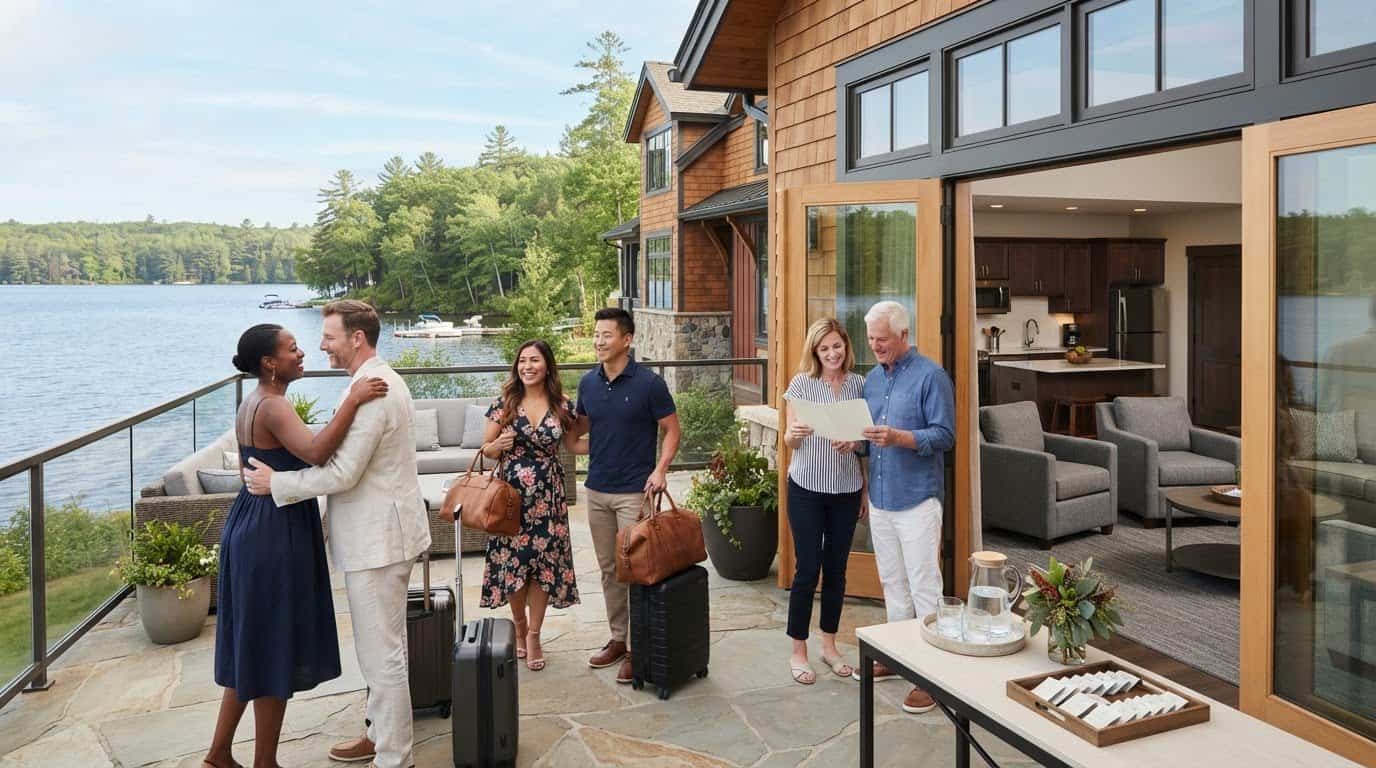
For couples planning an overnight stay, the One Bedroom Suite includes a private balcony or patio with lake views, a fully equipped kitchen, and a gas-log fireplace. Guests can also enjoy access to a private beach, adding a peaceful lakeside moment to their visit.
Explore the wedding venue rental details to see how this setting may suit your plans. Visit Water Street Inn’s wedding page to learn more.
Choose the Setting That Feels Right for You
Before making your final choice, agree on the feeling you want guests to take home. Write one sentence that describes it, such as “warm and unhurried” or “joyful and full of discovery.” Use it as your compass when options look equally appealing. Understanding what makes a wedding venue unique comes down to how well its setting supports the experience you want to create.
Then picture an ordinary moment, not just the grand entrance: guests arriving, finding their seats, sharing a meal, and relaxing together. If that scene feels natural in the space, you may have found a setting that fits your story. Your decision doesn’t need to follow a trend. It needs to feel meaningful to you both.
If Water Street Inn feels like a fitting place to explore, contact Water Street Inn. Your celebration can begin with a setting that feels genuinely yours.
Frequently Asked Questions
What Makes a Beautiful and Unique Wedding Venue?
A beautiful, distinctive venue combines visual appeal with an atmosphere that suits the couple. Consider how the space welcomes guests, where they’ll gather between key moments, and whether it feels comfortable rather than staged. For example, a couple who loves quiet dinners might prefer an intimate dining room over a vast ballroom. Ultimately, what makes a wedding venue unique is how naturally its setting supports the experience the couple wants to create.
What features make a wedding venue unique?
Distinctive features can include unusual architecture, a meaningful connection to the couple, or a layout that encourages guests to interact. Look beyond decoration: a balcony for a private pause, a welcoming lounge for conversation, or a room suited to a family tradition can make the celebration feel individual. Consider which features guests will actually use, then choose a venue where those details add comfort and meaning to the day.