
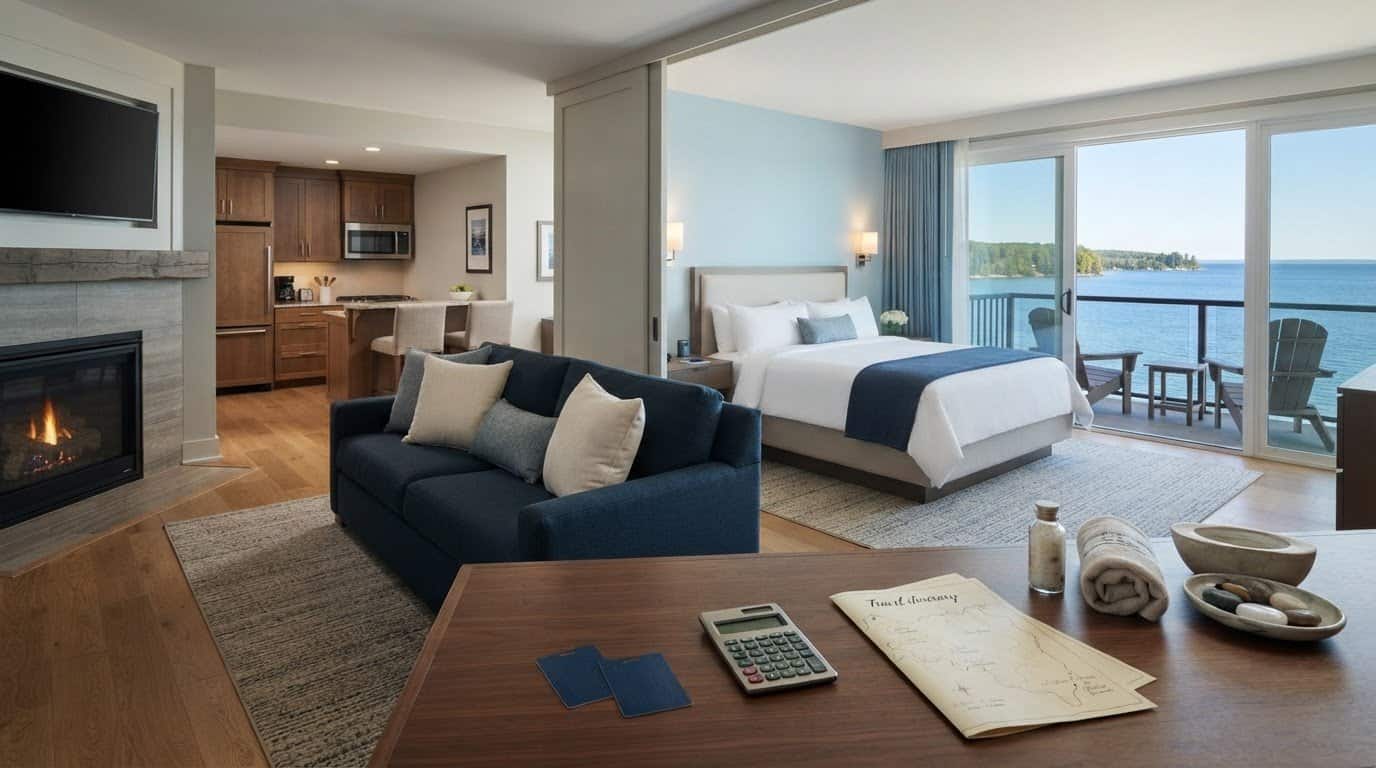
Two hotel rooms aren’t automatically cheaper or better value than a suite. The right choice depends on the total rate and what your group will use. Justifying the cost of a suite hotel means looking beyond the bed count to privacy, shared living space, useful amenities, and overall convenience.
It’s reasonable to question a higher nightly rate, especially when booking two separate rooms seems like a straightforward alternative. But room rates reflect more than square footage: amenities, operating costs, demand, and how well a property’s features fit your plans all shape the value you receive.
This guide will help you compare suite rates and included features, understand what affects pricing, and decide when one suite or two rooms makes more sense for your group. You’ll also learn to weigh a suite’s practical comforts, from a private place to unwind to features that make a longer stay easier, against the space and separation of individual rooms.
Key Takeaways
- Compare what a suite’s rate includes with the features your group will genuinely use, not just the room size.
- Consider how operating costs, local demand, and a hotel’s distinct features can influence its rates.
- Assess inclusions by their practical value to your stay, such as whether they make daily plans easier or more comfortable.
- Weigh a suite against two rooms by considering your group’s need for shared space, privacy, and separate sleeping areas.
- Look at how amenities such as a kitchen, balcony, or fireplace could shape the comfort and value of your stay.
1. Justifying higher room rates through added value
For travelers, justifying the cost of a suite hotel means comparing its rate with the value they’ll actually use. Extra living space, a separate sleeping area, a kitchen, or a private balcony can add value beyond the bed count. Start with your travel plans, group size, and time spent in the room. A suite may cost less overall if its features replace other expenses or inconveniences.
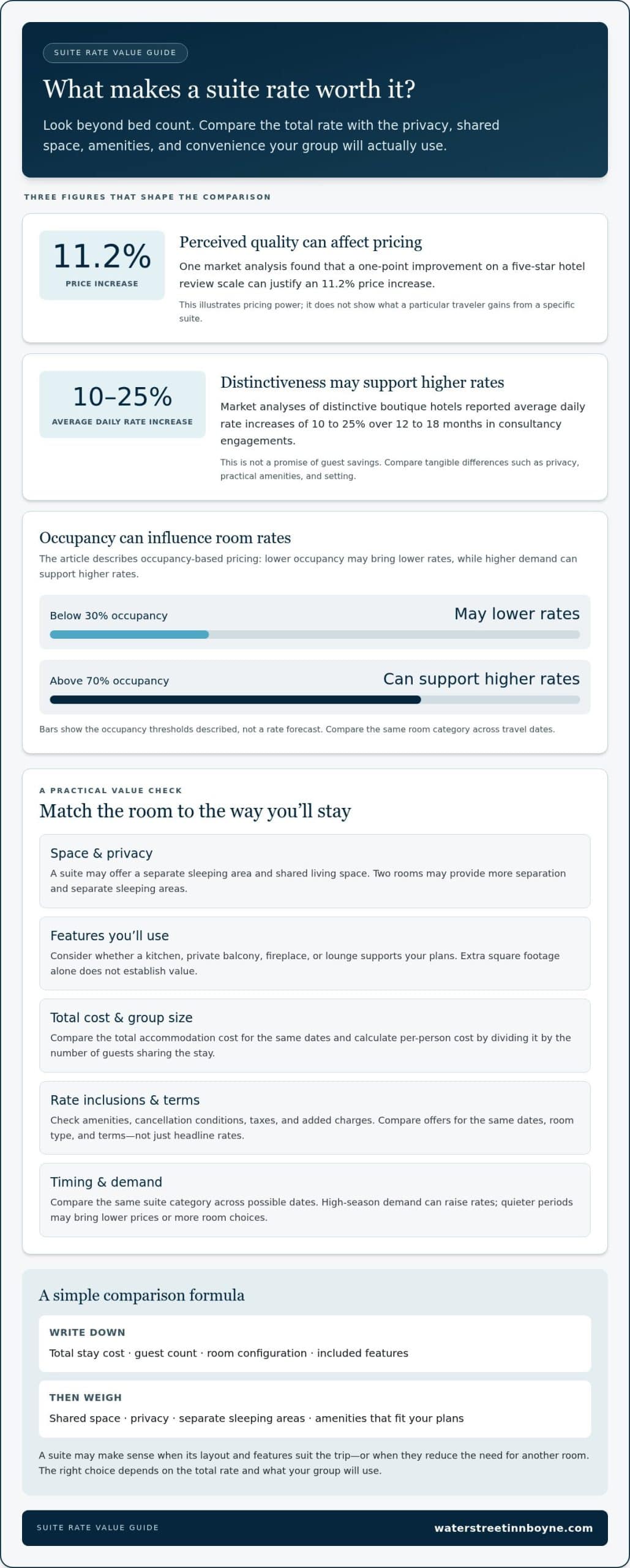
One market analysis found that a one-point improvement on a five-star hotel review scale can justify an 11.2% price increase. That figure illustrates how perceived quality can affect value, but it doesn’t show what a particular traveler gains. Consider a family planning several quiet mornings: a kitchen and shared living area may matter more than premium finishes used briefly.
To see how suite types differ in practical features and services, watch this short overview:
Make the value visible: list the features included in the rate, then mark which ones suit your trip. For example, a lake-view balcony may be a meaningful part of a restful getaway, while a larger lounge may be more useful for a group that spends evenings together. Compare those benefits with a standard room rather than treating every extra square foot as equally valuable.
Compare loyalty rates and subscriptions separately. Check the total for the same dates and room type, with the same cancellation terms and amenities. A lower member rate may be worthwhile if its conditions suit your plans. A subscription is harder to justify if you won’t use its benefits again. Weigh immediate savings against any recurring fee and the features you’d otherwise pay for.
The season also affects the comparison. Stronger demand during high season can raise rates, while quieter periods may bring lower prices or more room choices. Compare the same suite category across possible travel dates, then weigh any rate difference against the weather, activities, and flexibility you gain. A low-season rate isn’t automatically better if the timing doesn’t suit your plans.
Market analyses of distinctive boutique hotels report average daily rate increases of 10 to 25% over 12 to 18 months in consultancy engagements. That result connects distinctiveness with pricing power, not guaranteed savings for guests. For your decision, focus on tangible differences: the privacy of separate sleeping space, practical amenities, and a setting that supports the trip you want.
2. Operating costs, demand, and competitive positioning
When justifying the cost of a suite hotel, looking at nationwide averages offers a useful baseline. This average covers high and low seasons across multiple markets. It isn’t a universal nightly rate: suite size, destination, dates, and demand all affect the price. Comparing equivalent dates and room types gives a clearer view than relying on one broad figure.
Hotels must account for the resources required for each stay. A suite can require more space, furnishings, utilities, and cleaning than a standard room. Its layout may also need more upkeep between guests. Those operating needs help explain rate differences, but don’t establish value on their own. Compare the usable space and features with what your group actually needs.
Demand influences rates too. Occupancy-based pricing may lower rates when occupancy falls below 30%, while higher demand above 70% can support higher rates. For leisure travel, compare the same room category across different dates. A weekday stay and a popular weekend can have different demand, even in the same destination. This helps separate a suite’s room value from a rate shaped by timing.
The cost of suites compared with standard rooms depends on what you’re comparing. Two standard rooms may provide more separate sleeping space, while one suite can keep guests together. These figures cover different suite types, so they aren’t a direct comparison with standard rooms. Check the layout, privacy, and total number of rooms needed.
Per-person cost can make a group stay easier to assess. Use the same calculation for your group: divide the total accommodation cost by the number of guests sharing it. Then compare room arrangements and consider whether everyone gets enough privacy and shared space.
For a practical comparison, write down the total stay cost, guest count, room configuration, and features included. A higher rate may make sense when the layout reduces the need for another room or suits a group’s plans. For a waterfront stay, explore vacation rental suites at Water Street Inn as one example to compare against your trip needs.
Local comparisons add context: nationwide data shows that alternative suite configurations frequently yield substantial savings over traditional multi-room bookings, depending on seasonal demand and regional market factors.
3. Presenting inclusions to justify a higher rate
A higher rate is easier to assess when the hotel room’s inclusions are clear. Compare a room-only option with a rate that includes useful extras, such as breakfast or late checkout. Value depends on whether those features suit your plans, not simply on how many are included. A guest leaving early may value breakfast less than someone planning a slow morning.
Room economics shape how hotels set rates. A hotel balances room revenue against operating expenses, expected demand, and the features attached to each booking. To compare offers, note the dates, room type, cancellation conditions, and included amenities. Then compare the full cost for the same stay, rather than judging headline rates with different terms.
Check the itemized total for taxes and added charges, such as parking, resort fees, or extra-guest charges. Review whether optional services cost extra, too. These details can change the final amount, so compare them alongside the room rate. For example, a lower room-only offer may not be better value if another rate includes features you’ll use.
Hotels can present inclusions directly beside the rate to make the comparison clearer. For example, a €200 standard room rate can be shown alongside a higher rate that includes breakfast and late checkout. The guest can then judge whether those additions fit the itinerary. A bundled rate works best as a transparent comparison, not as a claim that every traveler will value each extra.
Average daily rate, or ADR, measures the average room revenue earned per occupied room over a chosen period. When assessing ADR growth, a hotel should consider whether rising rates reflect stronger demand, a different mix of room types, or added features. These factors tell different stories. A rate increase tied to a useful amenity differs from one driven mainly by a busy calendar.
Major events can shift that calendar sharply. Average nightly hotel rates can rise by up to 32% year over year during major event periods. Travelers comparing dates around an event should assess the same room category and inclusions across alternative nights. This makes it easier to distinguish event-driven pricing from the value of the suite itself.
Use a simple three-step check before booking: compare equivalent room types, add mandatory charges to each total, and value only the features you expect to use. Late checkout may help after an evening event, while breakfast may matter more during a full day of sightseeing. That practical match is the clearest basis for deciding whether a higher rate suits your stay.
4. Booking a suite versus two rooms for groups
A suite keeps a group together around shared living space, while adjoining rooms provide separate sleeping areas connected by a door. A vacation rental may feel more residential, but its layout and amenities depend on the property. Compare sleeping arrangements, privacy, shared space, and booking terms before choosing.
For a family traveling with children, one suite can make evenings simpler: adults can relax in the living area while children settle into a separate sleeping space. Two adjoining rooms offer more privacy, which may suit older children or friends. A vacation rental may have a kitchen or living room, but compare its actual features with hotel options rather than assuming every rental is alike.
Connector suites were cheaper than traditional suites in eight of the nine U.S. cities analyzed. That finding shows why layout matters when comparing group stays. A connector arrangement links separate rooms, while a traditional suite combines sleeping and living areas in one accommodation. Compare the exact configuration rather than relying on labels such as “suite” or “adjoining.”
Calculate the total stay for each option using identical dates and guest numbers. Include every room needed, then review taxes, cancellation terms, and separately listed charges. For example, friends might compare one suite with two adjoining rooms and a vacation rental. The most useful figure is the final total for the same stay, not the displayed rate for one room.
Next, weigh privacy against convenience. Two rooms create distinct personal spaces, but guests may spend less time together unless they meet in shared areas. A suite can make gathering easier, though its sleeping layout may not suit every group. A vacation rental may feel more home-like, while a hotel stay offers a different setting and service structure. Match these trade-offs to your group’s plans.
Before booking, write down the group’s must-haves: separate beds, a connecting door, a common lounge, or a kitchen. Compare each option against that list, then check the full stay cost and terms. A group arriving late after a shared event may value an easy place to gather; travelers on different schedules may prefer separate rooms. This keeps layout and practical use central to the decision.
Finally, consider whether the group’s size changes the value per person. Divide each option’s total cost by the number of travelers, then compare the result alongside privacy and shared amenities. The lowest per-person figure may not suit a group that needs separate sleeping areas. For a family prioritizing time together, a suite’s common space could matter more than an additional private room.
5. Hotel suite amenities and services
Suite amenities add value when they support how you’ll spend your stay. A kitchen, separate living area, private balcony, or fireplace can make the room feel more residential. Compare each suite’s listed amenities with your plans. A traveler expecting quiet evenings may value a lounge more than a feature they’d use only briefly.
An in-room kitchen can reduce meal spending if guests prepare some meals instead of dining out. Any savings depend on grocery costs, meal choices, and how often guests cook, so weigh those factors against the convenience of nearby dining.
Look beyond an amenity’s name and consider how you’d use it. A fully equipped kitchen, for example, can support breakfast before a day outdoors or an easy dinner after returning late. A private balcony offers a calm place to enjoy the surroundings, while a gas-log fireplace can make an evening indoors feel inviting. These features matter most when they fit your routine.
Services also affect the experience, but they vary between hotels and suite types. Separate what’s included from what costs extra. Where the details are provided, compare housekeeping arrangements, parking terms, breakfast availability, and checkout conditions. A clear list helps you judge what the rate delivers without assuming every hotel includes the same services.
For business travelers, a suite’s separate living space can provide room to work without using the bed as a desk. For longer stays, a kitchen can make everyday meals more convenient, while distinct living and sleeping areas can help create a settled routine. Consider a traveler who works remotely by day and wants a comfortable place to unwind afterward.
Use a simple amenity check before booking: identify the features you’ll use daily, those you may use occasionally, and those that won’t affect your stay. Then compare suites using the same priorities. A family may put a kitchen and shared living area first; a couple planning outdoor activities may care more about a balcony and a comfortable place to rest afterward.
If a kitchen, balcony, and fireplace matter to your stay, explore suite accommodations and compare their features with your plans. That practical match helps you decide which amenities belong in your booking choice.
Water Street Inn: One Bedroom Suite
Water Street Inn’s One Bedroom Suite suits travelers who value a residential feel alongside a waterfront setting. Each suite features a fully equipped kitchen, a private balcony or patio with water views, and a cozy gas-log fireplace. These amenities are useful for guests who want to prepare meals, unwind indoors, and enjoy the view at their own pace.
Guests also have access to a private beach and can walk to nearby shops, restaurants, and local attractions. When comparing a suite with a standard hotel room, consider whether a kitchen, outdoor space, and waterfront views fit your plans. If they do, explore the One Bedroom Suite for your stay.
Visit waterstreetinnboyne.com to learn more about Water Street Inn.
Choose the stay that fits the experience you want
Before booking, picture an ordinary day of your trip, from a quiet morning to returning in the evening. This simple exercise can clarify which room features will genuinely matter and which are unlikely to shape your experience. It also offers a personal way to justify the cost of a suite hotel: focus on how the accommodation supports the stay you want, rather than choosing by room category alone.
If you’re planning a celebration as well as a getaway, Water Street Inn also offers Wedding Venue Rental. Consider how the setting fits the occasion as you plan your lodging and event.
For a closer look at Water Street Inn and the options for your plans, contact Water Street Inn to discuss your stay. Take your time choosing, and look forward to a stay that feels right for you.
Frequently Asked Questions
Is it Cheaper to Get Two Hotel Rooms or a Suite?
Two rooms cost less only when their combined booking total is below the suite’s total for the same dates. A suite may fit better when your group wants one shared place to gather, while separate rooms can suit travelers who need more independence. Compare the actual room configurations and complete booking totals, then decide whether the price difference matches how your group will use the space.
How much more does a suite hotel cost than a standard hotel room?
There’s no single fixed premium: the difference depends on the destination, travel dates, suite layout, demand, and included features. Compare a suite with a standard room at the same property, for the same dates and booking terms. Check what changes beyond room size, such as a separate living area or kitchen. This side-by-side view helps explain the difference without relying on an unrelated market average.
How can families or groups calculate whether a hotel suite saves money?
Compare the suite’s total price with the total for the room arrangement your group actually needs. If a family needs separate sleeping areas, don’t compare a suite with just one standard room. Instead, compare options that fit everyone’s sleeping plans. Then consider whether shared space or privacy matters more to your group. A lower total is useful only if the layout works for your stay.
When is paying extra for a hotel suite not worth it?
Paying extra may not make sense if you’ll use the room mainly to sleep, spend most of the day away, or leave its added features unused. For example, a traveler stopping overnight may get little practical use from a large lounge. A solo guest may also prefer a standard room if extra space won’t improve the trip. Choose a suite when its features support your plans, not simply for its category.