What if a rental that looks like a peaceful retreat still leaves you awake listening to hallway sounds, traffic, or neighbors? For light sleepers, a scenic view and a welcoming description don’t tell the whole story. Choosing vacation rentals for light sleepers means looking past reassuring adjectives and checking the details that can shape a night’s rest.
It’s reasonable to want a stay that feels restorative, especially when a restless night could take the ease out of a relaxing trip. But listings don’t always explain noise conditions or provide enough room details to compare properties. The better approach is to ask specific questions and confirm the answers before booking.
This guide shows you how to compare rentals using practical, verifiable criteria, including room placement, windows, occupancy, and bedding. You can assess Water Street Inn’s One Bedroom Suite against your own needs, but confirm room-specific details rather than assuming them. You’ll come away with a clearer sense of what to verify and how to choose a stay that better fits the way you sleep.
Key Takeaways
- Separate essential sleep needs from flexible preferences, so appealing extras don’t distract from what matters overnight.
- Compare vacation rentals for light sleepers by checking room-specific details, not by assuming a rental or hotel will be quieter.
- Follow a simple sequence before booking: define your needs, review the listing, ask focused questions, and compare the answers.
- Look for useful patterns in guest reviews and confirm details about room placement, occupancy, windows, and bedding.
- Assess the One Bedroom Suite against your sleep priorities, and verify any room-specific conditions before booking.
Vacation rentals for light sleepers: what makes a stay restful?
A restful stay doesn’t require perfect silence. It means the sleeping conditions suit your sensitivities well enough for you to feel comfortable and recover during your trip. For people comparing vacation rentals for light sleepers, the useful question isn’t whether a listing calls itself peaceful. It’s whether the room’s layout, likely sound sources, and other sleep conditions match what you need.
Start by separating essentials from preferences. You might need a bedroom away from shared areas, while a view or access to amenities is a welcome extra. Voices through a wall, traffic outside a window, light entering the room, and movement in a hallway can each affect comfort differently. The effects of noise on sleep are one reason to consider Noise pollution when assessing a place to stay.
For a related perspective on sleeping away from home, watch this video from Sleep Doctor:
A quiet claim is a general impression; a verifiable sleep detail describes the room, its surroundings, or a specific source of noise. That distinction helps you compare listings without treating appealing photos or words like “serene” as evidence of nighttime conditions.
Which sleep conditions matter most when booking?
Before browsing, consider what tends to wake you: voices, traffic, light, or movement. Then distinguish steady background sounds from sudden or intermittent ones. A consistent distant hum may be easier for you to ignore than doors closing or people passing the bedroom. Rank your needs in order and mark each as essential or flexible. This makes comparisons clearer and helps you ask focused questions.
Why a vacation rental is not automatically quieter
A rental’s format doesn’t confirm sound insulation, room placement, or how close the sleeping area is to shared spaces. A kitchen, balcony, view, or other appealing feature can add comfort, but it doesn’t establish what you may hear at night. Seek property-specific answers instead of assuming that a rental is quieter than a hotel. Ask which details apply to the exact suite you’re considering.
Water Street Inn’s furnished rentals are described on its vacation rentals page. Consider the One Bedroom Suite against your priorities, and confirm room-specific information about noise, occupancy, bedding, and windows before booking.
Compare vacation rentals and hotels by their sleep setup
A rental may offer more room to arrange your evening, while a hotel may make certain room details easier to ask about. Neither format guarantees a restful night. When comparing vacation rentals for light sleepers, focus on the specific sleeping space and documented conditions, not assumptions about what a rental or hotel is usually like.
| What to compare | Vacation rental | Hotel |
|---|---|---|
| Private space | Check which areas are for your use and whether other guests or residents share the property. | Confirm what is private to your room and what spaces are shared. |
| Room layout | Look for a floor plan or written details showing whether sleeping and living areas are separate. | Check the documented room configuration rather than assuming rooms have the same layout. |
| Shared areas | Ask whether the bedroom adjoins a kitchen, entrance, common area, or outdoor space. | Ask what is near the room, such as a corridor or shared facility, if that matters to you. |
| Noise information | Seek details about the specific unit, its placement, and reported sound sources. | Ask whether the property can confirm room placement and nearby activity. |
Comparison takeaway: Choose based on verified details about the room you’ll occupy, not the lodging label.
When a vacation rental’s layout may suit your routine
A kitchen or separate living area can make it easier for one person to wind down while another keeps a different schedule. That flexibility is useful only if the actual layout supports your routine. Check whether the bedroom shares a wall with a common area, kitchen, neighboring unit, or outdoor space, and ask about anything the listing doesn’t make clear. Separate spaces don’t, by themselves, prove that sound won’t carry.
When a hotel-style stay may be easier to assess
A hotel’s room categories and property staff may give you a direct way to ask about placement, but service style doesn’t establish that a room is quiet. Request specifics, such as whether the room faces a shared space or is near an area with regular activity. Compare only details the property can confirm. Travel can also affect sleep timing; the CDC explains Jet Lag Disorder, a separate consideration from noise and room layout.
Water Street Inn is an all-suite condominium hotel, and its furnished units include fully equipped kitchens. These features may suit your routine, but they don’t establish the noise conditions or layout of a particular suite. Review the furnished rental details and confirm the room-specific information that matters to you.
How to check whether a vacation rental suits light sleepers
A careful check turns a vague impression into a useful comparison. Follow a simple sequence: define your sleep needs, inspect the listing, ask the host about anything unclear, then compare answers across properties. Words such as “peaceful” or “tranquil” can set a mood, but they don’t explain where the bedroom is or what sounds may reach it.
Guest reviews can add context. Look for recurring comments that describe a specific sound, location, or time of day, such as voices near a sleeping area or activity outside a window. Treat these as clues, not predictions: one guest’s experience doesn’t prove that your stay will be the same. For practical travel-rest ideas beyond choosing a room, see Johns Hopkins Medicine’s guide to better sleep when you travel.
What to look for in listing photos and descriptions
Study the bedroom photos and any floor plan or written layout. Note visible window coverings and whether the sleeping space appears close to a kitchen, living area, entrance, or outdoor space. Photos can help you form questions, but they can’t confirm sound insulation, how a window closes, or what activity is like at night. If the layout isn’t clear, ask rather than treating the gap as a warning sign.
Separate what the listing confirms from what it leaves unknown. A stated bed type is a documented detail; a photo alone may not establish its firmness or condition. Curtains visible in an image don’t confirm how much light they block, either. Keep a short note of each listing’s confirmed features and unanswered questions.
Questions to ask before reserving a rental
Be specific and courteous. For example, ask: “What areas are next to the bedroom?” or “Is there regular activity near the sleeping space, and does it vary by time of day?” If bedding, window coverings, or room layout are essential to you, ask for clarification about the exact rental you’re considering. Clear questions make it easier for a host to give a useful answer.
- What spaces or activity are closest to the sleeping area?
- Does the bedroom share a wall with a common or outdoor space?
- Can you confirm the bed or window-covering details that matter to me?
Save the answers alongside the listing, then compare them with your ranked priorities. If a response is broad or doesn’t address a must-have, ask a follow-up before deciding. You can review the furnished rental details and confirm any room-specific information that’s important to your stay.
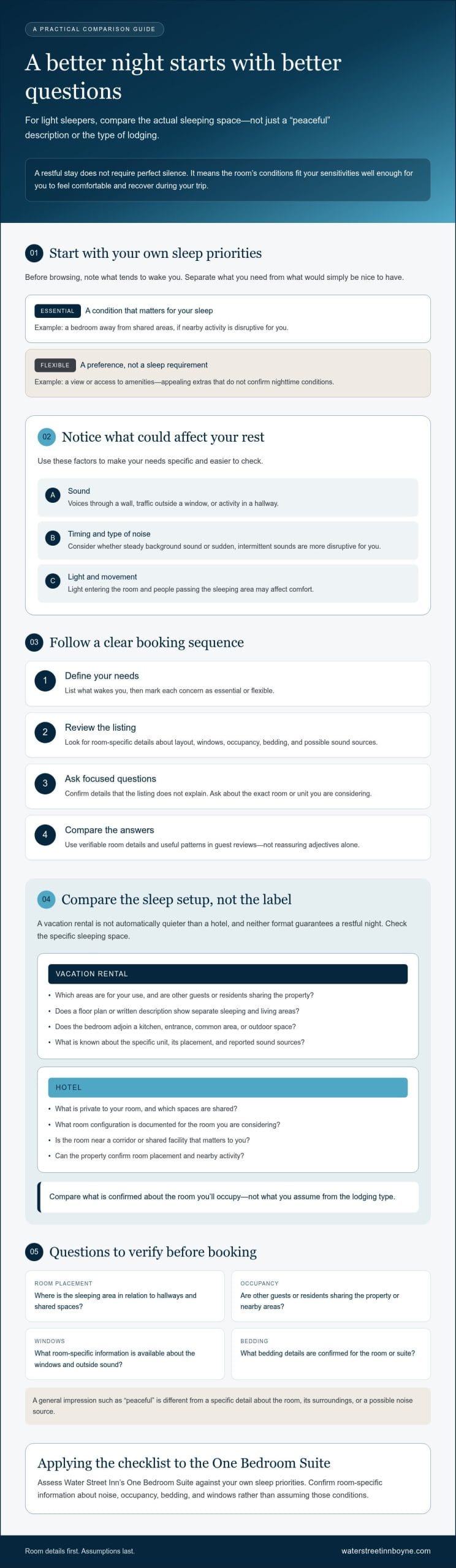
A light-sleeper booking checklist for comparing vacation rentals
A compact checklist can keep attractive photos and broad comfort claims from overshadowing what matters to your sleep. Before choosing among vacation rentals for light sleepers, separate must-haves from flexible preferences. A must-have might be a bedroom away from a shared living area; a preferred view may be negotiable.
Build a personal sleep-needs checklist
Write down the conditions that affect your rest, including sensitivities to voices, traffic, light, or movement, along with any bedding needs and schedule considerations. Mark each item as confirmed, unanswered, or flexible. Use unanswered essentials to guide a conversation with the host before you reserve.
- Sleep priorities: What sounds, light, or activity tend to disturb you?
- Room details: What do you need to know about the bedroom, windows, bedding, or nearby spaces?
- Noise questions: What activity might occur near the sleeping area, and does it vary by time?
- Review patterns: Do guest comments repeatedly describe a specific sound or location?
Keep a simple comparison record for each shortlisted property. It won’t predict sleep quality, but it will help you see what you know and what still needs checking.
- Property A: Must-haves confirmed: ____ | Questions unanswered: ____ | Flexible preferences met: ____
- Property B: Must-haves confirmed: ____ | Questions unanswered: ____ | Flexible preferences met: ____
Compare answers without overvaluing vague promises
Specific information is more useful than an unqualified assurance of comfort. “The bedroom is beside the shared lounge” gives you something concrete to consider; “very peaceful” doesn’t explain the layout or possible activity. Ask the same questions of each property so your comparison is fair, and note whether reviews point to a recurring, clearly described concern. Missing details signal uncertainty, not proof that a stay will be poor.
Before deciding, review your notes. If an essential remains unanswered, seek clarification rather than letting a flexible extra tip the balance. To review the property’s accommodation details, explore the suite and vacation rental options, then confirm any room-specific information that matters to you.
Choose a vacation rental that fits your sleep needs
The clearest decision rule is simple: match verified details about the room to your personal sleep priorities. A listing can look inviting and include appealing amenities, but those features don’t establish how the sleeping area will feel at night. Compare what you’ve confirmed with your must-haves, and follow up on any unanswered essentials.
What to verify about the One Bedroom Suite
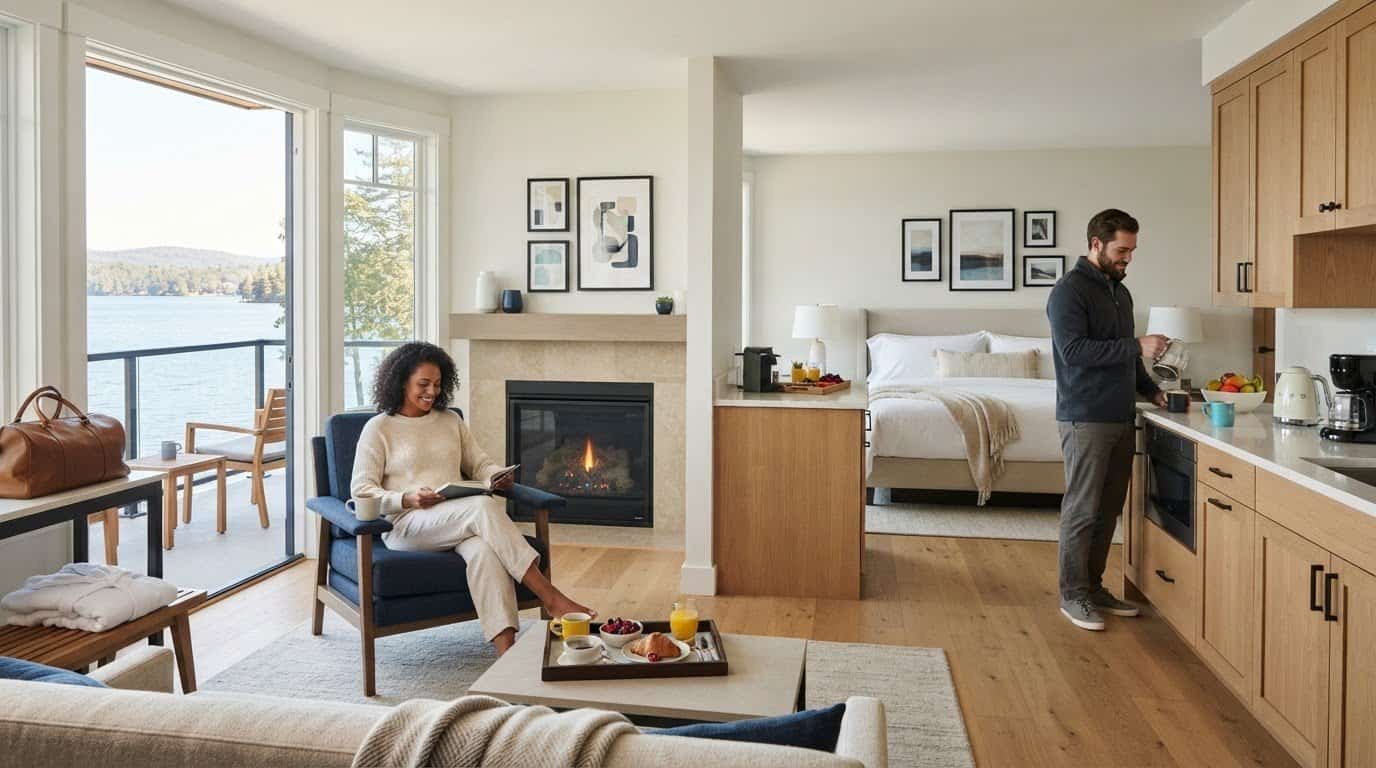
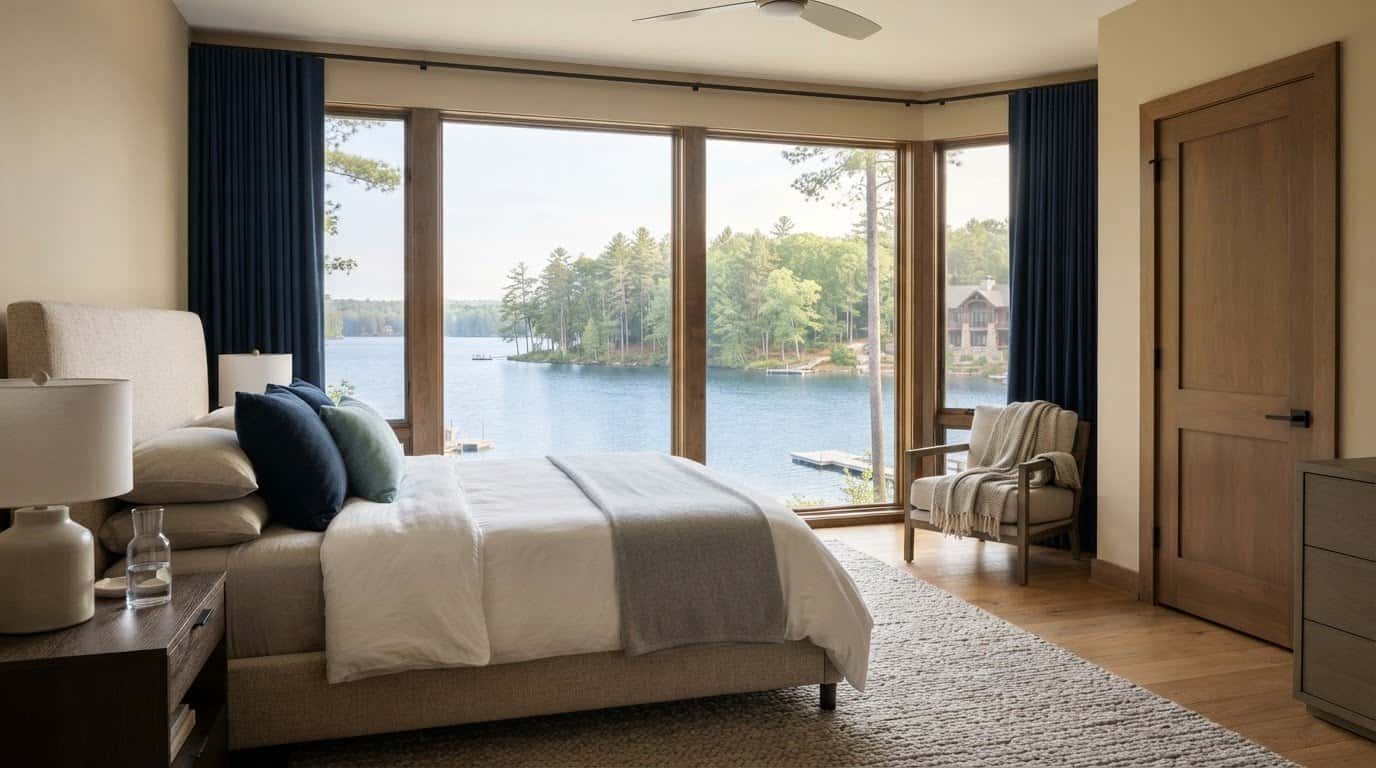
Water Street Inn’s One Bedroom Suite is an option to assess against your needs, not a promise of a quiet stay. The property’s units feature fully equipped kitchens, private balconies or patios, lake views, and gas-log fireplaces. These details describe the accommodation, not its noise conditions. Ask directly about any room-specific requirements that matter to you, including layout, nearby activity, windows, or bedding.
Be clear about what you need to know. If you’re sensitive to voices near the sleeping area, ask what spaces are adjacent to the bedroom. If a particular bedding detail is essential, request confirmation for the suite you’re considering. Don’t infer soundproofing, blackout treatments, or quiet surroundings from amenities or general descriptions.
Take the next step with confidence
Set the property’s answers beside your completed checklist. Do they confirm your must-haves, or are important details still uncertain? Consider flexible preferences separately, so a lake view or fireplace doesn’t outweigh a sleep requirement you’ve marked as essential. If an answer is unclear, ask for clarification before choosing your accommodation.
Careful checking can help you select a stay that better fits your routines and priorities. For vacation rentals for light sleepers, confidence comes from understanding the specific room rather than relying on a broad promise. When you’re ready, view vacation rental options and confirm the details that matter to your rest.
Choose your next stay with confidence
A restful rental is a personal fit, not a promise of complete silence. Before booking, identify your essential sleep conditions, compare the details each property confirms, and ask about anything that remains unclear. Room-specific answers and recurring, clearly described review comments offer more useful context than broad claims like “peaceful.”
Water Street Inn’s all-suite condominium hotel format may be worth considering as you compare options. Its One Bedroom Suite includes a fully equipped kitchen, and units feature a private balcony or patio and a gas-log fireplace. These amenities describe the stay, but they don’t confirm noise conditions or guarantee a particular sleep experience. Check that the suite’s specific details match your priorities before deciding.
With a clear checklist and focused questions, you can choose vacation rentals for light sleepers with greater confidence. Explore Water Street Inn’s vacation rental options and review the accommodation details as you plan your stay.
Frequently Asked Questions
Are vacation rentals quieter than hotels for light sleepers?
Neither vacation rentals nor hotels are automatically quieter. Sound depends on the individual property, room placement, nearby activity, and how the sleeping area relates to shared spaces. A rental may offer a separate living area, while a hotel may be able to answer questions about room location. Compare confirmed details for the specific room you’d book instead of relying on the accommodation type to predict how well you’ll sleep.
How can I find out whether a vacation rental is quiet at night?
Look for specific, room-level information and ask the host about nearby activity. Find out whether the bedroom is next to a shared area, entrance, or outdoor space, and whether activity there varies by schedule. Read reviews for repeated, clearly described noise concerns. If the listing only says “peaceful,” treat that as an impression, not confirmation of nighttime conditions, and ask follow-up questions before booking.
What should light sleepers ask a vacation rental host before booking?
Ask what spaces are closest to the bedroom and whether activity nearby changes at different times. You can also request details about the room layout, windows, window coverings, and bedding if these affect your sleep. Make your questions specific to the unit you’re considering, then save the answers so you can compare them with other listings. If a must-have remains unclear, ask for clarification before reserving.
Can reviews help identify noise problems in a vacation rental?
Yes, reviews can point to possible noise sources, especially when different guests describe the same issue, such as voices near a bedroom or activity outside a window. Look for specific details rather than general praise or criticism. Reviews reflect individual stays, though, and one person’s experience doesn’t establish what your visit will be like. Use comments as prompts for questions, then confirm relevant room details with the host.
What bedroom features should light sleepers look for in a rental?
Look for details that match your needs, such as the bedroom’s location, its distance from shared spaces, and documented window coverings or bedding. Photos may show curtains or a bed, but they can’t confirm how much light the coverings block or whether the bedding suits you. Ask the host about any essential feature and whether the answer applies to the specific room you’d occupy.
Is a separate bedroom important for light sleepers on vacation?
A separate bedroom can be helpful if you want a distinct place to sleep while someone else uses a living area or keeps a different schedule. Whether it matters depends on your routine and sensitivities. Check how the bedroom relates to common spaces and neighboring activity, since a separate room doesn’t guarantee that sound won’t carry. Treat the layout as one factor to compare, not a promise of quieter conditions.
What should I do if a vacation rental does not mention noise?
Don’t assume that silence in the listing means the property is quiet, or that it signals a problem. Ask the host about the sleeping area’s placement, nearby shared or outdoor spaces, and any activity that may occur around it. Check reviews for recurring noise descriptions, then compare the replies with your must-haves. If an essential detail remains unanswered, consider whether you’re comfortable booking with that uncertainty.