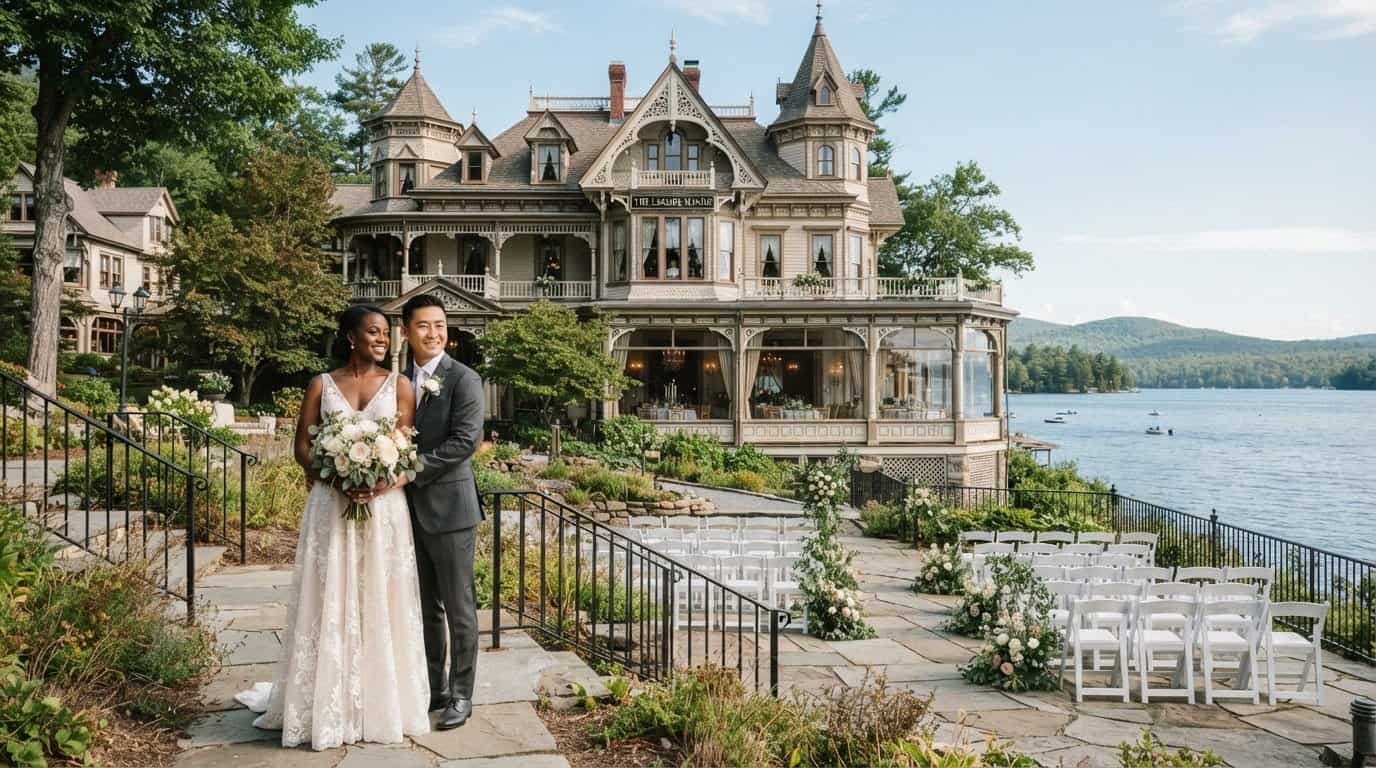

Planning a wedding rehearsal dinner starts with choosing a host, setting a spending limit, and picking a date that works with the wedding schedule. Traditionally, the dinner follows the ceremony run-through, often the night before the wedding, and aims to start around 6 or 7 p.m. But that timing can shift if another date better suits your plans.
It’s natural to want this gathering to feel welcoming without letting costs or logistics take over. The groom’s parents often host, but anyone can take the lead. Agreeing on a budget early helps shape the guest list, food, and setting.
Use this guide to decide who hosts, set a budget, include out-of-town guests, plan toasts, and schedule the evening. A few thoughtful choices can make the dinner a relaxed chance to thank loved ones and spend time together before the wedding day.
Key Takeaways
- Agree on the host and spending limit early, then let the budget shape the guest list, meal, and setting.
- Consider welcoming out-of-town relatives and wedding helpers, and make the invitation clear about the food and plans.
- Keep toasts warm and brief, with a natural moment for speeches during or just after dessert.
- Plan around the ceremony run-through: the dinner is often the night before the wedding, but another date may better fit your schedule.
1. Choosing a host and setting a budget
For planning a wedding rehearsal dinner, begin by agreeing on the host and the gathering’s purpose. The groom’s parents traditionally often host, but the couple, relatives, or friends can take the role. Choose one person to coordinate decisions and track spending. Set a budget before shaping the guest list, menu, and venue. Start planning four to five months before the wedding day to give those choices room to develop.
Set priorities together. Guest count, food, drinks, venue, and decorations all affect the budget, so decide which matter most. A buffet or set menu can help guide food planning. Discuss the menu with restaurant staff or a caterer well before the dinner. Ask guests about dietary needs and share relevant details with whoever prepares the food. Include nonalcoholic drinks among the beverage choices.
Choose a date around the ceremony run-through and the couple’s plans. The dinner traditionally follows the rehearsal, often the night before the wedding, but couples may choose another date. The rehearsal can take place two or three nights before the wedding, but not more than a week beforehand. Aim to start dinner around 6 or 7 p.m. When planning a wedding rehearsal dinner, choose a venue that suits the guest count, meal format, and atmosphere. Book after settling the date and estimating attendance, since those details shape the space and arrangements.
A garden gathering or casual family meal can provide a simple theme. State the dress code in the invitation; otherwise, guests can choose neat, comfortable clothing suited to the setting. Avoid common planning risks by naming the host, clarifying who is invited, and explaining food arrangements if the event serves only appetizers or no meal. Follow up on missing RSVPs and confirm the final guest count two weeks before the dinner.
2. Considering out-of-town guests
Start the guest list with the people central to the wedding weekend, such as the wedding party, parents, grandparents, and, when appropriate, the officiant. Then consider relatives traveling from out of town. Inviting them recognizes the time and effort involved in attending. If budget or space is limited, prioritize wedding helpers and traveling relatives before widening the circle. The host and couple can review names together so invitations feel intentional.
Group the list by wedding party, close family, and out-of-town guests. This makes it easier to organize addresses and RSVPs and to consider travel-friendly timing. For example, a relative arriving late on the wedding-eve afternoon may appreciate a dinner scheduled after the ceremony run-through. Share the event time, venue address, meal details, and dress guidance in one place. Guests can then plan transportation and know whether the gathering includes a full meal.
Rehearsal dinner invitations can be sent with the wedding invitations or mailed separately. Send them around the same time so guests have advance notice. Address each invitation to the people invited, and state clearly whether a spouse or other guest is included. This avoids uncertainty for relatives traveling with family members.
Keep the RSVP process simple. Ask invitees to respond and note dietary needs, then use their replies to finalize seating and meal arrangements. If guests are traveling, share the schedule and location directly with them as well as on the invitation. A brief message can clarify when to arrive and how dinner fits around the rehearsal. These details help out-of-town relatives feel welcome without making the event another obligation or adding pressure to the wedding-day schedule.
3. Including pre-wedding toasts
A rehearsal dinner gives hosts a comfortable opportunity to thank guests and wedding helpers. A toast to everyone attending is appropriate. If the groom’s parents host, they will likely speak, but the couple can invite other speakers too. Choose people who can welcome guests, express gratitude, or share a personal memory. Agreeing on the speakers beforehand keeps the evening thoughtful and avoids uncertainty about who should speak.
Plan the order with the host before dinner begins. For example, the host can welcome guests, followed by a parent, wedding party member, or the couple. Make participation optional, especially for relatives who may feel uncomfortable speaking publicly. Let each speaker know the order, where to stand, and when the host will introduce them. This simple coordination helps the room settle and gives each person a natural turn.
Speeches often take place during or just after dessert. Guests can enjoy the meal first, then share a pause before the evening winds down. Ask the venue or meal host to signal when dessert is served, and introduce speakers between courses or after plates are cleared. Avoid remarks during arrival, serving, or lively conversation, when guests may miss them.
Help speakers prepare by suggesting a focus, such as thanking family, welcoming out-of-town guests, or sharing a kind story about the couple. Ask them to keep remarks warm, inclusive, and suitable for everyone present. Personal stories work best when they celebrate the couple without embarrassing them or revealing private details. The couple can decide whether to speak, offer a brief thank-you, or simply enjoy the toasts. A calm plan gives heartfelt words room to land without making the dinner feel like a formal program.
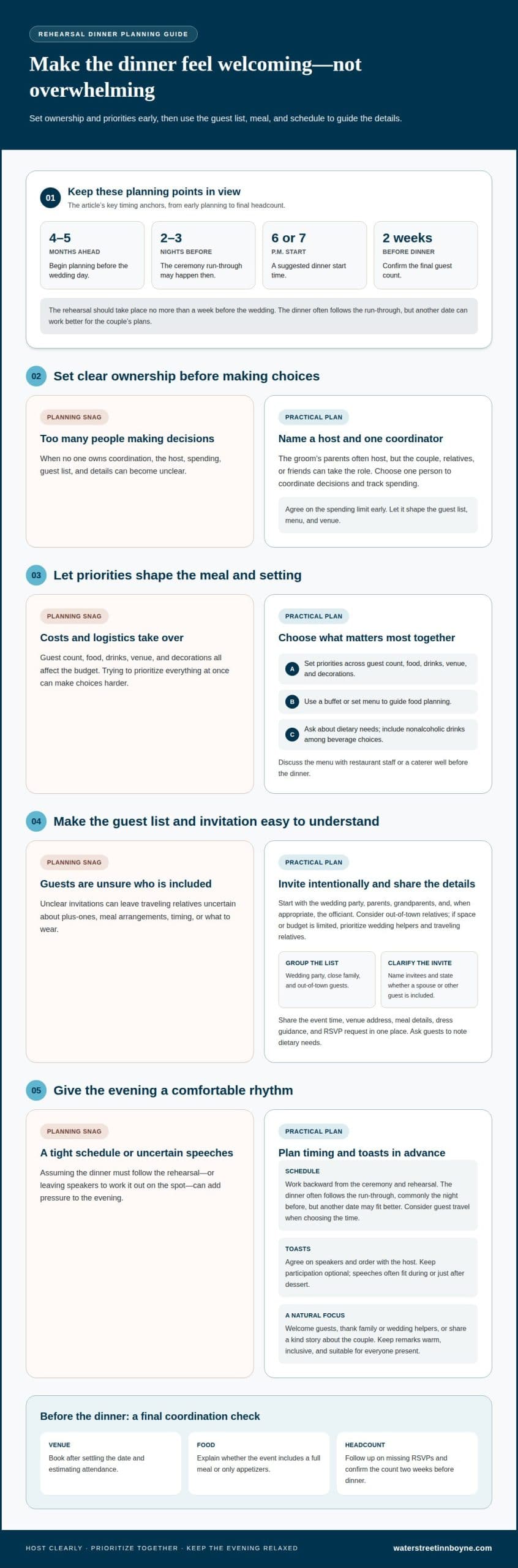
4. Setting the rehearsal dinner date and time
Choose the dinner date by working backward from the ceremony and rehearsal, then consider guest travel and the couple’s plans. Traditionally, the dinner follows the ceremony run-through, often the night before the wedding. This keeps the wedding party together after practicing, but it isn’t the only option. Couples can choose another date if it suits the weekend better.
Keep the rehearsal and dinner schedule distinct. The ceremony run-through may happen two or three nights before the wedding, but not more than a week beforehand. This leaves room to place dinner separately, rather than assuming it must follow immediately. For example, a couple might rehearse earlier in the week, then reserve the evening before the wedding for a smaller dinner. Check that the wedding party can attend both events without creating a rushed transition.
Some couples choose one evening for the rehearsal dinner and another for a welcome party for all guests. This separates the more intimate gathering from a larger welcome while giving traveling guests another chance to connect. Use the invitation to clarify which event each person is invited to and where to arrive. Consider transportation, meal timing, and the next day’s wedding schedule when choosing dates.
A 6 or 7 p.m. start is a useful target for the dinner. Work backward from that time when setting the run-through, allowing guests to travel between locations and arrive without rushing. If the rehearsal takes place on another evening, communicate both dates clearly so no one mistakes the dinner for the rehearsal itself. Confirm the final schedule with the couple, host, wedding party, and venue, then share one consistent version with invitees. A simple schedule should state the rehearsal time, dinner start, location, and any later gathering, such as Friday’s welcome party. That clarity helps everyone plan the wedding weekend around the events.
Water Street Inn: One Bedroom Suite
Water Street Inn offers a Wedding Venue Rental for couples looking for a setting for their celebration. Its One Bedroom Suite provides a comfortable place to unwind, with a fully equipped kitchen, private balcony or patio, and cozy gas-log fireplace.
Consider the venue rental when comparing settings for your wedding events, and the suite when planning a stay around the celebration. Explore wedding venue details, or contact Water Street Inn to discuss your plans.
Shape a wedding weekend that feels like yours
Let the dinner reflect the welcome you want guests to remember: easy conversation, heartfelt appreciation, or an unhurried evening together. That intention can guide decisions when plans change, helping you protect what matters without adding details just because tradition suggests them.
As planning a wedding rehearsal dinner reaches its final decisions, consider how the gathering fits the mood you want for the wedding weekend. A relaxed, personal atmosphere can come from thoughtful choices, not an elaborate schedule. Focus on what will help guests feel included, and let the rest support that purpose.
Before finalizing arrangements, write down how you want guests to feel as they head into the wedding day. Use that intention to weigh competing ideas and decide what to simplify. This small step keeps the celebration personal rather than turning planning into a checklist of expectations.
For a closer look at a wedding setting and stay option, contact Water Street Inn today. A clear purpose can make the gathering feel personal, welcoming, and comfortably your own.
Frequently Asked Questions
Who traditionally hosts and pays for the wedding rehearsal dinner?
The groom’s parents traditionally host, but the couple, relatives, or friends can take the lead. The person or family hosting generally organizes the gathering and takes responsibility for its expenses. Before invitations go out, agree on whether one host will cover the event or families will share costs. A clear agreement helps prevent awkward assumptions.
Who should be invited to the rehearsal dinner?
Start with the people directly involved in the wedding, then shape the guest list around the gathering’s size and purpose. The couple can decide whether to include wedding party members’ spouses or partners, close relatives, and out-of-town guests. For an intimate dinner, invite essential helpers and immediate family. Make each invitation clear about who is included, especially when guests are traveling together.
When should a wedding rehearsal dinner be held, and how long should it last?
The dinner is traditionally held after the ceremony rehearsal, often the night before the wedding, though another date may suit the schedule better. Set the start and end times around travel between locations, the next day’s events, and the meal format. There’s no required duration: a simple dinner with a few toasts may be shorter than a gathering with several speakers or activities.
How do you plan a rehearsal dinner step by step?
First, agree on the host, purpose, and spending limit. Next, choose a date, estimate attendance, and select a venue suited to the meal and atmosphere. Send invitations with clear RSVP instructions, then use replies to finalize food, seating, and dietary accommodations. Before the event, share a simple schedule with the host and speakers so arrivals, dinner service, and toasts flow smoothly.
What are popular rehearsal dinner venue options and how do they compare?
A restaurant private room can simplify meal service, while a home offers a personal setting and more control over the evening. A rented event venue can provide a distinct backdrop and gathering space, though the host will coordinate more details. Outdoor locations offer an open-air atmosphere, but require a weather backup. Compare options by guest comfort, meal arrangements, access, and setup needs.
How much does a rehearsal dinner cost per guest in the United States?
There isn’t one per-guest amount that fits every rehearsal dinner. Costs depend on the meal format, food and drink choices, venue arrangements, and final attendance. To build an estimate, list planned expenses and divide the total by the expected guest count. A buffet and a plated meal can lead to different totals, so compare options with the host’s overall budget.