A popular wedding date can narrow your venue choices long before the celebration arrives. For peak-season Saturdays, couples are generally advised to book 12 to 18 months ahead; for off-peak or weekday weddings, 6 to 12 months can still offer solid options. That’s the practical answer to how far in advance to book a wedding venue, with your preferred season and day of the week helping set the pace.
It makes sense to want time to shape your plans. Booking early can give you more choice, even if every detail is not settled. Your guest count matters: a larger gathering may need more space, while your budget can affect which dates and seasons work for you.
Season, guest count, and budget all affect when to book, as do the options available if your preferred date is approaching. Clarifying these priorities early can make planning calmer and help you choose a setting that suits your celebration.
Key Takeaways
- For a peak-season Saturday, start looking 12 to 18 months ahead to have a stronger choice of dates and venues.
- If your plans are more flexible, consider an off-peak season or a weekday, when booking 6 to 12 months ahead can still offer solid options.
- Let your guest count and budget guide your search, since venue capacity and the dates you consider can shape your choices.
- Begin early, especially if you have a specific date in mind, so you have more room to weigh your options before booking.
1. When Should I Book My Wedding Venue?
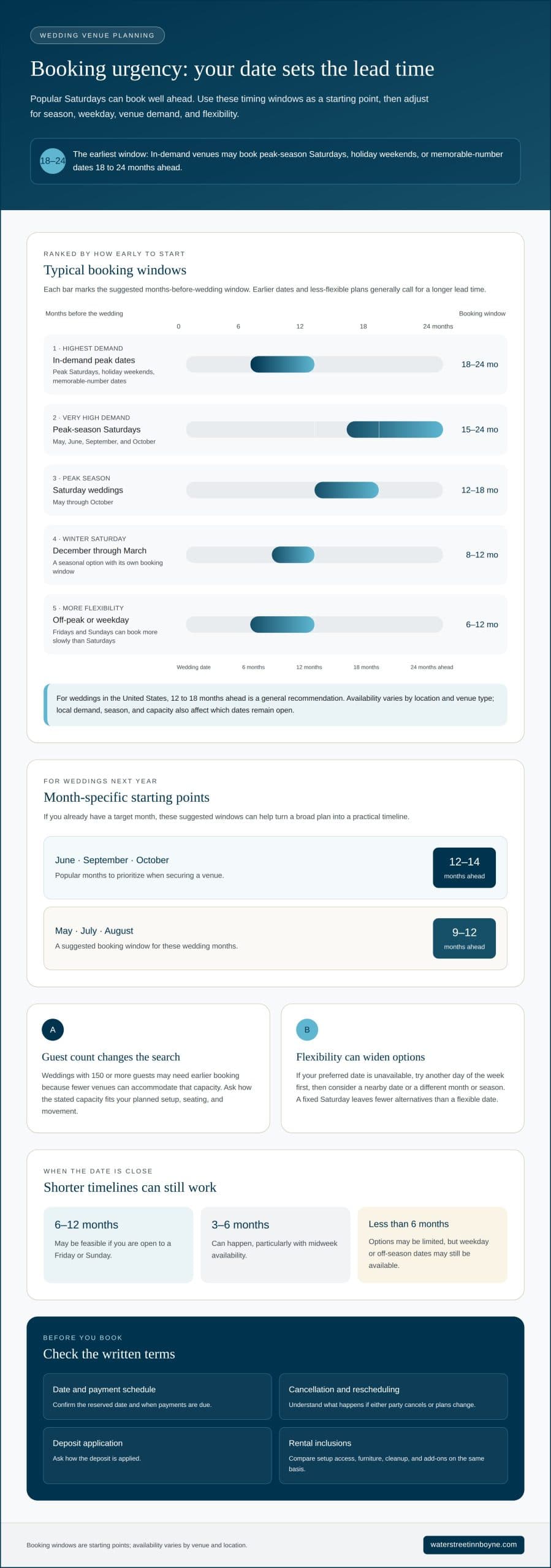
In the United States, couples are generally advised to book a wedding venue 12 to 18 months ahead. This window gives you more time to find a preferred date, especially for a Saturday during the May-to-October peak season. Saturday evenings in those months tend to book fastest. For off-peak or weekday weddings, booking 6 to 12 months ahead can still provide solid options.
Season and day of the week can shift the timeline. Winter Saturdays from December through March typically book 8 to 12 months ahead. Peak-season Saturdays in May, June, September, and October may book 15 to 24 months ahead, while holiday weekends can be just as competitive. Fridays and Sundays tend to book more slowly than Saturdays, so flexible couples may have more dates to consider.
If your wedding is less than 6 months away, venues may have limited options, but weekday or off-season dates can still be available. Weddings planned 3 to 6 months ahead can happen, particularly with midweek availability. A flexible date may help you find a venue, while a fixed Saturday can make an earlier booking more useful. Once the venue is secured, schedule key vendors, including your photographer.
Before booking, review the contract’s date, payment schedule, cancellation terms, and rescheduling policy. Ask how the deposit is applied and what happens if either party cancels. These written terms set out the financial and practical commitments tied to your reservation.
For a destination wedding, use the same seasonal booking windows as a starting point, then leave time for guests to plan travel. Search earlier for a popular peak-season Saturday than for a flexible weekday date.
Availability varies by location and venue type. Local demand, season, and capacity all affect which dates remain open. If a venue is being renovated, clarify in the contract how opening milestones, delays, cancellations, and rescheduling are handled before booking.
2. Choosing a season, guest count, and budget
Season affects both demand and the range of dates to consider. January, February, and March generally have the most venue availability during the off-peak season. Popular spring, early-summer, and fall dates attract stronger demand, especially Saturdays. If the season matters more than one exact date, compare options across nearby months.
Set a realistic guest count before comparing spaces. Weddings with 150 or more guests may need earlier booking because fewer venues can accommodate that capacity. Capacity also affects how a room feels: a large space can feel sparse with a smaller gathering, while a tight layout can limit seating and movement. Ask how each venue’s stated capacity fits your planned setup.
Build your venue budget around the event’s needs, not headline pricing alone. Compare rental inclusions such as setup access, furniture, cleanup, and add-ons, since they affect the overall cost. Leave room for factors that can change the total, including guest count, date, and event format. Compare written proposals on the same basis rather than treating different packages as equivalent.
Holiday weekends, including Memorial Day, Labor Day, and weekends around New Year’s, tend to book like peak Saturdays, regardless of the month. If you prefer one, treat it as a high-demand date in your planning. Flexibility can widen your options: consider a nearby date, weekday, or less popular season.
When comparing wedding venues, look at available dates, guest capacity, layout, rental inclusions, and contract terms. First match each option to your season and guest count, then weigh the price against what the rental covers. Couples planning surrounding events like rehearsal dinners can apply a similar approach, considering full-service dining destinations like The Oxford Kitchen & Gastropub to accommodate their party. This gives you a clearer basis for choosing a setting that suits your plans and budget.
Planning timelines for weddings next year
For a wedding next year, start with the month and day you want, then set a booking timeline around them. Couples planning June, September, or October weddings are advised to book their venue 12 to 14 months in advance. For May, July, or August weddings, the suggested window is nine to 12 months ahead. These month-specific ranges help turn a broad plan into a practical starting point.
Once you know your target month, arrange venue tours and compare available dates. If your preferred date falls within the recommended window, prioritize the venue before coordinating other major plans. Review each contract carefully, including the date, payment schedule, cancellation terms, and rental inclusions. Then you can make an informed decision before moving on to vendors such as catering, photography, and live event production providers like straightst.com.
A shorter timeline can still work, but flexibility becomes more useful. Booking 6 to 12 months out may be feasible if you’re open to a Friday or Sunday. With less than 6 months, weekday weddings or off-season dates may have openings. Weddings planned 3 to 6 months ahead can happen, particularly when midweek dates are available. A fixed Saturday in a popular month leaves fewer alternatives than a flexible date.
If your ideal venue or date is unavailable, adjust one part of the plan at a time. Try another day of the week first, then consider a different month or season. For example, a couple set on an October celebration could explore a nearby date before changing the whole plan. Keep your guest count and essential needs steady while comparing alternatives. This makes each option easier to assess, even on a compressed timeline.
4. Why to book a wedding venue early
Early booking can give couples more choice before popular dates are locked. In-demand venues may book peak-season Saturdays, holiday weekends, or memorable-number dates 18 to 24 months ahead. Some popular venues book prime fall Saturdays up to 2 years in advance. That matters if one beautiful autumn date is central to your plans.
A confirmed date also gives the rest of wedding planning a stable starting point. Once the venue is booked, couples can coordinate vendors around the location and schedule, rather than building plans around a date that may change. Photographers, caterers, DJs, and florists in Southern Ohio and the Tri-State area are usually booked 9 to 12 months ahead for wedding-season Saturdays. Booking early can leave more time to arrange those details.
Making decisions early can also clarify budget comparisons. Before paying a deposit, review the contract, cancellation terms, payment schedule, and package inclusions. Compare all the terms, not just the date or package name. If your preferred Saturday is unavailable, a Sunday or November wedding may offer alternatives while keeping your priorities in view.
What are the risks of booking a wedding venue too late or too early? Booking late can leave fewer date and venue choices, especially for peak-season Saturdays. Booking very early can mean committing before your guest count or plans feel settled, so understand the deposit and contract terms before reserving.
Use a simple sequence: identify your preferred date range, tour venues, compare written terms, then reserve the option that fits your priorities. Popular dates can book quickly after a tour, so timely decisions matter when you find a suitable setting. Begin planning your celebration with your date and venue priorities in mind.
Water Street Inn: Wedding Venue Rental
Water Street Inn offers Wedding Venue Rental for couples planning a celebration. Once you have a season, guest count, and preferred dates in mind, consider whether a waterfront setting suits your gathering. The natural surroundings provide a scenic backdrop, and nearby shops and local attractions add convenience for guests.
For guests considering an overnight stay, Water Street Inn also offers a One Bedroom Suite. This is a separate offering, not a stated part of the Wedding Venue Rental, so consider it separately when making your plans. Reviewing the wedding and venue details can help you decide whether the setting suits your celebration.
Contact Water Street Inn to discuss your wedding venue plans.
Turn your date into a clear next step
Knowing how far in advance to book a wedding venue is useful when it helps you make a plan. Choose the details that matter most, such as the setting, the size of the gathering, and the parts of the day you want to prioritize. Bring those preferences together so your venue conversations can focus on what will make the celebration feel personal.
Name your non-negotiables and the details you’re willing to adapt. This gives you a steady way to assess options without losing sight of the experience you want to create. A thoughtful choice can give the rest of your planning a meaningful place to start.
Discuss your wedding plans with Water Street Inn, and take the next step toward a celebration that feels true to you.
Frequently Asked Questions
When Should I Book My Wedding Venue?
Start looking once your preferred date and general guest count are clear. For a popular Saturday, beginning early gives you more time to compare venues. If your date is flexible, consider several days or months instead of focusing on one option. Before reserving, make sure the venue’s capacity and contract terms fit your celebration.
Starting a few months out?
A wedding planned only a few months ahead can still be possible, especially if you’re open to a weekday or off-season date. Contact venues promptly with your preferred date range, approximate guest count, and essential requirements. You may need to adjust the day, setting, or event plans if your first choice is unavailable. Keep decisions focused on what matters most.
Starting in spring or summer for a fall wedding next year?
Begin your venue search right away, especially if you’re hoping for a September or October date. Those fall months are popular, and the recommended booking window can extend 12 to 14 months ahead. If your preferred date is closer than that, explore nearby dates and weekdays too. Compare options promptly so you can make a considered choice without narrowing your search to one Saturday.
What Does the Wedding Venue Booking Process Look Like for Clients?
The process typically begins with sharing your preferred date or date range, guest count, and basic event needs. Touring venues helps you understand how each space could suit your gathering. Once you find a fit, review the contract, payment schedule, cancellation terms, and included services before committing. Keep those details together to coordinate later decisions, such as catering, with the venue’s arrangements.
How far in advance should you book a wedding venue in the United States?
In the United States, a common planning window is 12 to 18 months before the wedding. Couples seeking a high-demand Saturday or holiday weekend may want to start earlier, since some prime dates book 18 to 24 months ahead. The more specific your date and season, the more useful it is to begin early. Flexible dates can give you additional options.
How far in advance should you book a wedding venue for an off-season or weekday wedding?
For an off-season or weekday celebration, start exploring venues around 6 to 12 months before the wedding. Fridays and Sundays can also offer alternatives to Saturday dates, with these days often booking 6 to 10 months ahead. Share your preferred date range and guest count when comparing spaces. Considering more than one weekday or month can help you find an option that fits your plans.