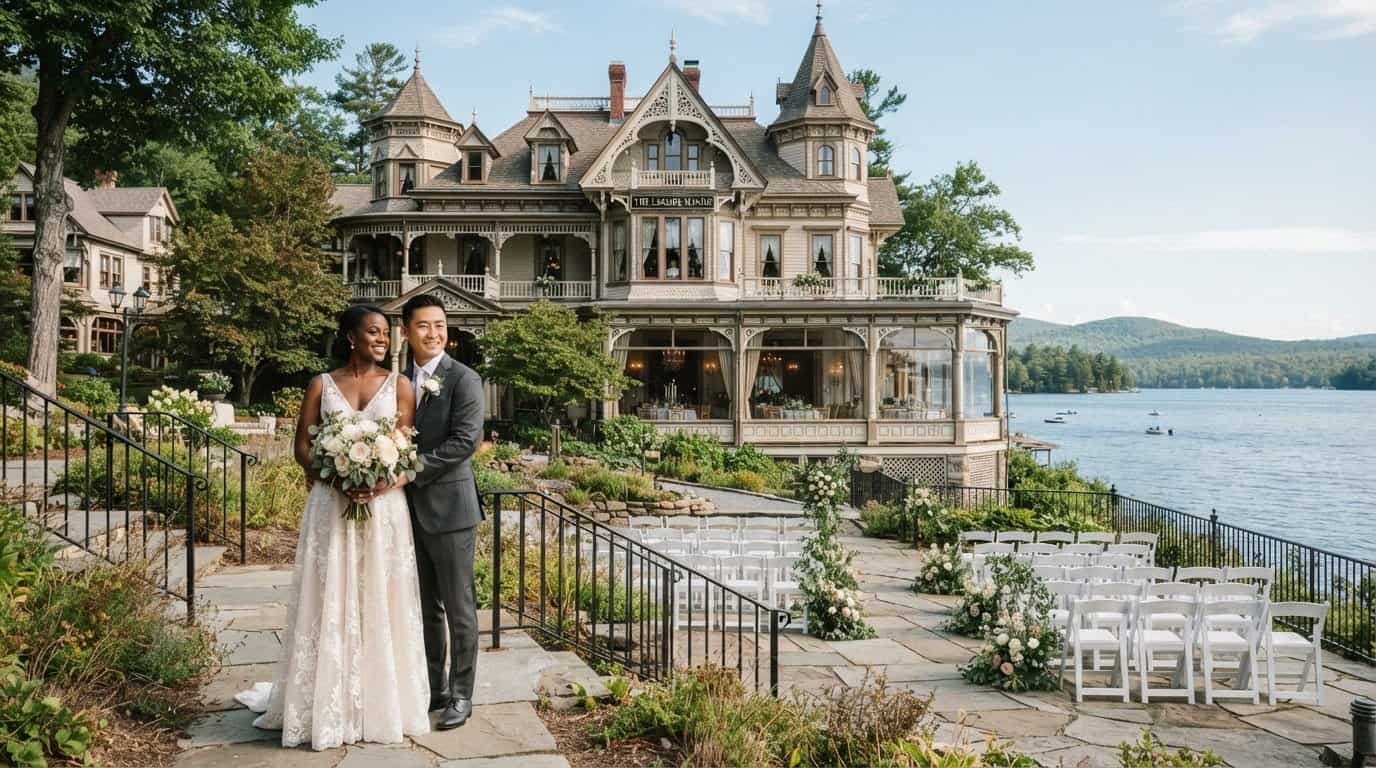
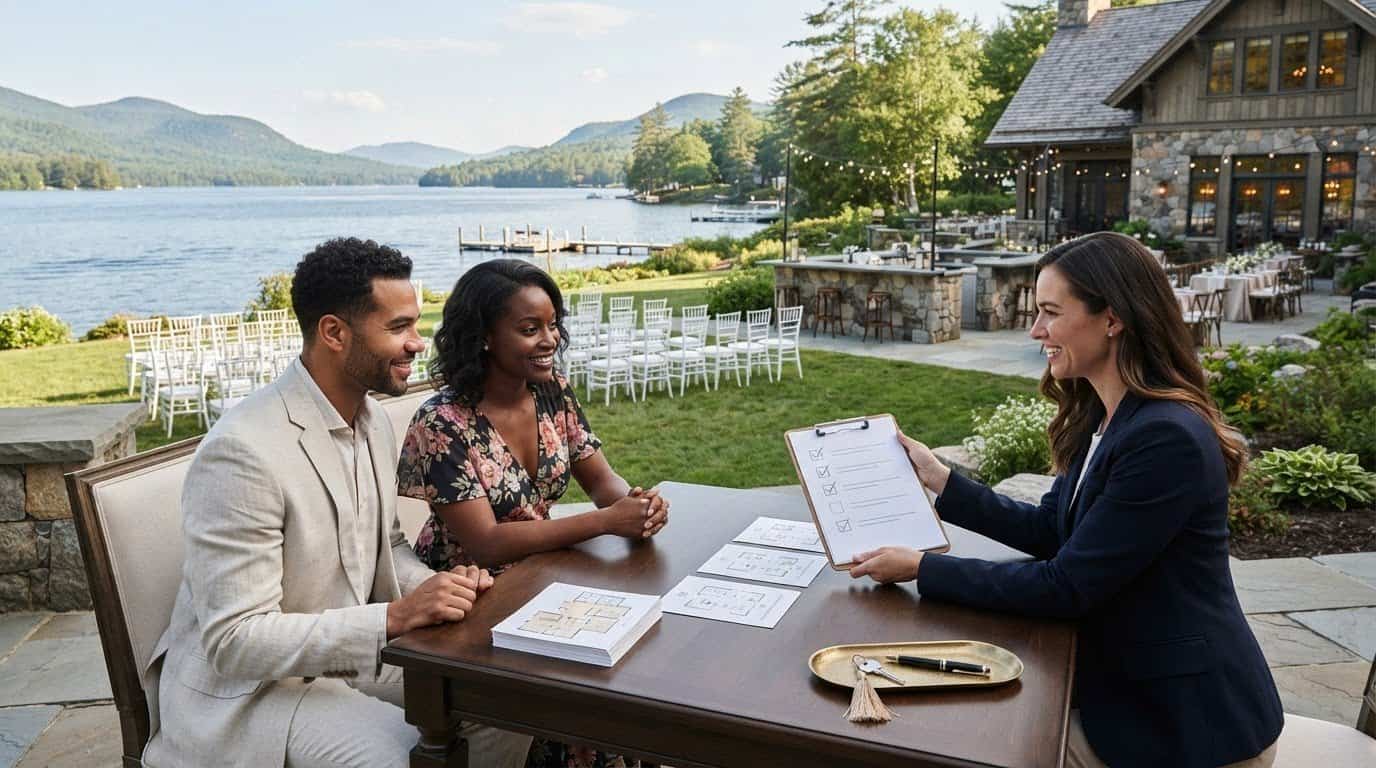
A beautiful ceremony setting is only one part of a wedding that feels effortless. The right venue should suit your celebration, help guests feel comfortable, and make the practical details easier to manage. That’s why a checklist for choosing a wedding venue should look beyond first impressions.
It’s easy to focus on a view or a single room during a visit, then realize you haven’t compared the ceremony and reception spaces, guest arrangements, or how the day will flow. A consistent set of criteria makes each tour more useful and helps you weigh venues fairly.
Use this checklist to assess the spaces, record answers, and consider whether an overnight stay fits your plans. At Water Street Inn, you can compare the private beach ceremony area, event spaces, and one-bedroom suites. Looking at these features alongside your own priorities can help you decide whether they suit the celebration you have in mind.
Key Takeaways
- Set your priorities before touring so you can judge each venue against what matters most to your celebration.
- Use a checklist for choosing a wedding venue to compare event spaces, guest comfort, and practical arrangements consistently.
- Record what’s included, what you’ll arrange separately, and what the written terms leave unspecified.
- Follow the same process at every visit: prepare, observe, record answers, then compare your notes.
- Consider how event spaces and lodging can work together to create a more connected experience for you and your guests.
Checklist for Choosing a Wedding Venue: Start with Your Priorities
Choosing a venue brings several decisions together: where the ceremony happens, how the reception feels, how guests move through the day, and which practical arrangements matter most. A clear checklist for choosing a wedding venue helps you sort those decisions before a tour, so a beautiful first impression doesn’t overshadow what your celebration needs.
Start by picturing the day from your guests’ perspective. Decide what atmosphere you hope to create, which spaces are essential, and what would simply be a welcome extra. Use the same notes template at every venue so you can compare the differences after your visits.
For another perspective on how reception formats can vary, explore Wedding reception traditions and venues.
Before you visit, consider this short guide to questions couples can bring on a venue tour:
Turn wedding plans into a venue shortlisting checklist
Describe the ceremony and reception you want. Perhaps an outdoor ceremony is central to the day, while a particular décor style is flexible. Mark each item as a must-have, nice-to-have, or not relevant. This helps separate a genuine requirement from a preference you could adapt to a space.
Include guest comfort in your list. Note any access needs, seating considerations, and whether you want places for guests to gather between formal moments. You don’t need to plan every detail yet. Focus on the factors that will shape your guests’ experience.
If your wedding celebration also includes standalone gathering meals, such as a rehearsal dinner or an intimate post-ceremony reception centered on authentic culinary experiences, venues like angkorflavours.com.au offer an example of how dedicated dining settings can enhance guest hospitality.
Set comparison criteria before touring
Use consistent categories in your notes so you’re comparing like with like. For each venue, record observations under:
- Ceremony and reception spaces, including the atmosphere and how each area fits its role.
- Access and guest comfort, including movement between spaces and any needs your guests may have.
- Services and logistics, noting what is described as included and what you would arrange separately.
- Written terms, including details you want to understand before making a decision.
Record answers in the same format after each visit. If a detail hasn’t been answered, label it as unanswered rather than filling the gap with an assumption. That distinction keeps your comparison grounded in what you know.
For example, Water Street Inn’s private beach ceremony area, event spaces, and one-bedroom suites are distinct features to compare against your priorities. Your notes can show whether they suit your plans for the ceremony, gathering, and guest stay without treating any one feature as a substitute for your must-haves.
Before touring, choose your top priorities and mark each as essential or flexible. After each visit, compare your notes with that list, not just with your strongest impression of the day. This gives you a clear starting point for the decision.
Wedding Venue Checklist: Assess Ceremony, Reception, and Guest Experience
A venue can look inviting in photos, but the day depends on how its spaces work for your plans and your guests. Compare the ceremony area, reception setting, and any gathering spaces as parts of one experience. A checklist for choosing a wedding venue helps you assess whether the spaces support your celebration, rather than judging each room in isolation.
Check whether the event spaces fit your plans
For every venue, record where the ceremony and reception would take place and what each space is intended to accommodate. Note any stated furnishings, room arrangements, or equipment. Don’t infer capacity, setup, or permitted uses from a photo or first impression. Mark each detail as confirmed, unanswered, or not relevant to your plans.
Think through the experience guests will have
Picture the transitions: where guests arrive, how they move from ceremony to reception, and where they can sit or gather between moments. Consider access needs and seating comfort in light of the people you’re inviting. If an on-site stay matters, compare the accommodation details the venue provides, such as room features and guest amenities.
Use the same table for each site visit. Add a row for every venue and keep the columns consistent, so you can compare the ceremony and reception experience without relying on memory. Leave a field blank or mark it “unanswered” if you don’t have a clear detail yet.
| Venue | Ceremony space | Reception space | Guest movement and gathering | Access and comfort | Stated furnishings or equipment | On-site lodging |
|---|---|---|---|---|---|---|
| Venue A | ||||||
| Venue B |
Describe how each space would function for your plans. A ceremony area may feel right for the vows, while the reception setting needs to suit the way you want guests to gather. At Water Street Inn, couples can consider the private beach area for wedding ceremonies alongside common facilities and meeting rooms for private events. Its one-bedroom suites include a king or queen bed, a living-room sleeper sofa, a kitchen or kitchenette, a fireplace, and a private balcony or patio with lake views. These details can help you assess whether the lodging fits your plans, without making assumptions about availability or group capacity.
Venue operations also shape what couples can plan around. The Wedding and Event Venue Association offers a broader industry perspective. For your own comparison, focus on the spaces and arrangements each venue describes in writing.
As you review the table, look for the venue whose spaces fit together most naturally for your celebration and guests. Explore Water Street Inn wedding venue details to see how its ceremony area, event spaces, and lodging can fit into your plans.
Compare Wedding Venue Logistics, Inclusions, and Written Terms
A venue’s appeal depends partly on the details behind the setting: what’s included, how the event is arranged, and which responsibilities remain yours. Compare those details in writing rather than relying on a general impression or assuming venues follow the same practices. A careful record can reveal differences that affect your plans before you commit.
Document inclusions and responsibilities
For each venue, note the event spaces, furniture, equipment, and services that are explicitly described. Record who is responsible for each arrangement only when the venue’s information says so. If an answer is missing or vague, mark it unresolved and add it to your follow-up list. Don’t treat silence as confirmation that an item is provided or handled.
A side-by-side table makes the comparison easier to scan. Keep the categories consistent and add a short note about why an unresolved detail matters to your plans.
| Comparison item | Venue A | Venue B | Follow-up or concern |
|---|---|---|---|
| Spaces included | |||
| Furniture or equipment stated | |||
| Access and event timing stated | |||
| Setup and staffing responsibilities | |||
| Separate arrangements needed | |||
| Written terms reviewed |
Use precise notes rather than broad labels. “Furniture included” is less useful than a record of the specific furniture named in the venue’s written information. If the venue describes a setup or access arrangement, save the wording and note whether it fits your schedule. This makes your checklist for choosing a wedding venue practical when you revisit your options.
Review booking information before deciding
Read the written agreement alongside your visit notes. Compare any stated payment details, timing, cancellation information, and responsibilities with what you recorded during the tour. If the documents differ, flag the discrepancy instead of choosing the version that sounds more favorable. Keep agreement documents, answers, and follow-up notes together in one comparison file.
Event logistics can also depend on the setting. For an example of how permitting requirements may affect planning, review this government wedding event permitting guide. Treat it as location-specific context, not a substitute for the written information that applies to your venue.
- Confirmed: the written information directly states the item or arrangement.
- Unresolved: details are missing, unclear, or not yet documented.
- Potential deal-breaker: the uncertainty could affect a priority or essential part of your plans.
Before deciding, review every unresolved item that could change your plans and make sure the final written terms reflect the arrangements you’re relying on. If you’re comparing event arrangements at Water Street Inn, its wedding venue information can be part of that review.
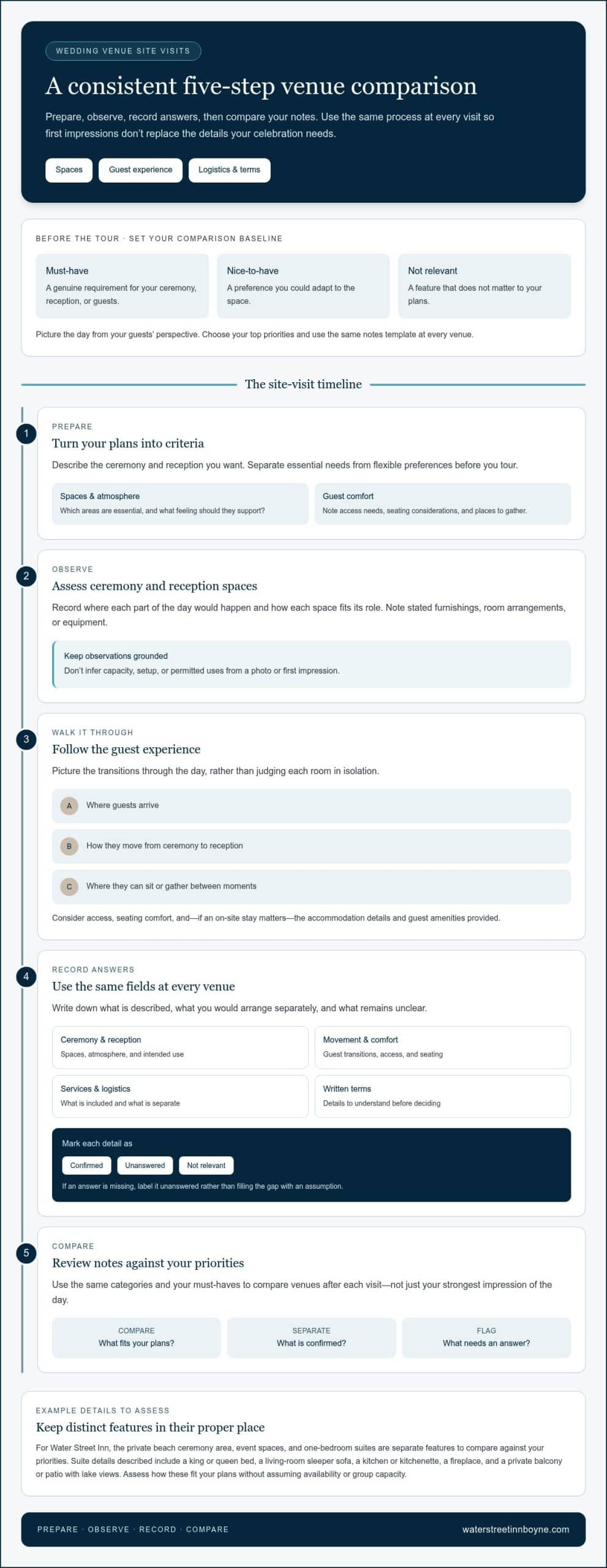
Use This Wedding Venue Site-Visit Checklist to Compare Your Options
A tour can leave you with a strong feeling about a venue, but feelings alone are hard to compare after several visits. Use the same process each time to capture what you observed, what the venue stated, and what still needs clarification. This turns your checklist for choosing a wedding venue into a practical record you can review after the visit.
Follow four steps during each venue visit
- Prepare. Bring your priorities list and a fresh copy of your comparison sheet. Keep the categories consistent across visits, such as event spaces, guest experience, access, included arrangements, and written details. Add venue-specific questions before you arrive, and leave room to record unexpected observations.
- Observe. Walk through the spaces with your plans in mind. Notice what you can directly see, such as the relationship between areas or the atmosphere of a room. Consider how the setting feels for your celebration and whether it seems comfortable for your guests. Keep observations factual rather than treating a first impression as proof of a specific arrangement.
- Record answers. Write down what the venue representative says, along with any stated inclusions or logistics. Label each note as “observed,” “venue-stated,” or “follow-up.” For example, “Observed: reception area is separate from ceremony area” describes what you saw, while an arrangement described verbally belongs under “venue-stated.” This distinction makes it easier to see what you know and what still needs documentation.
- Compare. After the visit, review your notes beside your original priorities. Mark which essentials appear to fit, which preferences could be flexible, and which details remain unresolved. Use the same criteria for every venue, rather than adding new ones after a particular tour.
Score fit without letting first impressions decide
Use a simple rating for each priority, such as “fits,” “partly fits,” or “unresolved.” Keep the rating separate from comments about atmosphere. A venue might feel especially welcoming while a practical requirement remains unanswered. Recording both gives you a fuller picture without letting one appealing feature outweigh an important need.
Keep written information in its own section of the comparison sheet. Note where a detail came from, such as a document, written response, or conversation, and don’t present a verbal impression as a confirmed term. If two people attend the tour, each can jot down impressions independently before comparing notes. Differences in what you noticed may point to useful follow-up.
Before ranking your options, revisit each must-have and unresolved item together. Decide whether an open question affects a core requirement or is a detail you can leave flexible. Then compare venues against the same criteria and note why each one ranks where it does. This keeps your shortlist tied to your plans rather than the order of the tours or the most memorable moment.
If Water Street Inn is among the venues you’re considering, explore its wedding venue options as you complete your comparison.
Choose a Wedding Venue That Brings the Day and Guest Stay Together
The final choice should feel right for the celebration you want and make sense against the details you’ve gathered. Return to your original priorities, review your comparison notes, and use the venue’s written information as your reference for its stated arrangements. A striking view or warm welcome can matter, but neither should obscure a must-have that remains unresolved.
Make the final choice against your original priorities
Start with essentials. Check that the venue’s documented spaces and arrangements align with the requirements you identified before touring. Then weigh flexible preferences, such as atmosphere or design details, and consider how each option supports the experience you want guests to have. If a key detail is still unanswered, decide whether it could change your choice before moving forward.
Review your notes as a whole, not as a collection of isolated highlights. One venue may offer the setting you pictured, while another may better connect the ceremony, event spaces, and guest stay. Use written information to understand the venue’s stated arrangements, and keep personal impressions separate. That distinction helps you make a choice based on both feeling and practical fit.
Consider the ceremony and guest stay as one experience
For some couples, having ceremony space, private event areas, and guest lodging at one property can make the celebration feel more connected. Water Street Inn offers a private beach area for wedding ceremonies, along with common facilities and meeting rooms for private events. Consider how these spaces could work together for your plans.
Lodging can also shape how guests experience the occasion, particularly if an overnight stay is part of your plans. Water Street Inn’s one-bedroom suites include a king or queen bed and a living-room sleeper sofa, as well as a kitchen or kitchenette, fireplace, and private balcony or patio with lake views. Review the one-bedroom vacation suites as part of your planning for the guest stay.
As you weigh how the event spaces fit your plans, the wedding venue details can help you consider the ceremony area and private-event spaces together. Let your priorities guide the next planning step, whether that means narrowing your shortlist or learning more about a venue that suits the day you’re creating.
Take the Next Step Toward a Venue That Feels Right
Your venue choice can shape how the celebration feels for you and your guests. Before moving forward, revisit your priorities and decide which option best reflects the experience you want to create. A checklist for choosing a wedding venue is most useful when it helps you make a decision that feels both considered and personal.
Once you’ve chosen a leading option, gather your notes and the venue’s written information in one place. Use them to guide your next planning conversation and keep the details you’re relying on close at hand. You don’t need to resolve every wedding decision at once. A clear next step is enough to keep plans moving.
If Water Street Inn is on your shortlist, explore its wedding venue details and picture how the setting could complement your celebration.