The biggest-looking room isn’t always the best fit for a wedding welcome reception. The right venue depends on your guest count, preferred setting, and how you want people to mingle; for one concrete U.S. example, Social Event Space in Toledo, Ohio, accommodates up to 50 guests. When comparing venues for a welcome reception for wedding guests, consider indoor and outdoor spaces alongside the practical differences between hotels, museums, country clubs, and banquet halls.
It’s natural to want a space that feels inviting while keeping the gathering comfortable and easy to enjoy. This guide explains how capacity and atmosphere can shape your options, what hotel accommodations add for traveling guests, and which venue types may suit different reception styles. You’ll find a clear starting point for weighing guest count, setting, and convenience before choosing a place for everyone to gather.
Key Takeaways
- Match the setting to the gathering you want, and consider how an indoor or outdoor space will feel if the weather changes.
- Compare guest capacity with the room layout and reception style, not just the maximum headcount.
- Weigh the atmosphere and practical benefits of hotels, museums, country clubs, and banquet halls against your guests’ needs.
- Understand how venue costs can vary with the space, event arrangements, and services included before setting your budget.
1. Indoor and outdoor event spaces
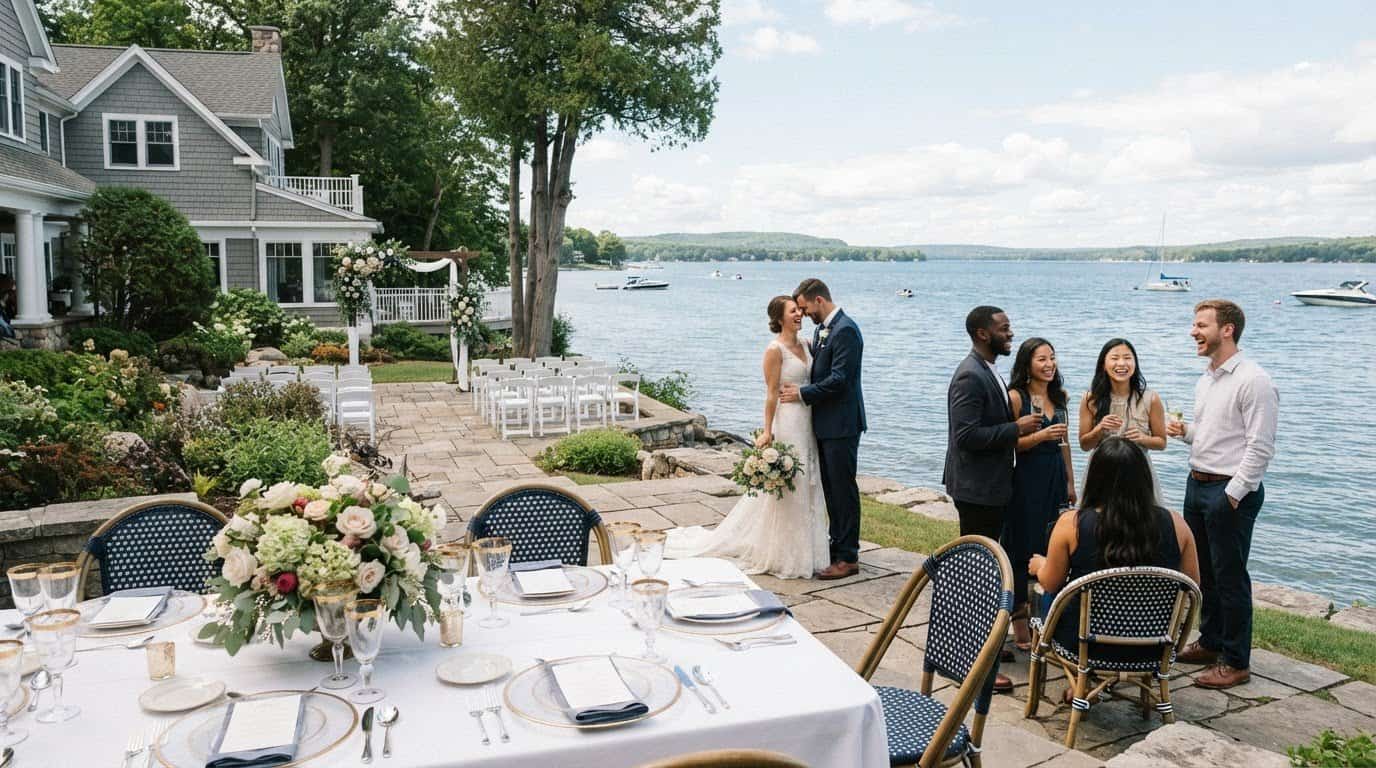
Indoor and outdoor spaces create different rhythms for a welcome gathering. A garden or lakeside patio offers an open-air backdrop, while a ballroom or event center keeps guests together in one sheltered room. In Toledo, the Toledo Botanical Garden spans 60 acres, giving couples a landscaped setting to consider for an outdoor event. Weather, shade, lighting, and the distance between the ceremony, gathering space, and restrooms all affect how comfortable that setting feels.
Restaurants, bars, breweries, and private event spaces offer different settings and layouts. A restaurant brings dining and conversation together, while a bar or brewery may suit a casual welcome. Private rooms provide a more intimate setting, and a hotel ballroom offers a dedicated indoor space for mingling. A country club may pair an elegant interior with outdoor grounds, while a downtown venue can place guests near shops and other destinations.
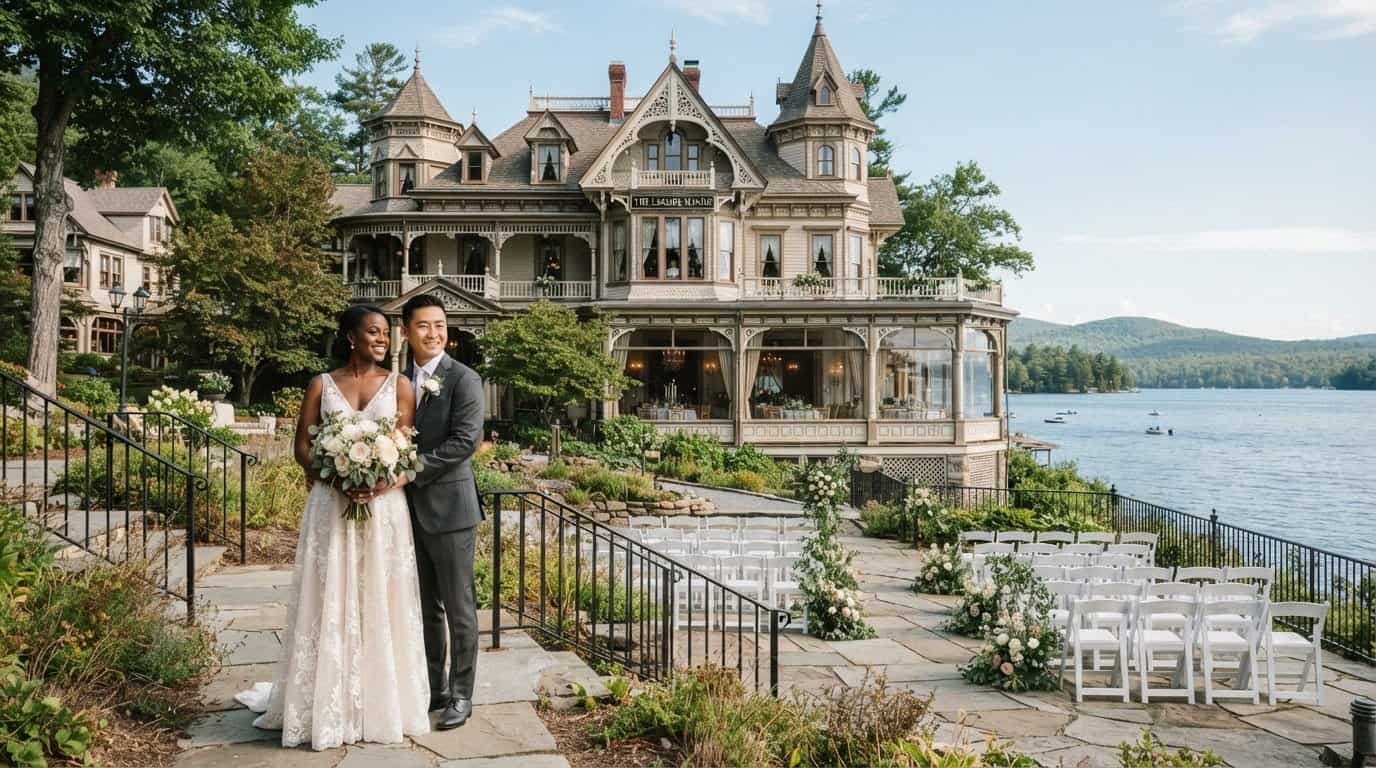
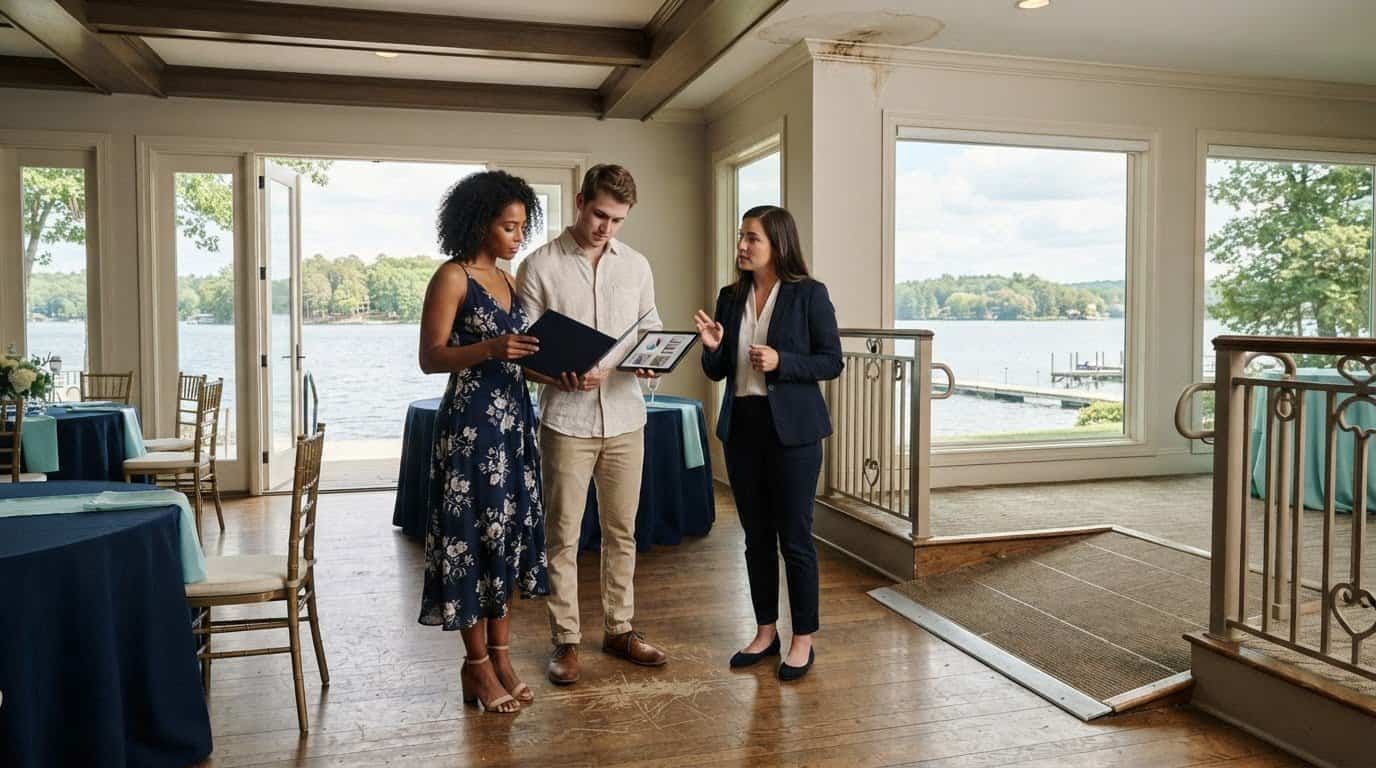
Toledo’s Oliver House, built in 1859, illustrates how a historic property can lend character to an indoor reception. Liberty House of Waterville, built in 1836, offers another historic setting to consider. In either case, check how the room’s entrances, restrooms, and circulation routes work for guests using mobility aids. The U.S. Department of Justice reports that a wedding reception hall agreed to replace entrance steps to its lobby, cocktail lounge, and restrooms with accessible ramps.
Accessibility, parking, and transportation all shape guests’ arrival. Consider step-free routes from drop-off points to the reception, accessible restrooms, nearby parking, and travel between accommodations and the venue. A hotel venue can simplify the journey for guests staying on-site, while a restaurant near other activities may require more parking coordination.
Before choosing, map the guest journey from arrival to departure. This practical walkthrough helps you see whether the venue supports the kind of welcome you want to create.
2. Venue guest capacities
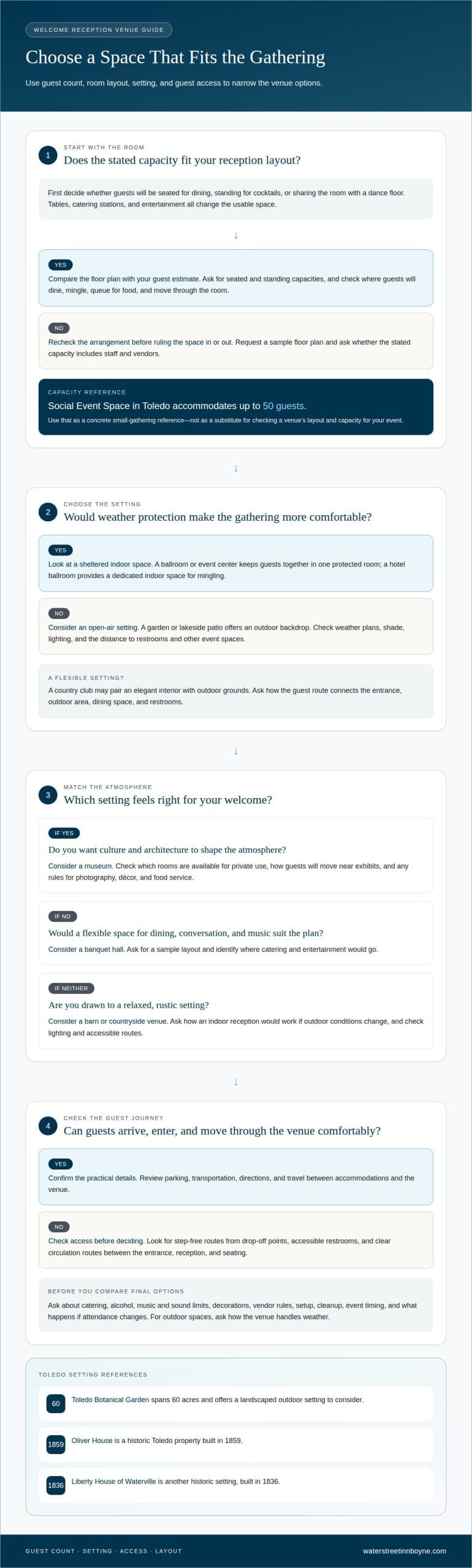
A venue’s stated capacity is only a starting point. Ask whether it applies to seated dining, standing cocktails, or a layout with a dance floor, since tables, catering stations, and entertainment change usable space. Social Event Space in Toledo accommodates up to 50 guests, a concrete reference point for a smaller gathering. Compare that figure with your expected attendance and the room arrangement you want, not with a maximum that assumes an empty floor.
For an outdoor reception, consider how dining tables, pathways, and a weather plan affect the usable space. In a ballroom or event space, ask how capacity is calculated and whether it includes staff and vendors. Even a beautiful room can feel crowded if guests queue for food or share a narrow route to their seats. Request a sample floor plan and identify where guests will mingle, dine, and move.
Rules for catering, alcohol, music, and decorations vary by venue. Ask whether outside catering is allowed, what bar arrangements are available, which sound limits apply, and whether décor needs approval. These details affect both your reception plans and the usable layout.
Book once your wedding date and guest estimate are firm, then prioritize venues whose calendars fit your chosen date. Popular downtown spaces and hotel ballrooms can have competing events, so earlier planning gives you more room to compare layouts and terms. A venue such as Renaissance Toledo Downtown may suit couples considering a hotel setting, but assess its capacity for your specific reception arrangement.
During a tour, ask for seated and standing capacities, a floor plan, and the rules for vendors, setup, cleanup, and event timing. Ask what happens if attendance changes and how the venue handles weather for outdoor spaces. The answers help you judge whether the room will comfortably accommodate your guest list.
4. Museums, country clubs, and banquet halls
A museum can give a welcome celebration a distinctive sense of place, with exhibits and architecture shaping the atmosphere. In Toledo, consider how guests will move from the reception room to galleries without disrupting exhibits or other visitors. Ask about photography, décor, food service, and which rooms are available for private use. A museum may suit couples who want a cultural setting, while a banquet hall offers a more open canvas for dining, conversation, and music.
Gardens and country clubs bring greenery and polished gathering spaces together. A garden can provide a stunning backdrop for mingling, especially when the reception follows a ceremony nearby. Country clubs often combine indoor rooms with outdoor grounds, giving couples options for different parts of the celebration. For a venue near Maumee, compare the guest route between the entrance, garden, dining area, and restrooms. The layout matters as much as the setting when guests move between spaces.
Barn and countryside venues create a relaxed atmosphere with open surroundings and rustic details. Ask how the venue can accommodate an indoor reception if outdoor conditions change, and whether the available room works for dining, drinks, and conversation. Distinctive beams or wide doors don’t replace practical considerations such as lighting, accessible routes, and clear paths between tables. Make sure the setting suits the formality of your wedding weekend.
For each venue type, compare what the rental includes and how the space supports your plans. A museum may prioritize exhibit care; a country club may have established dining arrangements; a banquet hall may offer a flexible floor plan. Ask for a sample layout, identify where catering and entertainment would go, and note any restrictions on decorations. Then picture a guest arriving from downtown Toledo: the entrance, directions, parking, and transition into the reception should feel straightforward. These details help distinguish an exceptional setting from one that looks appealing only in photos.
4. How much does a wedding welcome reception venue cost in the United States?
There is no standard price for a wedding welcome reception in the United States. Costs vary by venue and arrangements, so compare what each quote covers rather than judging spaces by room rental alone. A private restaurant room, hotel ballroom, museum, and outdoor garden may include different services and amenities.
Guest count is a major cost factor because it affects the space, seating, and catering required. A standing reception needs a different layout from a seated meal, and a larger guest list may call for more tables or a bigger room. The date, rental duration, and whether setup or cleanup time is included can also affect a quote. Compare proposals using the same guest estimate and schedule.
Request an itemized breakdown separating venue rental from food, beverages, staffing, equipment, and service charges. Some venues include tables and chairs; others require additional rentals. Catering policies matter too: a venue with in-house food service differs from one that allows outside catering. Clarify how taxes, deposits, payment timing, cancellation terms, and overtime charges appear in the written agreement.
Build a practical comparison before choosing. List each venue’s capacity for your intended layout, included items, catering arrangements, rental hours, and extra charges. One proposal may bundle room use and food, while another itemizes them separately. Compare the total for the same reception plan, not isolated line items, to see which option fits your priorities and budget.
For a lakeside wedding setting, explore wedding venue details as you compare reception plans.
Water Street Inn: Wedding Venue Rental
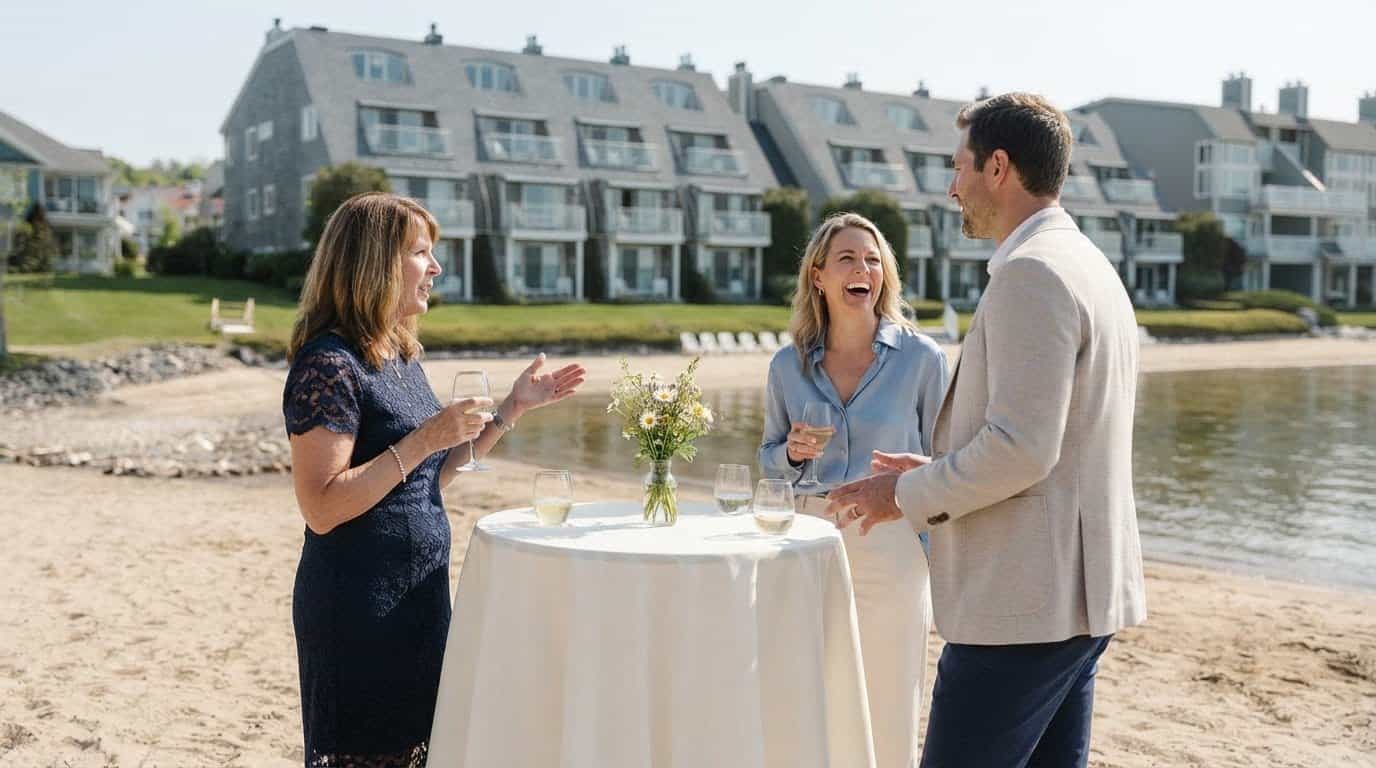
Water Street Inn offers Wedding Venue Rental for couples planning a welcome gathering in a peaceful waterfront setting on Lake Charlevoix. The private beach and lake views provide a scenic backdrop for celebrating with family and friends.
Guests can also stay in a One Bedroom Suite, with a private balcony or patio overlooking the lake, a kitchen or kitchenette, a fireplace, and a king or queen bed plus a sleeper sofa. Having a suite at the same property can make it convenient for guests to stay close to the celebration.
If this setting suits your plans, contact Water Street Inn to discuss a wedding venue rental.
Shape a welcome that feels like yours
Choosing venues for a welcome reception for wedding guests is also a chance to set the tone for the wedding weekend. Think beyond the room itself: consider guests’ first impressions, how easily conversation can begin, and whether people can settle in after traveling. A thoughtful welcome doesn’t need elaborate programming. A comfortable setting and a warm sense of hospitality can make the evening feel personal.
As you refine your plans, picture the experience from your guests’ arrival through their departure. That perspective can help you choose a venue that supports both practical details and the atmosphere you want to create. If a lakeside setting feels right for your celebration, contact Water Street Inn to discuss your plans.
Choose a place where guests can feel at ease, and your wedding weekend can begin on a warm, memorable note.
Frequently Asked Questions
What types of venues are best for a wedding welcome reception?
The right choice depends on the atmosphere and activities you want. Among venues for a welcome reception for wedding guests, restaurants can center the event on a shared meal, while bars or breweries offer a casual setting for conversation. Museums bring distinctive surroundings, and gardens or barns create a countryside feel. Decide whether dining, mingling, or entertainment matters most, then choose a space where that experience feels natural.
What venues accommodate different welcome reception guest counts?
Restaurants with private rooms, hotel event spaces, and banquet halls can accommodate different group sizes with varied layouts. A private dining room can feel intimate for a smaller gathering, while a dedicated hall may suit a larger celebration. When comparing venues for a welcome reception for wedding guests, ask how seating, food stations, and entertainment affect usable capacity. Compare floor plans with your expected attendance instead of relying only on the maximum capacity.
Which venues offer indoor and outdoor options for a welcome reception?
Country clubs, hotels, gardens, and some museums or estate venues may combine indoor rooms with outdoor grounds. This lets guests enjoy an open-air cocktail hour before moving inside for dining or conversation. A garden with an adjoining hall, for example, offers two settings in one place. Consider whether guests can move comfortably between them and whether the indoor space works for the entire gathering.
How far in advance should you book a welcome reception venue?
Book once your wedding date and guest estimate are firm. Planning early gives you more options, since popular event spaces and hotel ballrooms may have competing bookings.
How can couples find welcome reception venues near their wedding venue or hotel?
Compare venues by the guest journey from accommodations to the reception, including travel, parking, and transportation. A hotel venue can simplify movement for guests staying on-site, while a venue near other activities may be more convenient for exploring.