

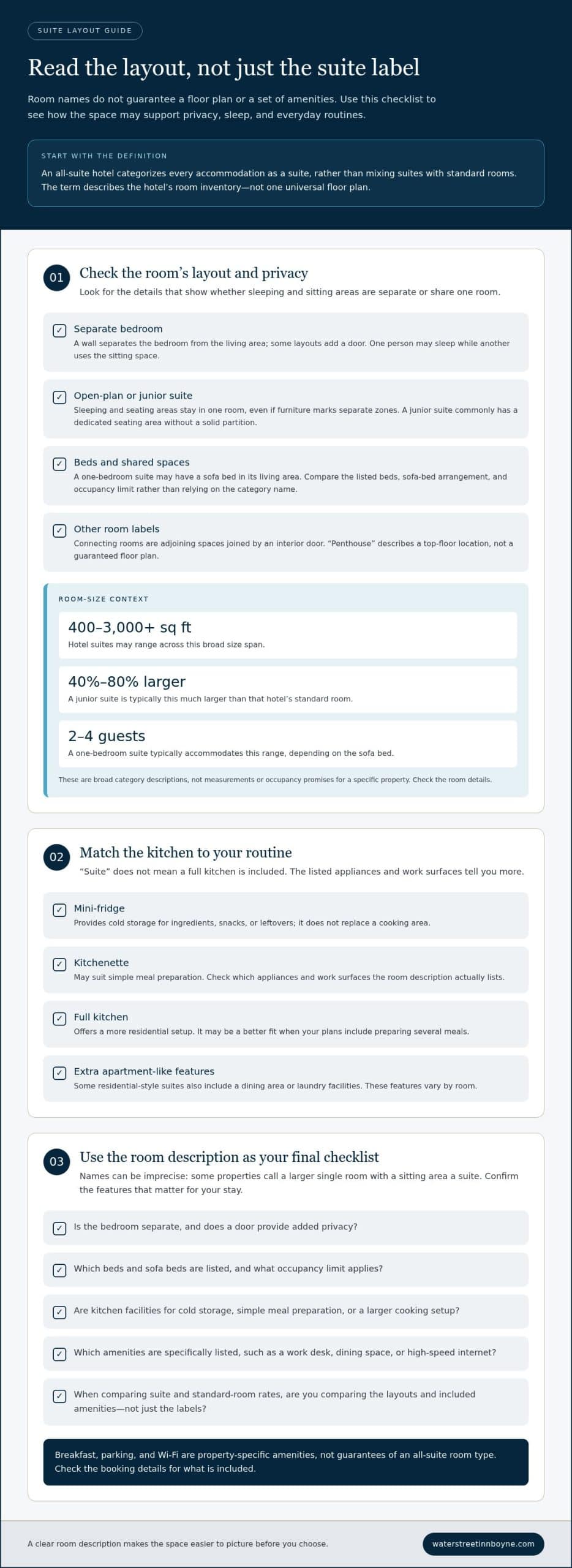
An all-suite hotel offers suite accommodations only, rather than a mix of suites and standard rooms. That’s what an all-suite hotel means: every room category is a suite, though the layout can range from a separate bedroom and living area to a more open plan.
It’s easy to assume every room called a suite has the same layout. In practice, the label can describe different arrangements, and kitchen facilities vary too. Understanding what separates a suite from a standard room helps you choose a stay that suits how you want to rest, gather, and spend time in your room.
This guide explains what makes a hotel suite, how separate-bedroom and open-plan layouts differ, and what to expect from a kitchen or kitchenette. You’ll also learn how an all-suite hotel compares with one that offers standard rooms, making room descriptions easier to understand before you book. Familiarity with these terms can help you picture your stay, whether you want a quiet place to unwind or room to settle in together.
Key Takeaways
- An all-suite hotel offers suite accommodations throughout, but the name alone doesn’t tell you how each room is arranged.
- Look for a separate bedroom if privacy matters; open-plan layouts keep sleeping and sitting areas within one room.
- Kitchenettes and full kitchens differ, so compare the listed kitchen features with how you plan to use the space.
- Compare room layouts and included amenities when weighing suite and standard-room rates, since the label alone doesn’t determine value.
- Water Street Inn’s One Bedroom Suite pairs a separate-bedroom stay with a kitchen, private outdoor space, and scenic waterfront views.
Kitchen areas and kitchenettes in suites
A suite’s kitchen area can make a stay feel more like an apartment, but the label doesn’t guarantee a full kitchen. Some suites have only a kitchenette, while others offer a larger cooking area. The distinction matters if you plan to prepare meals rather than simply store snacks or leftovers.
Hotel suites commonly combine a bedroom, bathroom, and living area, sometimes with a kitchenette. A mini-fridge can keep ingredients cold, while cooking facilities let guests prepare meals in the room. Some residential-style suites also include a dining area or laundry facilities, giving the layout more of an apartment feel.
For a real-world brand example, watch this overview of Embassy Suites by Hilton.
Kitchen equipment varies by room type. A kitchenette may suit simple meal preparation, while a full kitchen offers a more residential setup. Read the room description for listed appliances and work surfaces. A mini-fridge, for example, provides cold storage but doesn’t replace a cooking area.
That distinction can shape daily routines. A traveler who wants breakfast in the room may value a kitchenette, while a family preparing several meals may prefer a full kitchen. Cooking in the suite may also reduce dining expenses, depending on the meals and the traveler’s plans.
Layout affects privacy as much as meal preparation. In many suites, a wall separates the bedroom from the living area, and some layouts add a door for privacy. That separation lets one guest rest while another reads or talks in the shared space. An open-plan room keeps sleeping and sitting areas together, even when furniture marks distinct zones.
Consider how everyone will use the space. A separate bedroom can offer a quieter place to sleep, while a sofa bed in the living area can provide another sleeping spot. A junior suite may place its seating area in the same room as the bed, without a solid partition. A presidential suite may have multiple rooms, but its name alone doesn’t tell you how the kitchen is arranged.
Before choosing, match the layout to your routine: check whether the bedroom is separate, whether a door adds privacy, and which kitchen features are listed. These details show whether the suite supports food storage, meal preparation, or a more apartment-like stay.
Separate-bedroom versus open-plan layouts
The key difference is whether a wall or door separates the bedroom from the living area. In a separate-bedroom suite, one person can sleep while another uses the sitting space. An open-plan layout places sleeping and seating in one room, even when a sofa or table marks distinct areas. That distinction can shape privacy, rest, and shared routines while traveling.
A junior suite typically uses one room with a dedicated seating area, often without a solid partition. A one-bedroom suite usually has a separate bedroom and may include a sofa bed in its living area. Depending on that sofa bed, a one-bedroom suite typically accommodates 2 to 4 guests. The room description and sleeping arrangements matter more than the suite label alone.
Other room types have different arrangements. Connecting rooms are adjoining spaces joined by an interior door, allowing a group to share access while keeping separate rooms. A penthouse suite is on the building’s top floor; its name describes its location, not a guaranteed floor plan. For a larger group, compare doors, beds, and shared spaces rather than relying on category names.
Suite size can also vary widely. Hotel suites may range from 400 to 3,000 square feet or more, while a junior suite is typically 40% to 80% larger than that hotel’s standard room. These figures describe broad categories, not a specific property. A floor plan or room description gives a clearer picture of how much usable space sits between the bed, seating, and dining areas.
Amenities depend on the individual layout. One suite may have a work desk and high-speed internet, while another emphasizes a dining space or sofa bed. A separate bedroom can make a longer stay feel more apartment-like, but it doesn’t automatically mean the suite includes a full kitchen, extra bathroom, or particular view. Match the listed features to your travel needs.
Breakfast, parking, and Wi-Fi are property-specific amenities, not guaranteed by the all-suite room type. Booking details show what’s included. Before booking, compare bedroom separation, bed and sofa-bed arrangements, occupancy limits, kitchen facilities, and listed amenities. These details clarify whether the layout suits sleeping, quiet work, or time together.
For a lakeside stay, explore suite details and consider how the bedroom and living area support your plans. A clear room description helps you picture the space before choosing, especially when guests have different sleeping schedules or want a quiet corner to unwind.
What defines a hotel suite
Strictly speaking, a hotel suite contains more than one room, connected under one room number. It often combines a bedroom with a living room or dining area, creating distinct spaces within one accommodation. An all-suite hotel means every accommodation is categorized as a suite, rather than the property mixing suites with standard rooms. The term describes the hotel’s room inventory, not one universal floor plan.
Hotel naming can be less precise than the strict definition. Some properties market a single, larger room as a suite because it has extra space or a sitting area. For example, a room may have a bed and sofa in one open space, while a traditional suite places the bedroom behind a wall or door. The difference matters if privacy between activities is important during your stay.
Suite labels also cover distinct room types. A junior suite commonly has a dedicated seating area within one room, while an executive suite may include a work desk for business travel. A presidential suite can have multiple bedrooms or a private dining room. These names suggest a general category, but the listed room features explain what guests will actually find.
Suite status doesn’t determine occupancy by itself. The number of guests a room can accommodate depends on its beds, sofa beds, and property rules. A larger living area may provide room to gather, but it doesn’t necessarily add a sleeping place. Compare the stated occupancy and bed arrangement with everyone’s needs, especially when a group shares one reservation.
Breakfast isn’t part of the definition of a suite or an all-suite hotel. It may be offered as an amenity or included with a booking, just as parking and Wi-Fi vary by property. Read the room and rate details to distinguish the accommodation from added services. A kitchen or dining area is a feature, not a requirement for a room to carry the suite label.
Families and groups can benefit from suites when separate rooms support different routines, such as children sleeping while adults use a living room. Business travelers may value a work area apart from the bedroom, while longer-stay guests may appreciate a more residential arrangement. An open-plan suite can still suit travelers who mainly want extra sitting space rather than a separate room.
In short, the clearest test is the actual floor plan, not the word “suite” alone. Check whether the accommodation has separate rooms, how the bedroom connects to shared space, and which amenities and occupancy details apply. Those specifics show whether the layout fits the way you plan to rest, work, or spend time together.
Hotel rooms versus suites
A standard hotel room usually places sleeping, sitting, and storage in one compact space, with a bathroom nearby. A suite offers a more residential layout, such as a separate living room or dining area. The difference isn’t just square footage. It’s how the room supports rest, privacy, and time together during a stay.
Standard rooms remain a familiar choice: they represent 80% of hotel bookings. Their simpler layout can suit guests who mainly need a comfortable place to sleep and get ready. A suite can be more useful when the room doubles as a place to relax, work, or gather. For example, one guest can read in the living area while another rests in the bedroom.
Bed dimensions help show how sleeping space differs from general room space. A double or full mattress is about 54 inches wide, a queen measures 60 inches, and a king measures 76 inches. A common occupancy pattern is two guests per bed, with additional capacity possible from a sofa bed. Room occupancy depends on the listed beds and the property’s stated limit, not on the word “suite.”
Storage and amenities also shape the experience. Suites may offer more drawer and closet space than typical hotel rooms, making it easier to unpack during a longer stay. A standard room may have a smaller sitting area, while a suite can provide space for dining or private calls. Still, neither category guarantees a particular kitchen, view, or bathroom arrangement.
Connecting suites offer another option for families and groups. They consist of adjoining rooms linked by an interior door, combining separate sleeping spaces with convenient access between them. That differs from a single suite with one bedroom and a shared living area. For example, relatives can close the connecting door for quiet while keeping the rooms close together.
Compare the layout before choosing. First, identify whether the bedroom and living space are separate or share one room. Then review bed sizes, sofa-bed arrangements, storage, bathroom details, and listed amenities. Finally, match the occupancy limit to your group. These steps show whether a standard room or a suite better fits how you’ll use the space.
A suite isn’t automatically the better fit for every traveler. A standard room can work well for a short stay focused on sleeping and exploring outside the hotel. A suite may suit guests who need distinct places to rest, work, or spend time together. The room description, rather than its category name, gives the clearest basis for comparison.
Are all-suite hotels more expensive than standard hotels?
Not necessarily. An all-suite hotel may have a higher nightly rate than a standard room, but the hotel label alone doesn’t determine the price. The comparison depends on the specific room, location, travel dates, and included amenities. A suite with a separate bedroom and living area offers a different layout from a basic room, so compare what each rate covers.
Room size and features help explain rate differences. A suite may offer more space, a dining area, a kitchenette, or separate sleeping and sitting areas. A standard room may have fewer distinct spaces, but could suit a trip focused on sleeping and getting ready. Compare room descriptions side by side rather than treating “suite” as a guarantee of a particular feature or price.
Occupancy can change the value calculation. For example, a family sharing a suite may use one living area and its sofa bed, while a group booking separate standard rooms pays for multiple accommodations. Compare the total cost for the whole party alongside bed arrangements and privacy. A larger room isn’t automatically a better fit if guests need separate sleeping spaces.
Travel dates and location also affect hotel rates. A popular destination during a busy period may price rooms differently from the same property during a quieter period. Compare the same dates and guest count. Check whether the displayed rate includes breakfast, parking, or Wi-Fi, since these amenities can affect overall value without changing the room layout.
Use a consistent comparison before booking: match dates, guest count, cancellation terms, and included amenities. Then weigh the suite’s extra space against how you’ll use it. For a short visit spent mostly outside, a standard room may meet your needs. For a longer stay involving shared meals, work, or different sleep schedules, separate areas may offer practical value.
Remember that all-suite describes the hotel’s room categories, not a promise that every suite costs more than every standard room elsewhere. A smaller suite may differ from a spacious, multiroom layout, and hotels may include different amenities. Compare the exact room type and booking terms, then decide whether the added space serves your plans. The best value is the option whose layout and inclusions fit your trip, not simply the one with the suite label.
Water Street Inn: One Bedroom Suite
Water Street Inn offers a One Bedroom Suite for travelers who want a more residential stay. Each unit has a fully equipped kitchen, a private balcony or patio with lake views, and a cozy gas-log fireplace, bringing everyday comforts into a welcoming space.
This option may suit guests who value kitchen facilities and private outdoor space during their stay. The suite offers room to settle in and enjoy a quieter pace, while its home-like features support a comfortable getaway.
If this suite style fits your plans, visit waterstreetinnboyne.com to explore Water Street Inn.
Choose a stay that fits your plans
Your next decision is about the kind of stay that will make your trip feel comfortable and well-paced. Knowing what an all-suite hotel means gives you a useful starting point, but your plans should guide the final choice. Think about how you want to spend your time away, what helps you settle in, and whether you’d enjoy a quiet retreat or a base close to local activity.
Picture the moments you want your accommodation to support, from a restful evening to an easy start before exploring. Water Street Inn offers a setting for guests looking to pair a relaxed stay with the comforts of a suite. If you’re ready to take the next step, contact Water Street Inn today.
Choose the stay that suits your plans, and look forward to making your time away your own.
Frequently Asked Questions
What are the different types of hotel rooms?
Common room types include standard rooms, studios, junior suites, one-bedroom suites, executive suites, and connecting rooms. The names describe different combinations of space, furnishings, and privacy, but labels can vary between properties. For example, a studio may suit a solo traveler who wants a sitting area, while connecting rooms can help relatives stay close while keeping separate sleeping spaces. Compare the specific room description rather than relying on its category name.
What is a suite in a hotel?
A hotel suite is an accommodation designed with connected spaces or a more generous arrangement than a basic sleeping room. The classic format has a bedroom and a separate living or dining space, while some properties use “suite” for a single room with a distinct sitting area. For instance, a sofa and desk may create a useful lounge-and-work zone. The room’s floor plan explains how those areas relate.
What is the difference between a suite and a room?
A standard room generally centers on sleeping, with essential furnishings arranged in one main space. A suite gives guests more room to use the accommodation for activities beyond sleeping, such as reading, working, or sharing a meal. Imagine returning from a day out: a separate lounge lets one guest relax without sitting on the bed. The practical difference comes from the layout, not simply the room’s title.
What does an all-suite hotel mean?
An all-suite hotel uses suite categories for its accommodations rather than offering a mix of suites and standard rooms. The phrase describes the property’s room inventory, not a promise that every suite has identical features. One hotel may offer open-plan studios alongside separate-bedroom suites. If you’re comparing options, focus on the specific room category and its layout, since the word “suite” can describe more than one arrangement.
What features are typically included in a hotel suite?
Hotel suites often have a bedroom, bathroom, and sitting or living space, with some layouts adding dining areas or kitchen facilities. A sofa bed, desk, or extra storage may also appear, depending on the room category. For example, a business traveler might value a desk, while a family may prioritize a separate lounge. Treat these as possible features, not a checklist that applies to every suite.
How is an all-suite hotel different from a standard hotel?
An all-suite hotel offers suite accommodations throughout its room inventory, while a standard hotel may offer standard rooms alongside suites. That distinction helps set expectations about room categories, but doesn’t establish a uniform level of space or amenities. A traveler wanting a sitting area in every booking may prefer an all-suite property. Still, compare individual layouts, because suites differ from one another.
Do all-suite hotels have separate bedrooms and living areas?
No, the layout depends on the room category. A one-bedroom suite separates the bedroom from a living area, while a studio or junior suite may combine sleeping and sitting spaces in one open room. For example, a traveler sharing a room with someone on a different schedule may appreciate a door between spaces. Check the floor plan or description for a partition, door, or clearly separate bedroom.
Do all-suite hotels include kitchens or kitchenettes?
Some suites have a full kitchen, while others provide a kitchenette or no meal-preparation area. A kitchenette can help with simple food storage or basic preparation, whereas a full kitchen supports a more home-like routine. For example, someone planning to prepare several meals should look for listed appliances and cooking facilities. The all-suite label alone doesn’t tell you which kitchen features come with a room.